
Kazakh President to Arrive in Pakistan Tomorrow, Signaling a New Phase in Bilateral Relations
High-level visit expected to deepen economic cooperation, energy ties, and regional connectivity between Islamabad and Astana

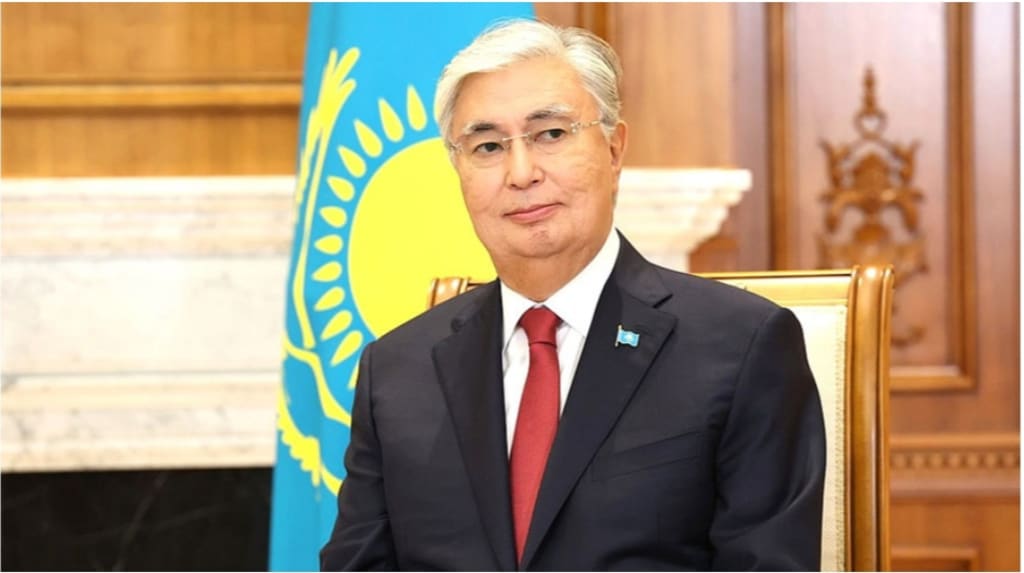
The President of Kazakhstan is set to arrive in Pakistan tomorrow on an official visit, marking a significant moment in the evolving relationship between the two countries. The visit comes at a time when Pakistan is actively strengthening its ties with Central Asian states, while Kazakhstan is looking southward to expand trade routes, energy partnerships, and diplomatic influence in South Asia. Officials in Islamabad have described the trip as “timely and strategic,” with expectations that it will open new avenues of cooperation across multiple sectors.
Strengthening Diplomatic Engagement
This visit is being closely watched by diplomatic circles, as it reflects growing political engagement between Pakistan and Kazakhstan. Although the two countries established diplomatic relations in the early 1990s, high-level exchanges have gained momentum in recent years. The arrival of the Kazakh president underscores a shared desire to elevate ties from friendly relations to a more structured and results-oriented partnership.
During the visit, the Kazakh leader is expected to hold talks with Pakistan’s president and prime minister, focusing on regional stability, multilateral cooperation, and mutual support in international forums. Both sides have consistently backed each other’s positions at platforms such as the United Nations, the Organization of Islamic Cooperation (OIC), and the Shanghai Cooperation Organisation (SCO).
Focus on Trade and Economic Cooperation
Trade and investment are expected to dominate the agenda. Despite cordial political relations, bilateral trade between Pakistan and Kazakhstan remains below its true potential. Officials from both countries have acknowledged that existing trade volumes do not reflect the size of their economies or the range of opportunities available.
The visit is likely to see discussions on reducing trade barriers, improving banking channels, and encouraging business-to-business contacts. Pakistan has shown interest in importing wheat, oil, and mineral resources from Kazakhstan, while offering textiles, pharmaceuticals, surgical instruments, and agricultural products in return. The possibility of preferential trade arrangements or long-term supply agreements may also be explored.
Energy and Connectivity at the Core
Energy cooperation is another key pillar of the visit. Kazakhstan, one of Central Asia’s largest energy producers, holds vast reserves of oil, gas, and uranium. Pakistan, facing persistent energy challenges, sees Kazakhstan as a potential partner in diversifying its energy imports.
Connectivity projects linking Central Asia to South Asia through Pakistan are expected to feature prominently in discussions. Islamabad has long promoted itself as a gateway to the Arabian Sea for landlocked Central Asian states. Projects such as road and rail links, as well as the use of Pakistani ports, could significantly reduce transportation costs for Kazakh exports while enhancing Pakistan’s role in regional trade corridors.
Regional Security and Afghanistan
Regional security, particularly the situation in Afghanistan, is also expected to be part of the dialogue. Both Pakistan and Kazakhstan share concerns about stability in the region, including the risks of extremism, drug trafficking, and humanitarian challenges. Cooperation on counterterrorism, intelligence sharing, and regional peace initiatives may be discussed as both countries seek a stable neighborhood that supports economic growth.
Kazakhstan has previously hosted international talks on Afghanistan and has positioned itself as a neutral diplomatic player. Pakistan, given its geographical proximity and influence, remains central to any meaningful regional approach. The visit could help align perspectives and explore joint initiatives aimed at supporting peace and reconstruction efforts.
Cultural and Educational Exchanges
Beyond politics and economics, the visit is also expected to emphasize people-to-people contacts. Agreements or memoranda of understanding may be signed to promote cooperation in education, culture, tourism, and science. Student exchange programs, scholarships, and academic collaboration can help bridge the distance between the two nations and build long-term goodwill.
Cultural diplomacy is increasingly seen as a soft-power tool, and both countries are keen to highlight shared values, historical links along ancient trade routes, and common interests as Muslim-majority nations with diverse societies.
Strategic Timing of the Visit
Analysts note that the timing of the Kazakh president’s arrival is particularly significant. Pakistan is actively pursuing an “engagement-first” foreign policy focused on economic diplomacy, while Kazakhstan is seeking to balance relations among major powers and expand southward connectivity. This convergence of interests creates a favorable environment for substantive outcomes rather than symbolic gestures.
The visit is also expected to result in the signing of multiple agreements covering trade, investment protection, transport, and institutional cooperation. Such agreements could provide a framework for sustained engagement beyond high-level visits.
Looking Ahead
As the Kazakh president arrives in Pakistan tomorrow, expectations are high that the visit will inject new momentum into bilateral relations. If followed by effective implementation of agreements and continued dialogue, the trip could mark the beginning of a more dynamic partnership between Islamabad and Astana.
For Pakistan, stronger ties with Kazakhstan mean greater access to Central Asian markets and energy resources. For Kazakhstan, engagement with Pakistan offers a strategic route to South Asia and the Middle East. In a rapidly changing regional landscape, this visit highlights how both countries are positioning themselves for deeper cooperation and shared economic growth.
About the Creator
Keep reading
More stories from Salaar Jamali and writers in The Swamp and other communities.
World’s Most Powerful Particle Collider Supplies Heat to Thousands of French Households
In an unprecedented fusion of science and sustainability, the world’s most powerful particle collider—the Large Hadron Collider (LHC) at CERN—has begun supplying district heating to thousands of households in France. Traditionally celebrated for its groundbreaking physics experiments, including the discovery of the Higgs boson, the LHC is now contributing directly to everyday life by converting surplus heat from its operations into warm water for residential heating. This innovative initiative exemplifies how high-energy research can have practical, ecological, and economic benefits beyond the laboratory.
By Salaar Jamalia day ago in The Swamp
You’re Not Human”: The Legal Limbo Facing Russian Nationals in Ukraine
Caught between war, identity, and the law, thousands of civilians are living without rights or recognition War does not only destroy buildings and borders. It also breaks identities. For many Russian nationals living in Ukraine since the start of the conflict, daily life has become a struggle not just for safety, but for legal existence. Stripped of documents, rights, and sometimes dignity, they find themselves trapped in a grey zone where they are seen as neither citizens nor protected civilians. Some describe the experience with chilling clarity: “You’re not human anymore.” This legal limbo has created a humanitarian problem that rarely makes headlines but deeply affects lives on the ground. A War That Erased Legal Status Before the war, thousands of Russian citizens lived in Ukraine legally. Many had families, jobs, and long-term residence permits. Some were married to Ukrainians. Others had lived in the country for decades. When Russia invaded Ukraine, everything changed overnight. Russian nationals quickly became associated with the aggressor state, regardless of their personal beliefs or opposition to the war. Legal protections collapsed. Residency permits expired or were suspended. Renewal processes became impossible. Crossing borders turned into a risk, not a solution. For many, their nationality alone became a liability. Neither Prisoners Nor Citizens International law offers protections for civilians during wartime. But Russian nationals in Ukraine often fall outside clear legal categories. They are: Not Ukrainian citizens Not prisoners of war Not refugees, because they have not crossed borders Not protected foreign nationals, due to diplomatic breakdowns Without valid documents, many cannot work legally, rent housing, or access healthcare. Some are detained for long periods without clear charges. Others are released but remain undocumented, unable to move freely or rebuild their lives. This is not punishment through courts—but through absence of status. Families Torn Between Flags One of the most painful aspects of this limbo is its impact on families. Mixed-nationality households are common. A Ukrainian wife, a Russian husband. Children with dual cultural identities. When laws tighten and borders harden, families are forced into impossible choices. Some parents are separated from their children. Others fear leaving their homes, knowing they may not be allowed back. Applying for new documents can take months—or be denied without explanation. The war has turned private lives into political battlegrounds. Fear, Silence, and Self-Erasure Many Russian nationals in Ukraine live quietly, avoiding attention. Speaking Russian in public can invite suspicion. Protesting the war may not offer protection. Staying silent does not guarantee safety either. Some have destroyed old documents out of fear. Others hide their nationality entirely. This constant pressure leads to anxiety, depression, and isolation. Human rights advocates warn that dehumanization begins when people are reduced to labels rather than individuals. When a person is seen only as “Russian,” their personal history disappears. Legal Gaps and Human Rights Concerns Human rights organizations have raised concerns about the lack of clear legal frameworks addressing this group. International humanitarian law was not designed for prolonged conflicts where civilians of the aggressor state remain inside the defending country. The result is inconsistency: Some regions detain Russian nationals automatically Others release them without documentation Appeals and legal challenges often go unanswered Without formal status, even humanitarian aid can be difficult to access. Experts warn that leaving people in legal uncertainty increases the risk of abuse, exploitation, and radicalization—outcomes that benefit no one. Ukraine’s Security Dilemma From Ukraine’s perspective, the situation is deeply complex. The country is defending itself against an invasion. Security concerns are real. Intelligence threats exist. Screening foreign nationals during wartime is unavoidable. Yet human rights law requires proportionality and individual assessment. Collective suspicion based on nationality risks violating international norms and damaging Ukraine’s global moral standing. Balancing national security with humanitarian responsibility is one of the hardest challenges any country can face during war. Invisible Victims of a Visible War Global attention often focuses on frontlines, weapons, and diplomacy. But the quiet suffering of civilians caught between legal systems remains largely unseen. Russian nationals in Ukraine are not a monolithic group. They include: Anti-war activists Long-term residents Elderly individuals with no ties to Russia anymore Families who consider Ukraine their only home Their stories complicate simple narratives of good and evil—but complexity does not erase suffering. A Need for Clear Solutions Human rights experts argue that clear, temporary legal pathways are urgently needed. These could include: Special civilian status during wartime Transparent review processes Access to legal aid and documentation Protection against indefinite detention Such measures would not weaken security. Instead, they would restore dignity and reduce chaos. Conclusion: Humanity Beyond Passports War forces nations to make hard choices. But it also tests values. When people are told—directly or indirectly—that they are “not human,” something fundamental has gone wrong. Legal systems exist to protect society, not erase individuals. For Russian nationals trapped in Ukraine’s legal limbo, recognition is the first step toward survival. Not recognition of politics or power—but of shared humanity. Because even in war, no one should disappear between the lines of the law.
By Fiaz Ahmed 4 days ago in The Swamp


Comments