
Jerome Powell
Warsh, and the Future of the Federal Reserve

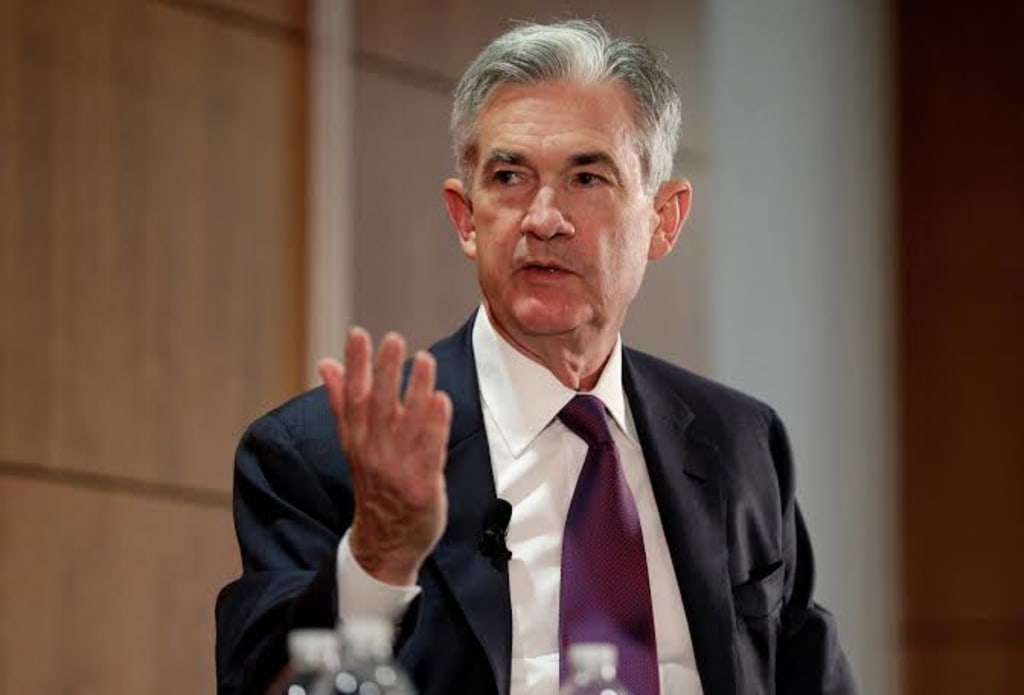
Few figures wield as much influence over the global economy as the chair of the U.S. Federal Reserve. Jerome Powell has held that responsibility during one of the most economically complex periods in modern history—marked by inflation concerns, shifting interest rate policies, political pressure, and growing debate about the independence of central banks. As his term approaches its conclusion, attention is increasingly turning toward potential successors, with former Federal Reserve governor Kevin Warsh emerging as a prominent name in policy discussions.
This moment represents more than a leadership transition. It reflects a broader conversation about how monetary policy should respond to economic uncertainty and how the balance between political authority and central bank autonomy should be maintained.
Jerome Powell’s Leadership in Uncertain Times
Jerome Powell’s tenure has been defined by a cautious and institution-focused approach. He has emphasized financial stability, consumer protection, and clear regulatory boundaries while allowing emerging financial markets to develop under existing rules.
As inflation gradually eased but remained unresolved, markets expected limited room for major policy shifts before Powell’s departure, underscoring the importance of continuity during the final months of his leadership.
Powell’s term as Federal Reserve chair is scheduled to end on May 15, 2026, though he could technically remain on the Board of Governors until 2028—something past chairs rarely choose to do.
His measured style has often placed him at the center of political debate, particularly as elected officials have pressed for more aggressive interest rate cuts to stimulate growth.
Political Pressure and Institutional Independence
The relationship between the White House and the Federal Reserve has historically required careful navigation. Recently, that dynamic has intensified.
Reports indicate that President Donald Trump has considered replacing Powell and is preparing to announce a nominee for the next Fed chair, with strong speculation surrounding Kevin Warsh.
The president has repeatedly criticized the Fed for not cutting rates deeply enough, even as the central bank held them steady around 3.50%–3.75% following recent meetings.
This tension highlights a recurring question in economic governance: How independent should a central bank be when monetary policy decisions affect employment, borrowing costs, and investment worldwide?
Experts warn that political pressure on the Fed could shape expectations in financial markets and alter long-standing norms about institutional autonomy.
Kevin Warsh: A Possible Successor
Kevin Warsh is not a newcomer to the world of monetary policy. He served as a Federal Reserve governor from 2006 to 2011 after being appointed by President George W. Bush.
Currently affiliated with Stanford University’s Hoover Institution, Warsh has remained active in economic policy debates and has appeared on shortlists for top financial leadership roles.
In fact, Treasury officials confirmed that Warsh is among the candidates considered to replace Powell when the chair’s term ends.
Warsh has advocated for clearer coordination between the Treasury and the central bank to help markets better understand the intended size of the Fed’s balance sheet and future policy direction.
At the same time, he has argued that the Federal Reserve should remain within its traditional responsibilities and avoid extending its authority into areas better handled by other government institutions.
These positions suggest a policymaker focused on structural clarity rather than rapid experimentation.
A Complex Relationship Between Powell and Warsh
The connection between Jerome Powell and Warsh is shaped by both policy overlap and philosophical differences.
Notably, discussions have taken place within political circles about replacing Powell with Warsh, though Warsh reportedly advised against attempting to remove the sitting chair prematurely and suggested allowing the term to conclude naturally.
This stance reflects respect for institutional processes—even amid political disagreement—and demonstrates how leadership transitions at the Fed are rarely simple.
On policy matters, the two share some conservative instincts but diverge in emphasis. Powell has avoided endorsing cryptocurrencies as money while permitting market development, whereas Warsh has acknowledged Bitcoin’s potential as a store of value yet remains cautious about private digital currencies functioning as everyday payment tools.
Such distinctions hint at how the Fed’s tone could evolve depending on future leadership.
Investigation Adds Another Layer of Scrutiny
Powell’s final stretch as chair has also been overshadowed by a federal criminal investigation launched in November 2025. Prosecutors are examining whether he made misleading statements to Congress regarding the cost and scope of renovations at the Federal Reserve’s headquarters.
Grand jury subpoenas were issued in January 2026, though Powell has not been charged with any crime.
The inquiry has intensified political conflict surrounding the Fed, even as officials maintain that investigative decisions were made independently.
While investigations do not necessarily alter policy outcomes, they can shape public perception and increase scrutiny of institutional leadership.
Markets Watching the Transition
Financial markets tend to react strongly to leadership changes at the Federal Reserve because expectations about interest rates influence everything from mortgage costs to stock valuations.
Traders increasingly anticipate only one additional rate cut before Powell’s departure if economic data supports such a move.
Meanwhile, economic growth has shown resilience—reaching 4.4% in one recent quarter—adding complexity to decisions about whether to loosen or maintain current policy levels.
If Warsh ultimately assumes the role, analysts expect a continued focus on balance sheet discipline and institutional credibility, though the precise direction would depend on evolving economic conditions.
The Broader Significance
The transition from Jerome Powell to a potential successor like Kevin Warsh is not merely a personnel change. It represents a defining moment for monetary governance in an era shaped by geopolitical uncertainty, technological transformation, and shifting political expectations.
Central banks operate most effectively when their decisions are predictable, transparent, and insulated from short-term political pressures. Yet they must also remain responsive to democratic oversight and economic realities.
Powell’s legacy may ultimately be judged by his steady leadership during turbulent periods and his commitment to institutional stability. Warsh, if selected, would inherit not only the tools of monetary policy but also the responsibility of preserving public trust in the Federal Reserve.
Conclusion
Jerome Powell stands at a pivotal crossroads in his career, guiding the Federal Reserve through the closing chapter of his chairmanship while debates intensify over who should lead next. Kevin Warsh’s emergence as a leading contender underscores the importance of experience, policy clarity, and institutional respect in shaping the future of the world’s most influential central bank.
Regardless of who occupies the chair, the underlying challenge remains the same: balancing economic growth with price stability while safeguarding the independence that allows the Federal Reserve to act in the long-term interest of the economy.
As markets, policymakers, and citizens watch closely, the Powell–Warsh narrative serves as a reminder that leadership at the Federal Reserve is never just about one individual—it is about the direction of global finance itself.
About the Creator
Saboor Brohi
I am a Web Contant writter, and Guest Posting providing in different sites like techbullion.com, londondaily.news, and Aijourn.com. I have Personal Author Sites did you need any site feel free to contact me on whatsapp:
+923463986212
Keep reading
More stories from Saboor Brohi and writers in The Swamp and other communities.
Luigi Mangione
Few criminal cases in recent years have captured public attention quite like that of Luigi Mangione. From the moment prosecutors accused him of a high-profile corporate killing to the unusual wave of public support that followed, the story has continued to evolve. Most recently, headlines were dominated by an unexpected twist — an alleged jailbreak attempt involving a man named Mark Anderson. This article explores the background of Mangione, the legal challenges he faces, the social reaction surrounding his case, and the bizarre circumstances of the so-called Luigi Mangione jailbreak plot. Who Is Luigi Mangione? Luigi Mangione, a young man in his late twenties, became widely known after authorities accused him of fatally shooting UnitedHealthcare CEO Brian Thompson in December 2024. Prosecutors describe the killing as targeted, and Mangione was arrested just days later following an intense search. Mangione has pleaded not guilty to both state and federal murder charges. If convicted, he could face life imprisonment or even the death penalty, making the stakes of the case exceptionally high. His legal proceedings are expected to stretch into mid-2026, with jury selection scheduled for September and multiple court appearances planned beforehand. A Polarizing Public Response What makes the Mangione case particularly unusual is the public reaction. While many see the charges as evidence of a serious crime, others have framed Mangione as a symbol of frustration with the healthcare industry. Supporters have donated significant funds to his defense and appeared at court hearings, reflecting a broader debate about healthcare costs and corporate accountability in the United States. This divided perception illustrates how criminal trials can sometimes become cultural flashpoints. Instead of remaining confined to courtrooms, they spill into public discourse, where competing narratives shape how the accused is viewed. The Alleged Luigi Mangione Jailbreak Attempt The story took a dramatic turn when Mark Anderson, a 36-year-old man from Minnesota, was arrested after allegedly impersonating an FBI agent in an attempt to free Mangione from the Metropolitan Detention Center in Brooklyn. According to investigators, Anderson approached jail officers claiming he possessed paperwork signed by a judge authorizing the inmate’s release. When asked for credentials, he reportedly presented a Minnesota driver’s license instead. Authorities later searched his backpack and found what he described as weapons — a barbecue fork and a circular steel blade resembling a pizza cutter. Officials quickly detained Anderson and charged him with impersonating a federal agent. Although the criminal complaint did not initially name the intended inmate, law-enforcement sources confirmed that Mangione was the person Anderson allegedly sought to release. Motive Remains Unclear Investigators have not publicly established why Anderson attempted the act. Some reports suggest Mangione has attracted sympathy from individuals critical of the health insurance system, but authorities have not confirmed whether ideology played a role in the incident. Anderson had reportedly traveled to New York for a job opportunity that fell through and was working at a pizzeria before his arrest. The detention center where Mangione is held has housed high-profile inmates in the past and is not known for successful escape attempts, underscoring how unusual the situation was. Legal Complexities Ahead Mangione’s case involves both state and federal jurisdictions, which could complicate the timeline. Even if one trial concludes, appeals or additional proceedings may follow. Prosecutors are reportedly seeking severe penalties, while the defense continues to challenge aspects of the charges. Cases of this magnitude often extend for years, especially when they include potential capital punishment. The judicial process — from pretrial motions to jury selection — is designed to ensure fairness, but it can also prolong uncertainty for everyone involved. Media Attention and Modern Criminal Narratives The Mangione story highlights how modern media ecosystems amplify criminal cases. Continuous coverage, online debates, and grassroots campaigns can transform defendants into widely recognized figures long before a verdict is reached. This phenomenon raises important questions: How does public opinion influence the atmosphere around a trial? Can widespread support or condemnation affect perceptions of justice? Where should the line be drawn between public interest and sensationalism? While courts operate independently, the surrounding narrative often shapes how society interprets a case. Security and Institutional Trust The alleged Mangione jailbreak attempt also points to broader concerns about institutional security. Even though the impersonation was quickly detected, the incident demonstrates how authority symbols — badges, documents, official language — can be misused. Correctional facilities rely heavily on verification procedures, and this event illustrates why such protocols remain essential. The Human Dimension Beyond headlines and legal arguments lies a deeply human story — one involving loss, accusation, and uncertainty. For the victim’s family, the trial represents a search for justice. For Mangione, it is a fight to prove his innocence in court. Meanwhile, episodes like the Anderson incident reveal how emotionally charged criminal cases can inspire unexpected actions from outsiders. What Comes Next for Mangione? Mangione remains in federal custody as the judicial process moves forward. Judges will continue addressing pretrial matters, and both sides are expected to prepare extensively for what could become one of the more closely watched trials of the coming years. The outcome will ultimately depend on evidence presented in court — not public opinion, speculation, or dramatic incidents. Conclusion The case of Luigi Mangione sits at the intersection of crime, public sentiment, and media scrutiny. The alleged involvement of Mark Anderson in a failed escape attempt added an almost surreal chapter to an already high-profile legal battle. Yet beneath the unusual details lies a familiar principle: justice unfolds through due process. Courts — not headlines — will determine Mangione’s fate. As the story continues to develop, it serves as a reminder of how modern criminal cases extend far beyond the courtroom, reflecting broader social tensions and the enduring importance of the rule of law.
By Saboor Brohi 4 days ago in The Swamp
How to Watch Back-to-Back Northern Lights for a Third Time This Week
Aurora borealis enthusiasts have reason to celebrate: the Northern Lights are set to appear for a third consecutive time this week, offering an unprecedented streak of celestial displays. These mesmerizing lights, caused by charged particles from the sun colliding with Earth’s atmosphere, are a highlight of winter skies in northern regions, and scientists say this week’s back-to-back events could be some of the most vivid in years.
By Aarif Lasharia day ago in The Swamp
Brooklyn Beckham Ignores Family’s Reunion as He Shares Loved-Up Nicola Peltz Pictures — and a $111,000 Bottle of Wine
Brooklyn Beckham has once again found himself at the center of public attention—not for what he said, but for what he didn’t. As the Beckham family reportedly reunited with loved ones in a moment meant to symbolize togetherness, the eldest Beckham son appeared to ignore the occasion entirely. Instead, Brooklyn chose to share affectionate images with his wife, Nicola Peltz, alongside a striking detail that did not go unnoticed: a bottle of wine reportedly worth $111,000.
By Aarif Lashari5 days ago in The Swamp
A Letter to the Firestarter
Dear Firestarter, We can all see you, we've been watching you since you began. In case you didn't know we were here before you and we will be here after. We witnessed your rise, your setbacks, your guilt and your lies. We witnessed you start the fire.
By Donny Foley4 days ago in Poets




Comments (1)
Thank you for examining the complexities of Jerome Powell during these strange economic times. Thank you. HUGS.