
It Ain't Over, Folks

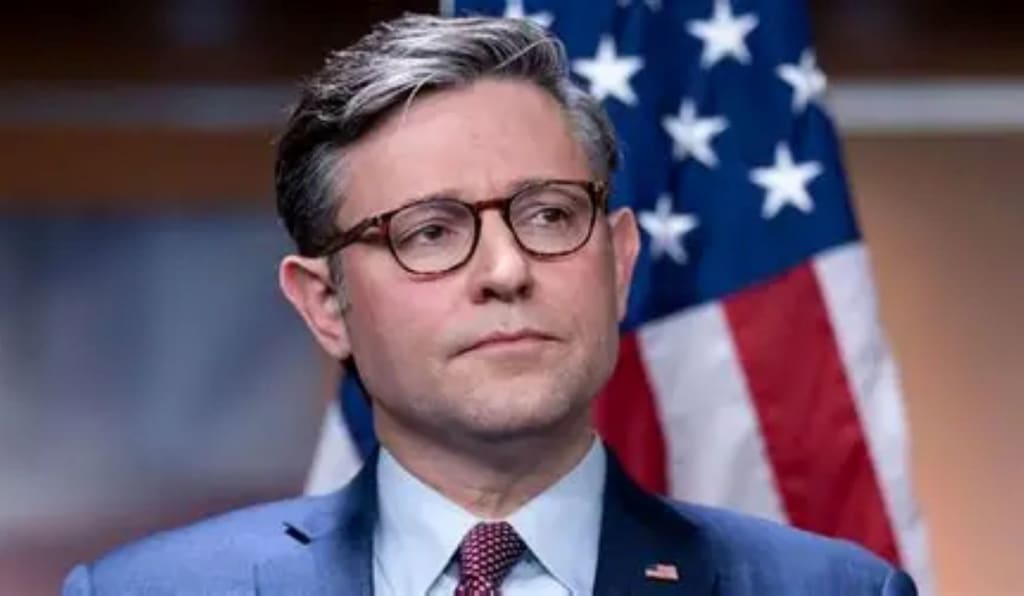
The Epstein Files Transparency Act has passed both the House and Senate with overwhelming bipartisan support—but Speaker Mike Johnson’s recent comments have raised concerns about a possible pocket veto, a rare and irreversible maneuver that could kill the bill without a formal rejection or override.
What Is a Pocket Veto?
A pocket veto is a constitutional tool that allows the President to effectively kill a bill without issuing a formal veto. It occurs when:
- The President receives a bill and takes no action (does not sign or return it) within 10 days (excluding Sundays), and
- Congress adjourns during that 10-day window, preventing the bill’s return.
Under Article I, Section 7 of the U.S. Constitution, if Congress is not in session to receive the President’s objections, the bill dies silently. Unlike a regular veto, a pocket veto cannot be overridden by Congress.
How This Applies to the Epstein Files Transparency Act
The Epstein Files Transparency Act passed the House 427–1 and was approved by unanimous consent in the Senate on November 18, 2025. It now awaits President Trump’s signature.
While Trump has publicly stated he supports the bill, Speaker Mike Johnson has expressed “deep disappointment” that the Senate passed it without amendments he had demanded—particularly those related to victim and whistleblower protections.
Johnson told reporters he and Trump “have concerns” about the bill’s current form. When asked whether Trump might veto it, Johnson replied, “I’m not saying that. I don’t know”.
This ambiguity has led to speculation that Johnson could attempt to adjourn Congress during the 10-day window, enabling Trump to issue a pocket veto.
Could Johnson Adjourn Congress?
As Speaker of the House, Johnson does not have unilateral power to adjourn Congress. Under Article I, Section 5 of the Constitution, neither chamber can adjourn for more than three days without the consent of the other. However, pro forma sessions—brief, often symbolic meetings—can be used to prevent adjournment and block a pocket veto.
If Johnson were to attempt adjournment, the Senate could refuse to consent or hold pro forma sessions to keep Congress technically in session. This would prevent a pocket veto and force Trump to either sign or issue a regular veto, which could then be overridden.
Given the bill’s overwhelming support, including from Senate Majority Leader John Thune and bipartisan House members like Rep. Thomas Massie, it’s unlikely the Senate would cooperate with any adjournment maneuver.
What Happens If a Pocket Veto Is Used?
If Trump uses a pocket veto:
- The bill dies permanently.
- Congress cannot override it.
- The DOJ would not be required to release the Epstein files.
- Survivors and transparency advocates would likely respond with public outrage and renewed legislative efforts.
This would also raise serious political risks for Trump and Johnson, as both have publicly claimed to support transparency. A pocket veto would contradict those statements and could be seen as an attempt to shield powerful figures from accountability.
Legal and Political Implications
- Legal ambiguity: Pocket vetoes are rare and often challenged. In Kennedy v. Sampson (1974), a federal court ruled that a pocket veto was invalid because Congress had not fully adjourned. However, the Supreme Court has not definitively ruled on all scenarios.
- Political fallout: Blocking the bill through a pocket veto would likely trigger bipartisan backlash and media scrutiny, especially given the bill’s near-unanimous support.
- Survivor response: Epstein survivors and advocacy groups have already warned against political manipulation. A pocket veto would be seen as a betrayal of their fight for justice.
Conclusion
While the Epstein Files Transparency Act has cleared Congress, its fate now rests with President Trump—and potentially with Speaker Mike Johnson’s procedural choices. A pocket veto remains a theoretical risk, but one that could be blocked by Senate action and public pressure.
If used, it would not only kill the bill but undermine the credibility of those who claim to support transparency. The next 10 days will be critical.
Sources:
- Newsweek – Will Donald Trump Veto Epstein Files Bill?
- New Republic – Mike Johnson Gives Away the Game
- Politico – Thune Denies Johnson’s Demand for Changes
- The Hill – Johnson Says He’ll Vote for Epstein Files Bill
- Congress.gov – Vetoes: In Brief
About the Creator
Julie O'Hara - Author, Poet and Spiritual Warrior
Thank you for reading my work. Feel free to contact me with your thoughts or if you want to chat. [email protected]
Keep reading
More stories from Julie O'Hara - Author, Poet and Spiritual Warrior and writers in The Swamp and other communities.
Do We Need to Implement a Media Blackout Against Trump?
A unilateral press blackout on Donald Trump—where no outlet reports on him, no journalist engages with his social media, and no commentator amplifies his provocations—would be a radical but potentially transformative act of media resistance. It would deny him the oxygen of attention, which he has weaponized for years to dominate headlines, distract from accountability, and manipulate public discourse.
By Julie O'Hara - Author, Poet and Spiritual Warrior3 months ago in The Swamp
Gold Plunge Deepens as Traders Unwind Bets
Gold prices plunged further this week as traders rushed to unwind speculative bets, sending the precious metal to levels not seen in recent months. Analysts attribute the decline to a combination of a strengthening U.S. dollar, rising Treasury yields, and a shift in investor sentiment away from traditional safe-haven assets.
By Salaar Jamaliabout 7 hours ago in The Swamp
Why Iran’s Response to a U.S. Attack Could Be Different This Time
As tensions rise between the United States and Iran — with U.S. warnings, military buildups, and political posturing on both sides — analysts are asking a key question: If a U.S. attack were to occur, why might Iran’s response differ from past patterns? The answer lies in an unprecedented blend of internal instability, external pressures, and strategic rethinking within Iran’s leadership. 1. A More Volatile Internal Political Landscape Unlike previous confrontations, Iran is currently grappling with significant domestic unrest. Massive anti‑government protests have shaken the country and led to thousands of deaths, according to activist reports. � albaniandailynews.com Previous military responses — such as the more measured retaliation after U.S. strikes in June 2025 — were partly designed to project resolve while avoiding immediate escalation. But today’s leaders face internal pressures that could encourage a faster and more forceful response if attacked. Some officials might see rapid retaliation as a way to unify public sentiment and distract from persistent domestic challenges. � albaniandailynews.com And at times of internal strain, political leaders may feel they have less room to maneuver — making sudden retaliation appear as the only viable way to demonstrate strength. 2. More Direct and Uncompromising Rhetoric from Iran’s Top Officials Iranian military and political statements have become significantly less restrained. In contrast to past conflicts where responses were calibrated to signal only limited retaliation, current official statements emphasize that any attack — limited or otherwise — would be treated as an “all‑out war.” � trtworld.com Brigadier General Mohammad Akraminia, a spokesperson for Iran’s army, said that any assault would be met with a “decisive and swift response,” stressing that Iranian forces have been instructed to react “in real time and without delay.” � Anadolu Ajansı This shift in tone indicates that Tehran may no longer prefer delayed or symbolic retaliation, as it has at times in the past, but instead could opt for an immediate, robust military response. 3. Strengthened Military Readiness and Broader Arsenal Since the previous confrontations, Iran has invested in expanding and upgrading its military capabilities — including missile systems, drones, and naval defenses. Reports suggest that Iran’s armed forces consider their level of readiness significantly heightened compared to previous years. � A News This improved readiness means Tehran may feel capable of responding swiftly and across multiple fronts if attacked. That includes: Missile and drone strikes against U.S. forces or bases in the Middle East Targeting U.S. naval assets, including aircraft carriers Cyber and asymmetric responses that could challenge U.S. infrastructure or regional interests � Anadolu Ajansı +1 The combination of expanded capabilities and ideological resolve suggests a response could be broader and more complex than what the United States has observed during previous stand‑offs. 4. Regional Considerations and Proxy Dynamics Iran no longer faces tensions with the U.S. as a solely bilateral issue. Its regional network — including allied militias and proxy forces — increases the potential scope of any retaliation. Gulf states, Israel, and U.S. partners in the region could be drawn into response scenarios indirectly or directly, heightening the risk that conflict spreads beyond Iran itself. � Le Monde.fr This dynamic means Tehran may be preparing not just a direct reply but a multi‑layered response involving both its conventional forces and allied groups — a stark contrast to earlier, more constrained exchanges. 5. Diplomatic Shifts and External Pressures The international environment also affects Iran’s calculus. The European Union’s designation of the Iranian Revolutionary Guard Corps (IRGC) as a terrorist organization has increased diplomatic isolation and pressure on Tehran. � The Guardian At the same time, Iranian officials have expressed conditional openness to diplomacy, preferring negotiations on an equitable footing rather than talks tied to defense‑capability restrictions. � Reuters This mix of harsher international pressure and limited diplomatic avenues could push Tehran toward a more assertive defensive posture, interpreting an attack as both a national and ideological threat. 6. Lessons from Past Conflicts and “Deterrence Signals” In the 2025 U.S. strikes on Iranian nuclear facilities, Iran retaliated with a missile attack on U.S. forces the next day — a response seen as both a warning and a signal that it would retaliate without triggering full‑scale war. � WHYY But current rhetoric from Iranian leaders suggests that narrow or symbolic retaliation may no longer suffice to preserve deterrence. They have repeatedly framed any attack as potentially equal to an act of war, hinting they may escalate more quickly than before to avoid appearing weak — a legacy of missed deterrence opportunities and the perceived costs of prolonged domestic unrest. � trtworld.com 7. Risk of Rapid Escalation: What Could Change the Game Past patterns of measured, delayed, or proportionate retaliation were rooted in a desire to avoid full‑blown conflict. Now, Tehran’s leaders may feel: They must reassert deterrence immediately Internal political legitimacy depends on a strong posture Regional allies expect decisive action That means Iran’s response — if faced with a U.S. attack — is more likely to be immediate, forceful, and multifaceted, involving simultaneous military, cyber, and proxy responses. Such escalation dynamics differ fundamentally from earlier periods when Tehran carefully calibrated its responses to avoid widening wars, making today’s potential conflict far more unpredictable and dangerous. Conclusion: A Turning Point in Strategic Calculus If the United States were to strike Iran, Tehran’s response could be dramatically different than in the past. The combination of: internal instability, harder official rhetoric, enhanced military capabilities, complex regional alliances, and heightened international isolation points toward a scenario where Iran might respond swiftly, decisively, and broadly. This shift heightens the stakes for U.S. policymakers and global security. In a world where miscalculation can quickly spiral into wider conflict, understanding these evolving dynamics isn’t just strategic — it’s essential.
By Zahid Hussain3 days ago in The Swamp
After the Storm
After the storm of winter snow there sat a small bear by the name Ted, of course. He loves the snow and likes to roll around in it making all sorts of trails and whatever he has a mind to do. He wondered where all the people are, but in a way, he is hoping that they are all snug in the homes maybe drinking hot chocolate-one of his favorite drinks with mini-marshmallows and eating something homemade for he likes this winter wonderland all to himself to romp and play and maybe even catch some fish down by the river.
By Mark Graham4 days ago in Fiction



Comments
There are no comments for this story
Be the first to respond and start the conversation.