
Iran Suggests It Could Dilute Highly Enriched Uranium for Sanctions Relief
Tehran signals renewed diplomatic flexibility as nuclear tensions rise and global powers weigh sanctions relief against nonproliferation risks
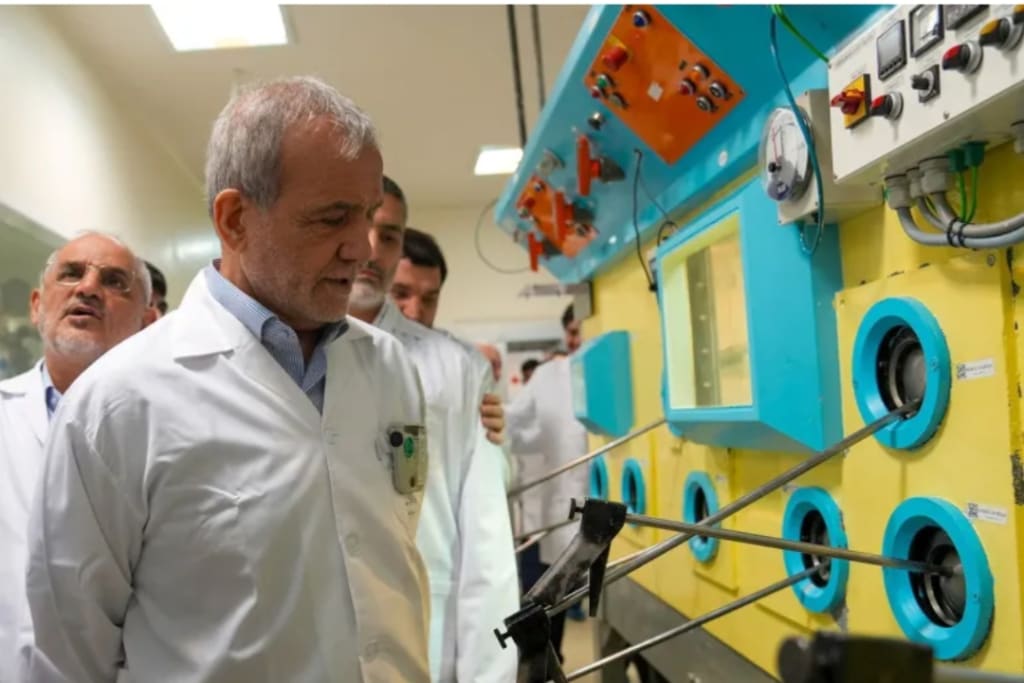
Iran has indicated that it may be willing to dilute its stockpile of highly enriched uranium (HEU) in exchange for relief from crippling international sanctions, a move that has reignited diplomatic debate over the future of its nuclear program and the broader stability of the Middle East. The suggestion, made amid mounting economic pressure and regional uncertainty, represents one of the clearest signals in recent months that Tehran could be open to compromise—if its core demands are met.
A Strategic Signal, Not a Concession—Yet
Iran’s nuclear activities have long been a focal point of international concern. Since the collapse of the 2015 Joint Comprehensive Plan of Action (JCPOA), commonly known as the Iran nuclear deal, Tehran has gradually expanded its uranium enrichment program. It has enriched uranium to levels far beyond the JCPOA’s 3.67% cap, reaching levels close to weapons-grade, though Iranian officials maintain the program is for peaceful purposes.
By suggesting it could dilute highly enriched uranium—essentially reducing the enrichment level to make it unsuitable for immediate weapons use—Iran is signaling flexibility without committing to a full rollback. This distinction matters. Dilution is reversible and less drastic than exporting enriched material or dismantling centrifuges, options previously discussed under the JCPOA framework.
For Tehran, this proposal appears less like a concession and more like a bargaining chip aimed at reviving negotiations stalled by mutual distrust.
Sanctions Pressure and Domestic Realities
Economic sanctions remain one of the most powerful levers shaping Iran’s foreign policy. U.S. and international restrictions on oil exports, banking, shipping, and trade have severely constrained Iran’s economy, fueling inflation, currency devaluation, and domestic discontent.
By floating the idea of diluting enriched uranium, Iranian leaders are likely testing whether the West—particularly the United States and European powers—is prepared to offer tangible sanctions relief. Tehran has repeatedly argued that past negotiations failed because sanctions relief was either insufficient or easily reversible, while Iran’s nuclear concessions were not.
From Iran’s perspective, any dilution would need to be matched by immediate and verifiable economic benefits, such as access to frozen assets, restored oil exports, or eased financial restrictions.
How the International Community Is Likely to Respond
Western governments and the International Atomic Energy Agency (IAEA) are expected to approach Iran’s suggestion with caution. While dilution of HEU would reduce immediate proliferation risks, it would not fully address concerns about Iran’s growing technical capability, advanced centrifuges, and reduced cooperation with inspectors.
For Washington, the proposal presents both an opportunity and a dilemma. Accepting a partial step could lower tensions and buy time, but critics argue it may legitimize Iran’s nuclear advances without guaranteeing long-term compliance. European countries, eager to avoid escalation, may view the move more favorably, especially if it restores some transparency and reduces the risk of a nuclear crisis.
Israel, meanwhile, has consistently warned that Iran’s enrichment progress represents an existential threat. Any deal perceived as weak or temporary could heighten regional tensions and increase the risk of unilateral action.
The Dilution Debate: Symbolic or Substantive?
At the heart of the issue is whether diluting highly enriched uranium meaningfully improves nonproliferation outcomes. Supporters argue that reducing enrichment levels would lengthen Iran’s “breakout time”—the time needed to produce enough weapons-grade material for a nuclear device—thereby enhancing security and opening space for diplomacy.
Skeptics counter that dilution alone does little if Iran retains the infrastructure and knowledge to re-enrich uranium quickly. Without limits on centrifuge production, enrichment capacity, and stockpile size, they argue, the move could amount to a symbolic gesture rather than a substantive reversal.
This debate underscores why any sanctions relief tied to dilution would likely be incremental and reversible, mirroring Iran’s own approach.
Regional and Global Implications
Iran’s suggestion comes at a time of heightened geopolitical strain. Conflicts in the Middle East, shifting alliances, and global energy market volatility have amplified the stakes of nuclear diplomacy. A limited agreement centered on uranium dilution could ease immediate tensions and stabilize oil markets by allowing more Iranian crude to reach global buyers.
However, failure to translate this signal into a structured agreement could have the opposite effect, accelerating Iran’s nuclear advances and increasing the likelihood of confrontation.
A Narrow Diplomatic Window
Iran’s proposal to dilute highly enriched uranium in exchange for sanctions relief highlights a narrow but significant diplomatic opening. It suggests Tehran is willing to engage, but only on terms that deliver concrete economic gains. For the international community, the challenge lies in determining whether this offer can be shaped into a credible, enforceable step toward de-escalation—or whether it risks entrenching a cycle of temporary fixes and renewed tensions.
As history has shown, progress on Iran’s nuclear file rarely comes from sweeping breakthroughs. Instead, it often emerges from incremental steps, fragile compromises, and sustained diplomacy. Whether this latest signal becomes a turning point or another missed opportunity will depend on how quickly—and seriously—both sides choose to engage.
About the Creator
Keep reading
More stories from Sadaqat Ali and writers in The Swamp and other communities.
Silver (XAG) Forecast: Silver Rally Takes Off as Dollar Weakens and Buyers Return
Silver is back in the spotlight. After months of choppy, directionless trading, the precious metal has staged a notable comeback, with prices climbing as the U.S. dollar weakens and buyers re-enter the market. The renewed rally in silver (XAG) reflects a mix of macroeconomic shifts, technical breakouts, and growing optimism around industrial demand—factors that together are reshaping the outlook for the metal in the weeks ahead.
By Sadaqat Aliabout 19 hours ago in The Swamp
Why Black History Matters in America?
The United States of America is celebrating their 250th anniversary in 2026. I'm proud to be an American and as someone who was born here, I wouldn't imagine myself living anywhere else. This is a country where opportunities are possible. Where anyone can be successful in anything they desire to do. Equality, community, and togetherness are the backbones of what America is and should be about. However, we have an administration who wants to erase and disregard those who have made positive, meaningful impacts in our country, specifically Black figures, such as Martin Luther King, Jr., Rosa Parks, and Maya Angelou. President Trump and his administration have been constantly complaining and fighting against what they call the "Woke agenda". They use this excuse as a distraction from other issues they refuse to address, such as the high cost of living, climate change, and inflation. That equality is dividing America, when in reality, it's bringing us together. Being woke is not tied to a specific political party. No matter where you stand on the political spectrum, you can still care about other people and their plights. Compassion and empathy for others isn't tied to a political party, either. We were taught as children to treat others the way we want to be treated and not judge others because they're different from us. Caring about others isn't a personal attack on your beliefs. It doesn't make you any less of a person. People who are easily offended over African American figures, past or present, or anything related to it, are grasping at straws. Current and future generations need to know who people like Harriet Tubman and Shirley Chisholm were, especially in the classroom. Black History is part of American History. It should be recognized, not hidden or forgotten. Besides, you can't shield children from everything, just because your feelings are easily hurt.
By Mark Wesley Pritchard 9 days ago in The Swamp
Gulf Unity Cracks: Bahrain on the Frontline
For decades, the Gulf Cooperation Council (GCC) has presented itself as a united bloc bound by shared security concerns, economic interests, and political alliances. Yet recent developments suggest that this unity is under growing strain. Bahrain, a small island nation strategically located in the Persian Gulf, has increasingly found itself on the frontline of regional tensions, highlighting cracks in Gulf unity and exposing deeper divisions among Arab states. Bahrain’s position is unique. It hosts the United States Navy’s Fifth Fleet and lies just across the narrow waters from Iran, a regional power with which several Gulf states have long had uneasy relations. While Saudi Arabia and the United Arab Emirates remain Bahrain’s closest allies, shifting diplomatic priorities across the Gulf have placed Manama in a difficult balancing act between security dependence and political autonomy. A Changing Regional Landscape The Gulf region is undergoing a period of realignment. Saudi Arabia and Iran have recently taken steps to restore diplomatic relations after years of hostility, mediated by China. The UAE has also pursued cautious engagement with Tehran, prioritizing trade and regional stability over confrontation. These moves have softened tensions in some parts of the Gulf but have also created uncertainty for Bahrain, which continues to view Iran as its primary security threat. Bahrain’s leadership has consistently accused Tehran of interfering in its internal affairs, particularly during periods of unrest. These concerns remain central to Manama’s foreign policy outlook. While other Gulf states explore détente with Iran, Bahrain has maintained a more confrontational stance, reinforcing its reliance on Western allies and Saudi backing. This divergence in approaches has exposed fractures within the GCC, an organization originally formed to counter external threats and promote unity among its six members: Bahrain, Saudi Arabia, the UAE, Kuwait, Oman, and Qatar. Normalization and Its Consequences Another source of strain has been Bahrain’s normalization of relations with Israel under the Abraham Accords. While the UAE and Morocco also joined the agreement, the move remains controversial in the Arab world, especially amid continuing violence in Gaza and the broader Israeli-Palestinian conflict. For Bahrain, normalization was framed as a strategic decision to strengthen security cooperation and diversify diplomatic partnerships. However, it has also placed the country under increased scrutiny from regional actors and segments of its own population, many of whom strongly support the Palestinian cause. Some Gulf states have taken more cautious positions, emphasizing humanitarian concerns and calling for ceasefires rather than expanding ties with Israel. This divergence has further highlighted the lack of a unified Gulf stance on major geopolitical issues. Domestic Pressures and Regional Rivalries Bahrain’s internal dynamics add another layer of complexity. The country has experienced political unrest in the past, and authorities remain wary of external influence that could inflame domestic tensions. This has made security cooperation with allies such as Saudi Arabia and the United States a top priority. Yet this dependence also limits Bahrain’s diplomatic flexibility. While larger Gulf states can pursue multi-directional foreign policies, Bahrain’s smaller size and strategic vulnerabilities mean it must tread carefully. Any shift in regional alliances could leave it exposed if broader Gulf unity weakens. Analysts say Bahrain’s role as a frontline state makes it a barometer of wider regional tensions. “When relations among Gulf countries become strained, Bahrain feels it first,” said one regional expert. “Its security is closely tied to the political decisions of others.” The Future of GCC Unity The current moment raises questions about the future of the GCC as a cohesive bloc. While the organization remains intact and continues to coordinate on economic and security matters, differences in foreign policy priorities are becoming more visible. Kuwait and Oman traditionally maintain neutral stances and act as mediators, while Qatar has pursued an independent diplomatic path since the end of the 2017 blockade. Saudi Arabia and the UAE, once closely aligned, now show signs of strategic divergence in areas such as energy policy and regional diplomacy. Bahrain, firmly anchored to Saudi support, appears increasingly isolated in its hardline positions. Despite these challenges, Gulf leaders continue to stress the importance of cooperation. Recent summits have focused on economic integration, infrastructure development, and joint responses to security threats. However, behind closed doors, debates over Iran, Israel, and relations with major powers like China and the United States remain unresolved. A Region in Transition Bahrain’s situation illustrates the broader transformation underway in the Middle East. The era of rigid alliances is giving way to more fluid and pragmatic relationships driven by economic interests and national security calculations. For Bahrain, this transition is particularly delicate, as it must navigate between traditional alliances and emerging regional realities. Whether Gulf unity can adapt to these changes remains uncertain. What is clear is that Bahrain stands at the intersection of competing visions for the region’s future. Its choices, shaped by geography and history, will continue to reflect the shifting balance of power in the Gulf. As regional diplomacy evolves, Bahrain’s role on the frontline serves as a reminder that unity in the Gulf is no longer guaranteed. Instead, it is being tested by a new era of strategic competition, cautious reconciliation, and unresolved conflicts that continue to shape the Middle East.
By Fiaz Ahmed 5 days ago in The Swamp
Our Song
Evening has given way to night. Gently, I settle next to you on the comfortable, old love seat and reach for your hand. You snatch it away, again. It cuts me to the quick, but I hide the pain, understanding that the reaction is but part of your demented state. Since the accident, your presence here in our cozy home has been clouded by a haze I can't see. Nevertheless, I feel the frigidity of your expressions and it serves as an excruciating reminder of the immeasurable distance between us.
By Dana Crandell6 days ago in Fiction


Comments
There are no comments for this story
Be the first to respond and start the conversation.