
France Makes First Interception Targeting Small Boat Crossings to the UK
A controversial move raises urgent questions about safety, law, and the future of Channel crossings

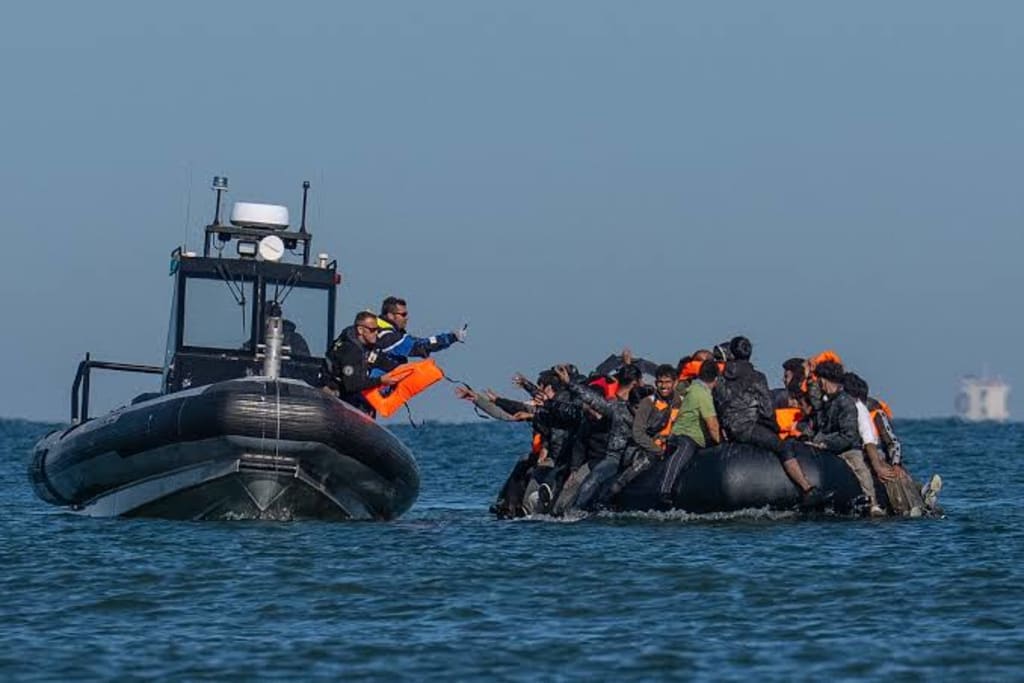
For the first time, French authorities have directly intercepted a small boat attempting to cross the English Channel toward the United Kingdom, marking a significant shift in Europe’s approach to one of the most sensitive migration routes in the world. The move signals a tougher stance by France amid growing political pressure, rising migration numbers, and increasing cooperation with the UK to curb dangerous Channel crossings.
A Turning Point in Channel Policing
Until now, French policy largely focused on preventing migrants from launching boats from beaches rather than stopping them once they were already at sea. Once a vessel had left the shore, intervention was limited, largely due to legal interpretations around maritime safety and international law. The recent interception breaks with that precedent, suggesting that France is now willing to act earlier and more decisively to prevent crossings deemed unsafe.
The intercepted vessel was reportedly a small, overcrowded boat carrying migrants hoping to reach British shores. French maritime and border police stepped in shortly after launch, escorting the boat back and ensuring passengers were brought safely to land. Authorities emphasized that the operation was carried out on humanitarian grounds, citing concerns over passenger safety and the risks posed by rough seas.
Why the Shift Now?
Several factors appear to have pushed France toward this policy change. Crossings of the Channel have surged in recent years, making it one of the busiest and deadliest irregular migration routes in Europe. Despite tighter patrols, migrant-smuggling networks have adapted quickly, using smaller, flimsier boats and launching from more remote locations to evade detection.
Political pressure has also intensified. In the UK, migration remains a dominant public issue, with successive governments urging France to take stronger action. Paris, meanwhile, faces domestic criticism over camps along the northern coast and the humanitarian toll of repeated crossings. The interception reflects growing alignment between the two countries on the need for firmer enforcement.
Legal and Humanitarian Concerns
The decision has reignited debate over maritime law and migrant rights. Critics argue that intercepting boats at sea could endanger lives if not handled carefully. International conventions generally prioritize rescue at sea, and humanitarian groups warn that aggressive interdictions could push smugglers to take even riskier routes or launch in worse weather conditions.
French officials, however, maintain that the operation complied fully with safety obligations. They stress that the goal is not punishment but prevention—stopping dangerous journeys before they escalate into life-threatening emergencies. Authorities also argue that allowing unseaworthy boats to continue toward the UK poses greater risks to migrants and rescue crews alike.
Impact on Smuggling Networks
Smuggling groups closely watch enforcement changes, and experts believe this interception could disrupt established patterns—at least temporarily. If France consistently enforces interceptions at sea, smugglers may be forced to rethink their tactics, potentially increasing fees or attempting longer, more perilous routes.
At the same time, enforcement alone is unlikely to eliminate crossings. Migration analysts point out that demand remains strong due to conflict, economic instability, and limited legal migration pathways. Without broader solutions addressing asylum processing, labor migration, and international cooperation, crossings may continue despite tougher policing.
France–UK Cooperation Deepens
This move fits into a broader framework of Franco-British collaboration. The UK has provided funding for enhanced surveillance, patrol boats, and personnel along the French coast. Joint intelligence sharing has increased, and both sides have pledged to dismantle smuggling networks operating across borders.
The interception may also influence future agreements. UK officials have long pushed for France to intervene more forcefully before boats reach international waters. France’s willingness to test this approach could pave the way for expanded joint operations, though it will likely face legal scrutiny and political debate on both sides of the Channel.
What Comes Next?
Whether this interception becomes standard practice remains uncertain. Much will depend on legal challenges, public reaction, and operational outcomes. If the policy reduces crossings without increasing harm, France may formalize it as part of its maritime enforcement strategy. If, however, it leads to dangerous confrontations or negative humanitarian consequences, authorities may be forced to reconsider.
For now, the incident represents a symbolic and practical shift in Europe’s migration response. It underscores the growing urgency felt by governments confronting irregular migration and highlights the difficult balance between border control, international law, and human safety.
A Defining Moment
France’s first interception of a small boat heading to the UK marks a defining moment in Channel migration management. It reflects changing political realities, deeper cross-border cooperation, and a willingness to reinterpret long-standing practices. As migration pressures persist, this decision may shape how Europe handles one of its most visible and contentious challenges—where borders, law, and humanity collide on the open sea.
About the Creator
Fiaz Ahmed Brohi
I am a passionate writer with a love for exploring and creating content on trending topics. Always curious, always sharing stories that engage and inspire.
Keep reading
More stories from Fiaz Ahmed Brohi and writers in The Swamp and other communities.
The Entire Functioning Royal Navy Attack Sub Force Is Headed for Australia: What It Means for Global Security
In a move that underscores a dramatic shift in global defense priorities, reports that the entire operational attack submarine force of the Royal Navy is heading toward Australia have captured international attention. While the deployment is temporary and mission-specific, its symbolism is powerful. It reflects not only the deepening military partnership between the United Kingdom and Australia but also a broader realignment of naval strategy toward the Indo-Pacific—now widely regarded as the world’s most critical geopolitical theater. A Rare and Strategic Deployment The Royal Navy’s attack submarines, powered by nuclear propulsion and designed for stealth, intelligence gathering, and strike missions, represent one of Britain’s most potent military assets. Sending the entirety of the operational fleet to operate alongside Australian and allied forces is an extraordinary decision, one rarely taken in peacetime. Such a deployment signals confidence in alliance cooperation and a calculated willingness to project power far from home waters. It also reflects the reality that Europe’s traditional naval focus—primarily the North Atlantic—is no longer the sole priority. Strategic attention is increasingly being redirected toward the Indo-Pacific, where maritime trade routes, contested waters, and rising regional competition dominate security thinking. The AUKUS Factor This move cannot be understood without considering AUKUS, the trilateral security partnership between Australia, the United Kingdom, and the United States. AUKUS aims to enhance military interoperability, share advanced technologies, and strengthen collective deterrence in the region. For Australia, hosting Royal Navy attack submarines provides invaluable experience in operating alongside nuclear-powered vessels—particularly significant as the country prepares to acquire its own nuclear-powered submarines under the AUKUS framework. For the UK, it reinforces its role as a global military actor rather than a purely European one. This deployment also allows British crews to gain operational familiarity with Indo-Pacific conditions, vast distances, and joint command structures—knowledge that will be essential in future coalition operations. Why the Indo-Pacific Matters The Indo-Pacific has emerged as the epicenter of 21st-century geopolitics. It is home to some of the world’s busiest shipping lanes, critical undersea infrastructure, and unresolved territorial disputes. Major powers are increasingly focused on maintaining freedom of navigation and ensuring stability in international waters. By positioning its submarine force in Australia, the UK is signaling alignment with allies who view maritime security in the region as a shared responsibility. Submarines, due to their stealth and endurance, are particularly suited to monitoring contested waters, deterring aggression, and gathering intelligence without escalating tensions. Domestic and Strategic Implications for the UK While the deployment highlights Britain’s global reach, it also raises questions at home. Some critics argue that sending all operational attack submarines so far from UK waters could leave gaps in domestic maritime defense. Supporters counter that modern security threats are global and that deterrence is most effective when allies act together beyond national borders. From a strategic standpoint, the move demonstrates confidence in intelligence-sharing arrangements and allied coverage of the North Atlantic while assets are deployed elsewhere. It also reinforces the UK’s commitment to being a credible partner in collective security efforts, even amid stretched defense resources. Australia’s Growing Role For Australia, the presence of the Royal Navy’s attack submarine force marks a significant step in its transformation into a central hub for allied naval operations in the Indo-Pacific. It strengthens Australia’s strategic relevance and accelerates its learning curve as it prepares for a future fleet of advanced submarines. The deployment also sends a clear message: Australia is not acting alone. Its security concerns are shared by major allies willing to commit their most advanced capabilities to the region. A Message Beyond the Region Perhaps most importantly, this move is symbolic. It signals that alliances are evolving, geography is no longer a constraint, and naval power remains a cornerstone of deterrence in an uncertain world. The deployment is less about immediate conflict and more about shaping perceptions—demonstrating unity, readiness, and resolve. Conclusion The decision to send the Royal Navy’s entire functioning attack submarine force to Australia is more than a routine military exercise. It is a statement of strategic intent in a rapidly changing global landscape. By deepening ties with Australia and reinforcing its Indo-Pacific presence, the UK is redefining its role as a global security player. For Vocal Media readers, this moment represents a clear example of how modern geopolitics is unfolding beneath the waves—quietly, strategically, and with long-term consequences for global stability.
By Fiaz Ahmed Brohi13 days ago in The Swamp
Silver Mining Stocks: Why The $60 Breakthrough Could Unlock Major Investment Returns in 2025-2026
Silver mining stocks are back in the spotlight as analysts predict that a breakthrough in silver prices to the $60 per ounce level could unlock substantial investment returns in 2025-2026. With silver serving as both a precious metal and an industrial commodity, its performance has a direct impact on the profitability of mining companies, creating potential opportunities for savvy investors.
By Salaar Jamalia day ago in The Swamp
Canadian Mining Company Confirms Mass Kidnapping of Employees in Concordia, Sinaloa
A Canadian mining company has confirmed the mass kidnapping of employees at one of its operations in Concordia, Sinaloa, Mexico, sending shockwaves through the mining industry and raising urgent questions about worker safety in high-risk regions. The company announced that multiple employees were abducted by armed individuals, prompting immediate coordination with local authorities and national security agencies to ensure the safe return of its personnel.
By Salaar Jamalia day ago in The Swamp




Comments
There are no comments for this story
Be the first to respond and start the conversation.