
Former CNN Journalist Don Lemon Attends 2026 Grammys Following Arrest Over Minnesota Protest
Grammys red carpet moment follows controversial protest arrest Lemon’s return to the spotlight draws mixed reactions From street protest to music’s biggest night Arrest and awards collide in high-profile comeback Journalism, activism, and celebrity intersect at the Grammys Supporters praise resilience as critics question timing A symbol of growing political expression in entertainment

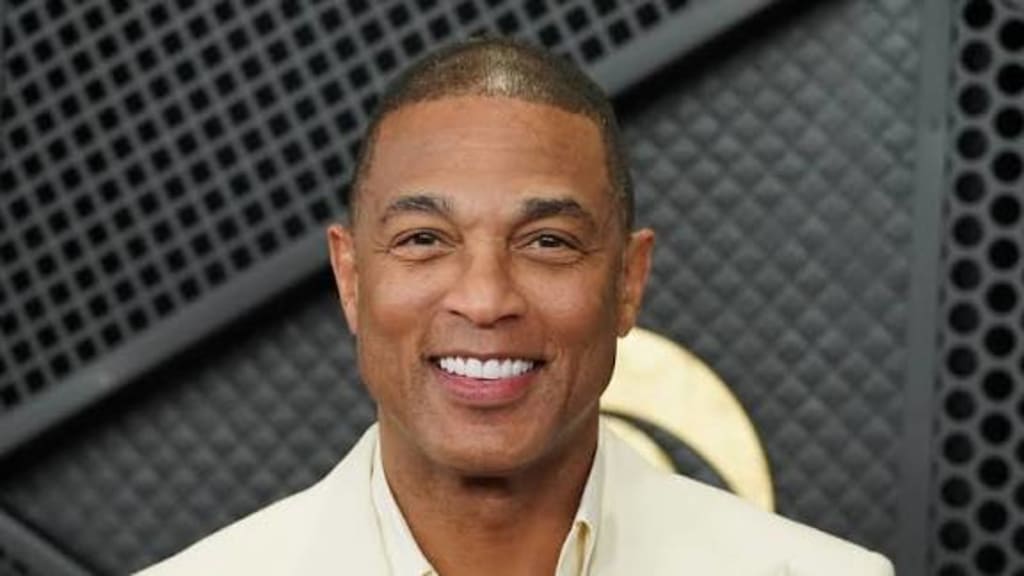
Former CNN anchor and journalist Don Lemon made a high-profile public appearance at the 2026 Grammy Awards, just weeks after his arrest during a protest in Minnesota drew national attention and sparked debate about celebrity activism and freedom of expression.
Lemon, who left CNN in 2023 and has since pursued independent media projects, was photographed walking the red carpet alongside prominent figures from the entertainment industry. His appearance marked his first major public event since authorities confirmed he had been briefly detained at a demonstration opposing new federal immigration enforcement measures in Minneapolis earlier this year.
The incident and his presence at the Grammys have placed Lemon once again at the center of a polarized conversation about the role of journalists and public figures in political protests.
The Minnesota Protest and Arrest
According to police statements, Lemon was arrested during a large protest that formed near a federal building in downtown Minneapolis. Law enforcement officials said demonstrators had blocked traffic and refused repeated orders to disperse. Lemon was cited for failure to comply with lawful orders and released later the same day without serious charges.
Witnesses said Lemon had joined a group of activists advocating for immigrant rights and police accountability. Video circulating on social media shows him standing near the front of the crowd and speaking with officers before being escorted away.
Lemon later addressed the arrest on his social media platforms, describing it as peaceful and emphasizing that he had not engaged in violence or property damage.
“I was exercising my right to protest alongside people who believe in justice and reform,” Lemon wrote. “This moment is not about me—it’s about the voices being heard.”
His legal team confirmed that the matter remains under review by local authorities and that Lemon intends to contest any citation issued during the incident.
Grammys Appearance Sends a Message
Lemon’s attendance at the Grammys immediately became a talking point across political and entertainment media. Some supporters praised his willingness to continue public life despite controversy, viewing his appearance as a statement of resilience and commitment to free expression.
Others questioned whether the Grammys stage was an appropriate venue for someone recently involved in a protest-related arrest.
“He’s blurring the line between activism and celebrity spectacle,” said one media analyst. “It raises questions about whether social movements are being amplified or diluted by star power.”
Lemon did not speak publicly on the red carpet about the protest but told one interviewer that art and social responsibility are deeply connected.
“Music has always reflected struggle, hope, and truth,” he said. “Tonight is about honoring voices that move culture forward.”
A Complicated Relationship With the Public
Since his departure from CNN, Lemon has sought to redefine himself as an independent commentator and podcast host, often engaging with controversial political and social topics. His outspoken style has continued to draw both praise and criticism.
For some, his arrest in Minnesota reinforced his image as a journalist willing to put himself on the front lines of social conflict. For others, it raised concerns about whether former mainstream journalists risk undermining professional neutrality when they take part in street demonstrations.
Media ethicists note that Lemon no longer represents a major news organization and therefore operates under different expectations.
“As a private citizen, he has the right to protest,” said a professor of journalism ethics. “But public trust is fragile. High-profile figures must be aware of how their actions shape perception.”
Protest, Policing, and National Debate
The Minnesota demonstration occurred amid a wave of nationwide protests related to immigration policy and law enforcement practices. Activist groups have organized rallies in several states, calling for changes to detention procedures and increased transparency in federal operations.
Authorities in Minneapolis defended their handling of the protest, stating that arrests were made only after demonstrators blocked emergency vehicle routes and ignored repeated warnings.
“Our priority was public safety,” a police spokesperson said. “We respect the right to protest, but that right does not extend to disrupting critical services.”
Civil liberties organizations have criticized what they describe as aggressive enforcement tactics, arguing that arrests of nonviolent demonstrators risk chilling lawful expression.
Lemon’s involvement has amplified attention to these debates, transforming a local protest into a national media story.
Reaction From the Entertainment Industry
Within the music and entertainment world, reactions to Lemon’s Grammys appearance were mixed. Some artists expressed solidarity with his activism, while others avoided commenting altogether.
One Grammy attendee, speaking anonymously, said, “The night is supposed to celebrate music, not politics. But politics is everywhere now. You can’t separate the two.”
The Recording Academy declined to comment directly on Lemon’s attendance, stating only that the Grammys welcome a wide range of guests from media, culture, and advocacy communities.
Looking Ahead
Lemon’s legal situation remains unresolved, and further proceedings could shape how the public interprets both his protest and his Grammy appearance. His supporters argue that the arrest demonstrates courage and moral conviction. Critics say it reflects a pattern of controversy that distracts from serious policy discussion.
For Lemon himself, the moment appears to represent a turning point in his post-network career.
“We’re living in a time when silence feels like consent,” he said in a recent online broadcast. “I choose to speak and stand, even when it’s uncomfortable.”
Conclusion
Don Lemon’s appearance at the 2026 Grammy Awards following his arrest at a Minnesota protest underscores the increasingly blurred line between journalism, activism, and celebrity. The episode highlights broader tensions in American society over protest rights, media influence, and political expression in cultural spaces.
Whether viewed as a principled stand or a provocative gesture, Lemon’s actions have reignited debate about how public figures navigate moments of controversy. As both his legal case and his independent media career continue to unfold, the intersection of protest and performance will remain a defining chapter in his evolving public story.
About the Creator
Fiaz Ahmed
I am Fiaz Ahmed. I am a passionate writer. I love covering trending topics and breaking news. With a sharp eye for what’s happening around the world, and crafts timely and engaging stories that keep readers informed and updated.
Keep reading
More stories from Fiaz Ahmed and writers in The Swamp and other communities.
Federal Courts Undercut Trump’s Mass Deportation Campaign
Federal courts across the United States have emerged as a major obstacle to former President Donald Trump’s renewed push for large-scale deportations, issuing rulings that have slowed or blocked key elements of his immigration agenda. As Trump campaigns on promises to carry out what he calls the largest deportation operation in U.S. history, judges are increasingly signaling that constitutional limits and existing immigration law will constrain how far such efforts can go. Recent court decisions have focused on due process rights, executive authority, and the legality of sweeping enforcement measures that bypass individual case reviews. Together, these rulings have raised serious questions about whether a mass deportation campaign can be implemented as envisioned without violating federal law. Legal Barriers to Broad Enforcement At the heart of the legal conflict is the Trump team’s proposal to expand fast-track deportations and restrict asylum access through executive action. Several federal judges have ruled that such measures cannot override congressional statutes or long-standing protections for migrants seeking legal review of their cases. In one prominent case, a federal appeals court blocked an effort to widen “expedited removal” procedures that would allow immigration authorities to deport individuals without full hearings. The court argued that eliminating access to immigration courts would undermine due process and expose individuals to wrongful removal. “The government cannot shortcut constitutional protections in the name of efficiency,” the ruling stated. Legal scholars say this decision reflects a broader trend: courts are more willing to scrutinize executive power over immigration than in previous decades. Asylum and Humanitarian Protections Another major point of contention involves restrictions on asylum. Trump has repeatedly pledged to end what he calls “abuse” of the asylum system by tightening eligibility and removing migrants more quickly. However, courts have ruled that asylum laws passed by Congress require individualized consideration of claims, including assessments of fear of persecution or violence. Several district court judges have struck down policies that automatically deny asylum to migrants who crossed the border without authorization, finding that such rules contradict federal statutes and international obligations. “These are not discretionary benefits that can be erased by presidential order,” said one immigration law professor. “Congress built a system that requires hearings and protections, and the courts are enforcing that framework.” Political Messaging vs. Legal Reality Trump’s campaign continues to frame deportation as a matter of political will, arguing that previous court decisions have weakened border enforcement. In speeches, he has accused judges of obstructing public safety and favoring migrants over citizens. “We will remove millions of illegal immigrants,” Trump said recently at a rally. “The courts will not stop us.” But legal analysts note that immigration enforcement is one of the most heavily litigated areas of federal authority, and sweeping policies inevitably face judicial review. Even during Trump’s first term, courts blocked or delayed multiple initiatives, including the travel ban, family separation policies, and efforts to dismantle protections for young undocumented immigrants under the Deferred Action for Childhood Arrivals (DACA) program. This pattern suggests that any new mass deportation plan would encounter similar resistance. Resource and Capacity Limits Beyond legal challenges, courts have also raised concerns about feasibility. Deportation proceedings already overwhelm immigration courts, which face backlogs of more than two million cases. Judges have warned that accelerating removals without increasing staffing or funding could collapse the system. A recent ruling emphasized that immigration agencies must follow procedural rules designed to prevent errors and abuse. The decision criticized proposals that would allow agents to detain and deport individuals without meaningful access to attorneys or appeals. “Efficiency cannot come at the expense of fairness,” the judge wrote. Impact on Migrant Communities For immigrant families, the court rulings have provided a measure of temporary relief. Advocacy groups say judicial intervention is critical to protecting vulnerable populations, including asylum seekers fleeing violence and long-term residents with U.S.-born children. “These decisions reaffirm that the rule of law applies to everyone,” said a spokesperson for a national immigrant rights organization. “Mass deportation without due process would be a humanitarian disaster.” However, critics argue that court involvement has weakened enforcement and encouraged illegal immigration. Conservative groups maintain that judicial limits prevent the government from addressing border security and public safety effectively. “This is not about compassion,” said one policy analyst aligned with Trump’s agenda. “It’s about restoring order. Courts are tying the hands of the executive branch.” A Constitutional Test Case The conflict between Trump’s deportation rhetoric and judicial oversight underscores a deeper constitutional struggle over separation of powers. Immigration policy sits at the intersection of executive enforcement and congressional lawmaking, with courts acting as referees when boundaries are crossed. Experts say the current legal environment makes it unlikely that a single administration could carry out mass deportations without cooperation from Congress and significant procedural changes. “Presidents do not have unlimited authority in this area,” said a former federal judge. “The Constitution and existing statutes place real constraints on what can be done.” Looking Ahead As Trump continues to campaign on immigration, future court battles appear inevitable. Any attempt to revive or expand deportation programs will almost certainly be challenged by states, civil rights groups, and affected individuals. The outcome of these cases could reshape immigration enforcement for years to come, setting precedents on how much power the executive branch holds over borders and migration. For now, federal courts have made clear that political ambition alone is not enough. The legal system remains a powerful counterweight to policies that seek to bypass established rights and procedures. Conclusion Federal court rulings have significantly undercut Trump’s mass deportation campaign by reinforcing due process protections and limiting executive authority. While immigration remains one of the most contentious issues in American politics, judges continue to emphasize that enforcement must operate within the boundaries of the law. As the debate intensifies, the courts are likely to play a decisive role in determining whether sweeping deportation plans remain campaign promises—or become constitutional reality.
By Fiaz Ahmed a day ago in The Swamp



Comments
There are no comments for this story
Be the first to respond and start the conversation.