
“Europe’s Oil Majors Prepare to Cut Billions in Shareholder Payouts” — complete with subtitles and written to suit vocal media requirements:
Europe’s Oil Majors Prepare to Cut Billions in Shareholder Payouts

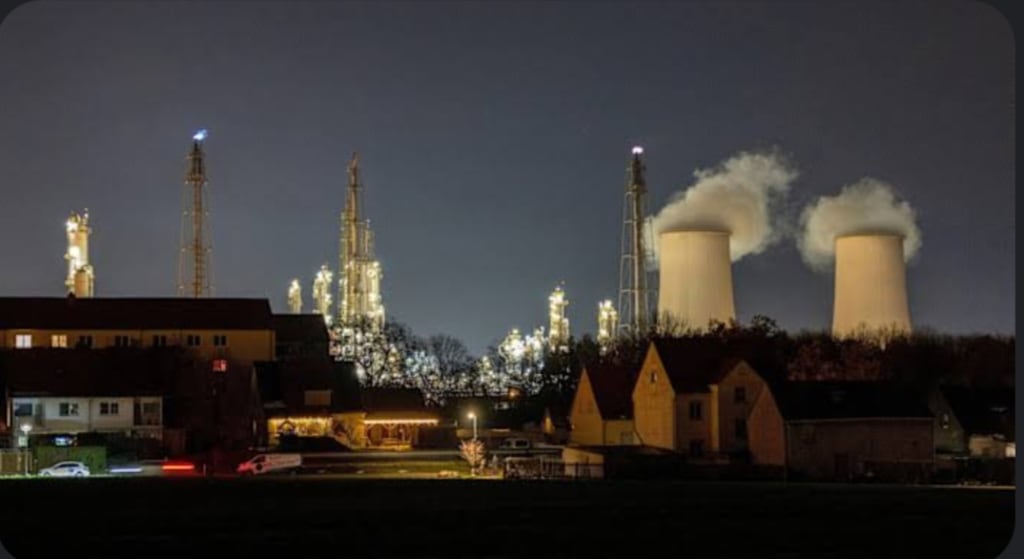
Europe’s biggest oil companies — long known for generous dividend payments and share buybacks — are now gearing up for a significant reduction in cash returned to investors, in a striking departure from past practices. This shift comes as profit margins tighten, global oil prices remain subdued, and strategic priorities evolve, signaling a broader transformation in how these energy giants allocate capital.
---
A Turning Point for Big Oil
For decades, European oil majors have been among the most reliable sources of dividends in global markets. Companies such as BP, Shell, TotalEnergies, and Norway’s Equinor have consistently paid out billions of dollars each year to shareholders, using both dividends and share buyback programs as tools to reward investors. However, a new financial reality is emerging.
According to recent reporting, these companies are now preparing to cut back on billions in shareholder payouts — a strategic recalibration that reflects weaker oil prices, rising costs, and mounting operational pressures. The anticipated cuts are expected in the coming weeks and mark a significant shift from a decade of abundant payouts.
---
Why the Pullback Is Happening
1. Prolonged Oil Price Weakness
One of the most visible pressures on oil majors is the persistent weakness in global crude prices. After the boom in prices following the 2022 geopolitical shocks, Brent crude and other benchmarks have retreated from their highs. Analysts warn that oil prices now need to stay above roughly $80 per barrel for these companies to maintain their historic dividend levels without increasing debt — a challenge in a market where prices have dipped below that threshold.
With oil markets increasingly competitive and supply pressures rising, margins have compressed, squeezing the free cash flow that fuels large payouts.
2. Need to Strengthen Balance Sheets
European oil majors are also confronting balance sheet and debt concerns. Investors have pushed companies to improve financial discipline after years of heavy distributions even when underlying fundamentals softened. Reducing payouts is seen as one way to bolster financial resilience — especially amid economic uncertainty and expectations of prolonged volatility in energy markets.
Cutting back on buybacks and dividends can preserve cash, reduce leverage, and ensure that companies are better positioned for strategic investments or downturns.
3. Reallocation to Strategic Priorities
Another factor in the shift away from high payouts is strategic realignment. Many European oil majors face pressure to balance traditional upstream oil investments with emerging opportunities such as natural gas, liquefied natural gas (LNG), and energy transition technologies. While these companies still generate cash from oil and gas, capital allocation is being reconsidered to support long‑term stability and growth in a shifting energy landscape.
---
Who’s Affected and How
BP and Shell
British giants BP and Shell have traditionally been pillar dividend payers. In past years, they distributed tens of billions of dollars annually to shareholders through a mix of dividends and buybacks. But with weaker recent earnings and mounting cost pressures, BP has already reduced its share buyback programs, while Shell’s profit margins have dipped, triggering internal reviews of capital allocation and cost structures.
TotalEnergies
France’s TotalEnergies has been adapting its payout strategy as part of a broader efficiency drive. While still offering returns to shareholders, the company has signaled tighter control over buybacks and capital expenditure as it seeks to focus on financial discipline and sustainable profits.
Equinor and Other European Producers
Norwegian energy firm Equinor, although not as reliant on shareholder payouts as some peers, is also facing pressure to balance market realities with investor expectations. Analysts note that weaker gas and oil prices could influence returns and extend the payout reductions across Europe’s energy sector.
---
Investor Reactions and Market Implications
The outlook has triggered mixed reactions from investors. Some see the cuts as necessary financial discipline that will strengthen these companies over the medium and long term. Others worry that lower payouts could weaken the appeal of oil majors as income investments, potentially triggering selloffs among dividend‑oriented investors.
In financial markets, dividends and buybacks have long been a key reason for oil and gas stocks’ solid performance, especially when compared to less predictable sectors. A reduction could shift capital flows toward sectors perceived as more stable or growth‑oriented, such as technology or sustainable energy.
---
A Broader Shift in the Energy Industry
This move to cut shareholder payouts is not isolated to Europe. Globally, energy companies — including some in the U.S. and Middle East — have reassessed dividend policies as part of responses to weaker crude prices and broader industry shifts. For example, national oil companies like Saudi Aramco have also trimmed dividends amid financial pressures, underscoring that the trend toward payout moderation is widespread.
The industry’s strategic pivot reflects not only near‑term economic pressures but also long‑term changes, including energy transition imperatives, regulatory pressures, and evolving demand patterns for fossil fuels versus alternative energy sources.
---
What This Means Going Forward
For investors, the decline in shareholder payouts from Europe’s oil majors represents both a risk and an opportunity. While reduced dividends may cool some appetite for traditional energy stocks, stronger balance sheets and more disciplined capital allocation could enhance resilience and long‑term viability.
For the oil companies themselves, this moment marks a transition point — one where financial prudence and adaptability may become as important as production volumes and reserve sizes.
In a world where energy markets are increasingly complex and geopolitics remain deeply entwined with commodity pricing, Europe’s oil majors are signaling that the era of unchecked payouts may be giving way to a new chapter in strategic financial management.
About the Creator
Keep reading
More stories from Salaar Jamali and writers in The Swamp and other communities.
Silver Rate in Pakistan Today – January 30, 2026
On January 30, 2026, the silver rate in Pakistan witnessed notable volatility amid swings in global bullion markets and local currency fluctuations. Precious metal prices — including silver — have been closely watched by investors, traders, jewelry buyers, and households seeking stable value in uncertain economic times.
By Salaar Jamaliabout 14 hours ago in The Swamp


Comments
There are no comments for this story
Be the first to respond and start the conversation.