
Difficult’ Russia-Ukraine Peace Talks End Without Breakthrough
Negotiators report limited progress as fighting continues and core demands remain unresolved

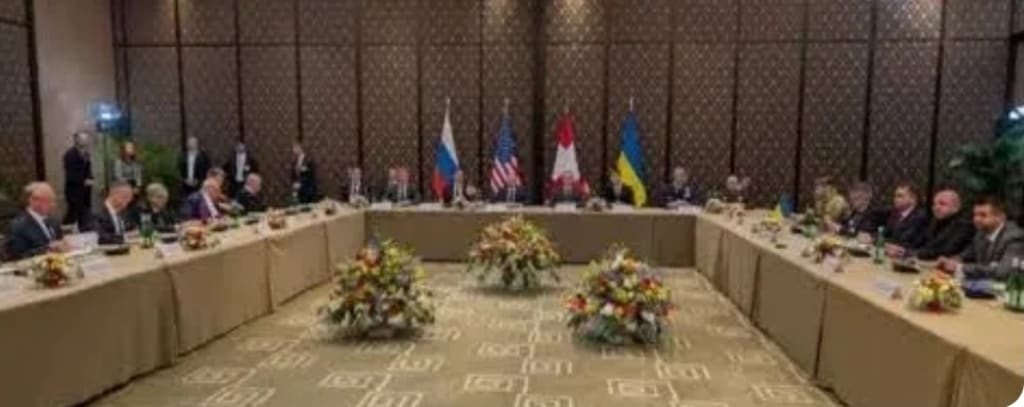
Talks Conclude Without Agreement
The latest round of peace talks between Russia and Ukraine has ended without a breakthrough, with negotiators describing discussions as “difficult” and progress as limited.
Officials from both sides met in an effort to explore the possibility of a ceasefire and outline steps toward a broader settlement. However, major disagreements over territory, security guarantees, and future political alignment remain unresolved.
The talks were closely watched by governments across Europe and beyond, as the conflict continues to affect regional stability, global food supplies, and energy markets.
Core Issues Still Divide the Sides
One of the main sticking points remains territorial control. Russia currently holds parts of eastern and southern Ukraine, including areas that Moscow claims as annexed. Ukraine has repeatedly stated that it will not formally recognize Russian control over its territory.
Ukrainian President Volodymyr Zelenskyy has maintained that any agreement must respect Ukraine’s sovereignty and internationally recognized borders. Meanwhile, Russian President Vladimir Putin has signaled that security concerns and territorial realities must be taken into account.
These positions have created a wide gap between the two sides, limiting the potential for immediate compromise.
Security Guarantees and NATO Membership
Another central issue is Ukraine’s future security alignment. Kyiv has expressed interest in deeper cooperation with Western institutions, including NATO. Russia has long opposed NATO expansion toward its borders, describing it as a security threat.
During the recent talks, negotiators reportedly revisited proposals involving security guarantees for Ukraine that fall short of full NATO membership. However, no detailed framework was announced.
Western officials have indicated that any lasting peace would need to address Ukraine’s long-term defense needs while also reducing the risk of renewed conflict.
Humanitarian Concerns Remain Urgent
While political discussions stalled, humanitarian issues continue to demand attention. Civilians in conflict-affected areas face challenges including damaged infrastructure, displacement, and limited access to services.
Previous negotiations had resulted in limited agreements on prisoner exchanges and grain exports through the Black Sea. Observers hoped that this round of talks might expand on such practical measures, even if a full ceasefire remained out of reach.
So far, no new humanitarian arrangements have been confirmed following the latest meeting.
International Mediation Efforts
Several countries and international organizations have attempted to facilitate dialogue between Moscow and Kyiv since the conflict escalated. The European Union and the United Nations have both expressed support for diplomatic solutions.
The European Union has maintained sanctions on Russia while providing financial and military assistance to Ukraine. At the same time, EU officials continue to encourage negotiations as part of a long-term resolution strategy.
Diplomatic observers note that mediation efforts are complicated by ongoing fighting on the ground. Negotiations often move more slowly when military operations continue.
Military Situation Shapes the Talks
Developments on the battlefield influence the tone and expectations of peace talks. Both Russia and Ukraine continue to conduct military operations, and neither side has indicated readiness to halt activity without clear concessions.
Analysts suggest that when each side believes it can improve its position through military means, incentives for compromise decrease. Conversely, stalemates or heavy losses can create pressure to negotiate.
At present, neither government has publicly acknowledged a shift in strategy that would signal immediate readiness for major concessions.
Public Messaging and Domestic Audiences
Statements from both capitals following the talks reflected caution. Ukrainian officials emphasized that dialogue is necessary but must align with national interests. Russian representatives described discussions as constructive but acknowledged ongoing differences.
Domestic audiences in both countries closely monitor developments. Public opinion can influence how leaders approach negotiations, particularly in conflicts involving national territory and security.
Governments must balance diplomatic outreach with internal expectations, which can limit flexibility at the negotiating table.
Economic and Global Impact
The conflict has had effects beyond the immediate region. Energy prices in Europe rose sharply in earlier stages of the war, and global grain markets were disrupted due to reduced exports from Ukraine, a major agricultural producer.
Efforts to stabilize trade routes have involved complex agreements, including arrangements monitored by international bodies. Renewed uncertainty following stalled peace talks may affect investor confidence and supply chains.
Global leaders continue to call for diplomatic engagement to reduce the wider economic impact of prolonged conflict.
The Challenge of Trust
Peace negotiations require a minimum level of trust between parties. In the case of Russia and Ukraine, trust remains low after years of fighting and accusations from both sides.
Previous ceasefire agreements have faced violations, which makes future commitments more difficult to secure. Observers note that monitoring mechanisms and third-party guarantees could play a role in rebuilding confidence.
Without progress on trust-building measures, large-scale agreements remain challenging.
What Could Happen Next
Although the latest round ended without major progress, diplomatic channels remain open. Negotiations in prolonged conflicts often involve multiple rounds before meaningful outcomes emerge.
Experts suggest that incremental steps, such as localized ceasefires or expanded humanitarian corridors, may offer a practical starting point. Over time, smaller agreements can build momentum toward broader settlement discussions.
However, significant breakthroughs usually require political decisions at the highest levels.
The Role of External Support
Ukraine continues to receive military and financial support from Western partners, while Russia maintains alliances and economic ties with various countries.
External support influences both sides’ calculations. Continued assistance may strengthen negotiating positions but can also prolong conflict if each side believes it has backing to sustain operations.
Diplomats emphasize that outside powers can encourage dialogue, but final decisions rest with Moscow and Kyiv.
A Conflict With No Immediate Resolution
The description of the talks as “difficult” reflects the complexity of the issues involved. Territorial control, security guarantees, sanctions, and reconstruction all require detailed negotiation.
At this stage, no timetable has been announced for the next round of talks. Officials have indicated that communication channels remain active, but expectations for rapid progress are limited.
For civilians affected by the conflict, uncertainty continues. Many hope that sustained diplomatic engagement will eventually lead to reduced violence and a path toward reconstruction.
Conclusion
The recent round of Russia-Ukraine peace talks concluded without a breakthrough, underscoring the challenges of resolving a conflict rooted in territorial disputes and competing security concerns.
While dialogue remains open, core disagreements over borders, alliances, and guarantees continue to block major progress. International actors support continued negotiation, but meaningful compromise has yet to emerge.
For now, the outcome highlights the reality that complex conflicts rarely end quickly. Diplomatic efforts may continue, but achieving a durable peace will require sustained engagement, political will, and practical steps toward rebuilding trust.
If you would like, I can also tailor this article more closely to a BBC-style tone with shorter paragraphs and tighter headline formatting.
About the Creator
Saad
I’m Saad. I’m a passionate writer who loves exploring trending news topics, sharing insights, and keeping readers updated on what’s happening around the world.
Why Black History Matters in America?
The United States of America is celebrating their 250th anniversary in 2026. I'm proud to be an American and as someone who was born here, I wouldn't imagine myself living anywhere else. This is a country where opportunities are possible. Where anyone can be successful in anything they desire to do. Equality, community, and togetherness are the backbones of what America is and should be about. However, we have an administration who wants to erase and disregard those who have made positive, meaningful impacts in our country, specifically Black figures, such as Martin Luther King, Jr., Rosa Parks, and Maya Angelou. President Trump and his administration have been constantly complaining and fighting against what they call the "Woke agenda". They use this excuse as a distraction from other issues they refuse to address, such as the high cost of living, climate change, and inflation. That equality is dividing America, when in reality, it's bringing us together. Being woke is not tied to a specific political party. No matter where you stand on the political spectrum, you can still care about other people and their plights. Compassion and empathy for others isn't tied to a political party, either. We were taught as children to treat others the way we want to be treated and not judge others because they're different from us. Caring about others isn't a personal attack on your beliefs. It doesn't make you any less of a person. People who are easily offended over African American figures, past or present, or anything related to it, are grasping at straws. Current and future generations need to know who people like Harriet Tubman and Shirley Chisholm were, especially in the classroom. Black History is part of American History. It should be recognized, not hidden or forgotten. Besides, you can't shield children from everything, just because your feelings are easily hurt.
By Mark Wesley Pritchard 18 days ago in The Swamp
US Navy on the Hunt for Strike Drones That Can Launch from Any Warship
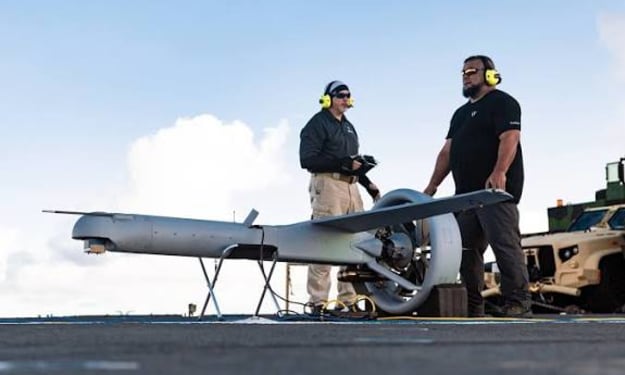
The U.S. Navy is quietly accelerating its search for a new generation of strike drones capable of launching from virtually any warship, a move aimed at transforming every vessel in the fleet into a potential offensive platform amid rising tensions in the Pacific and beyond. Senior defense officials say the initiative reflects lessons learned from recent conflicts, particularly the widespread use of low-cost, long-range drones in Ukraine and the Middle East. The Navy now wants small, lethal unmanned systems that can be fired from standard ship-based launchers and strike targets hundreds of kilometers away without putting pilots or high-value aircraft at risk. The concept, described by Navy planners as “distributed strike,” would allow destroyers, frigates, amphibious ships, and even support vessels to deploy armed drones from their existing Vertical Launch System (VLS) cells or modular deck launchers. Instead of relying solely on carrier-based aircraft or expensive cruise missiles, commanders could unleash swarms of autonomous or semi-autonomous drones to overwhelm enemy air defenses. From Defense to Offense For years, ship-launched drones were primarily used for surveillance and reconnaissance. Systems such as the ScanEagle and MQ-8 Fire Scout provided real-time intelligence but carried no weapons. That is now changing. According to Navy officials familiar with the program, the service is seeking a strike-capable unmanned aerial vehicle that can be: launched from multiple ship classes, operated with minimal crew training, and produced at a fraction of the cost of conventional missiles. “These drones are not meant to replace cruise missiles or fighter jets,” one naval officer said privately. “They are meant to supplement them — and in some scenarios, to be used in large numbers where attrition is expected.” The Navy’s interest is tied closely to its broader push toward unmanned and autonomous warfare under the Pentagon’s “Replicator” initiative, which aims to deploy thousands of expendable drones within two years to counter China’s growing military power. A Response to China’s Anti-Access Strategy The urgency behind the project stems largely from China’s expanding missile forces and air defenses in the Western Pacific. Beijing’s strategy of denying access to U.S. forces — often called anti-access/area denial (A2/AD) — relies on targeting aircraft carriers and major bases. Strike drones launched from dispersed ships would complicate that strategy. “Instead of one aircraft carrier projecting power, you could have dozens of ships each capable of launching multiple strike drones,” said a U.S. defense analyst. “It creates a much more survivable and unpredictable threat.” Unlike traditional aircraft, these drones could be programmed for one-way missions, similar to loitering munitions. They could fly low to avoid radar, identify targets using onboard sensors, and strike with precision explosives. Technical Challenges Designing a drone that can be launched from “any warship” presents major engineering hurdles. The system must fit inside standard launch tubes or compact canisters, withstand saltwater environments, and integrate with existing combat systems such as Aegis radar and shipboard command networks. Industry sources say the Navy is testing several prototypes, including tube-launched drones that unfold their wings after launch and use jet or propeller propulsion. Some models are designed to carry small warheads, while others focus on electronic warfare, jamming enemy radars before follow-on missile strikes. Another key challenge is command and control. The Navy wants drones that can operate in contested environments where GPS and communications may be disrupted. This means greater autonomy and onboard decision-making — a shift that raises both technical and ethical questions. Cost and Speed Matter One of the driving forces behind the program is cost. A Tomahawk cruise missile can cost over $1 million per unit. In contrast, the Navy hopes its strike drones can be produced for tens or hundreds of thousands of dollars each. That price difference enables mass deployment. “If you can launch 50 drones for the cost of a few missiles, you change the economics of naval warfare,” said a former Pentagon acquisition official. A New Era of Naval Power The push for ship-launched strike drones signals a deeper transformation in how the Navy views combat at sea. Rather than relying on a small number of highly expensive platforms, future operations may depend on networks of manned ships and unmanned weapons working together. While still in development, officials say operational testing could begin within the next few years. If successful, the program would mark the first time in U.S. naval history that almost every warship could serve as a drone strike platform. As one senior officer summarized, “The future fleet won’t just sail. It will launch clouds of unmanned weapons. And that changes everything.”
By Fiaz Ahmed 7 days ago in The Swamp



Comments
There are no comments for this story
Be the first to respond and start the conversation.