
Desperate Times Are Behind Sarwar’s PM Resignation Call
Formal / News Style Scottish Labour leader says crisis of confidence demands change at the top Sarwar argues Britain needs new leadership amid political and economic strain Opposition pressure grows as trust in government weakens 🔹 Neutral & Informative Why the call for resignation reflects mounting public frustration A bold challenge to Westminster leadership 🔹 Impactful & Catchy When patience runs out in politics A call that signals rising political temperature

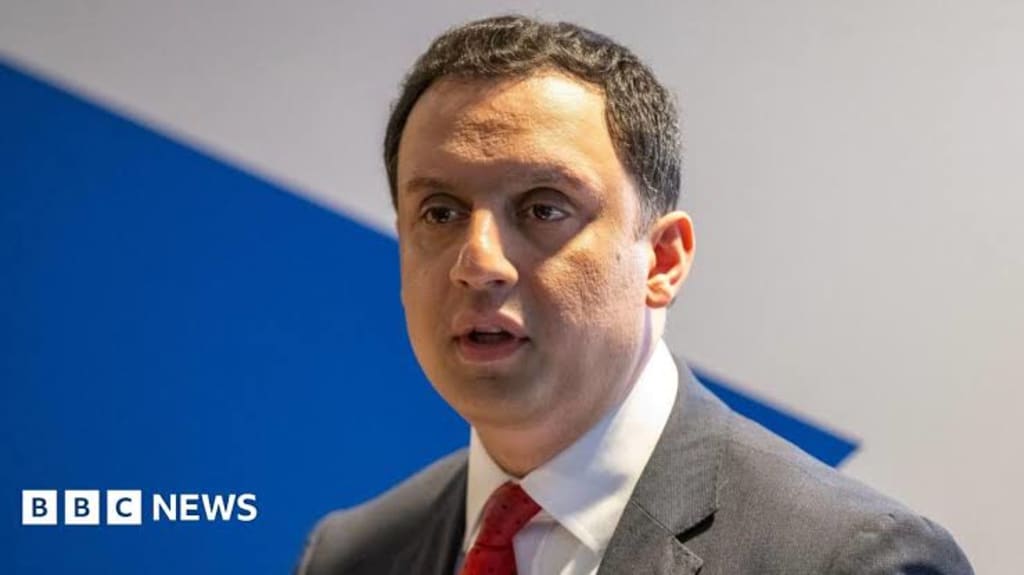
Scottish Labour leader Anas Sarwar has intensified pressure on the UK government by calling for the Prime Minister to resign, arguing that the country has reached a breaking point after months of political turmoil, economic strain, and declining public trust.
Sarwar’s remarks come amid growing unrest within Westminster and mounting criticism over the government’s handling of inflation, public services, and foreign policy challenges. His statement, delivered during a party address in Glasgow, framed the call for resignation as a response to what he described as “desperate times requiring decisive leadership change.”
A Calculated Political Move
While opposition leaders frequently demand accountability from those in power, Sarwar’s intervention stands out for its blunt tone and urgency. He accused the Prime Minister of presiding over “chaos and confusion” and said Britain could no longer afford instability at a moment when families and businesses are struggling with rising costs of living.
“This is not about party politics,” Sarwar told supporters. “It is about restoring faith in government and giving people confidence that those in charge understand the scale of the crisis.”
Political analysts note that Sarwar’s strategy aims to position Scottish Labour as a credible alternative not only in Scotland but across the wider UK political landscape. By calling for resignation rather than policy reform, he signaled that incremental fixes would no longer satisfy an electorate frustrated by repeated controversies.
Economic Pressures Fuel the Argument
At the heart of Sarwar’s criticism lies the state of the economy. Inflation has squeezed household budgets, while public sector workers continue to demand higher wages to match rising prices. NHS waiting lists remain high, and transport strikes have disrupted daily life in major cities.
Sarwar argued that these pressures are symptoms of leadership failure rather than temporary setbacks. He pointed to what he called a “pattern of mismanagement” that has eroded confidence among investors and international partners.
“Every week brings a new announcement, a new reversal, or a new crisis,” he said. “That is not stability. That is drift.”
The Prime Minister’s office rejected the accusations, insisting the government has taken “firm and responsible action” to stabilize the economy and support vulnerable households. Officials highlighted recent measures aimed at reducing inflation and boosting growth.
Divisions Within the Political Landscape
Sarwar’s remarks also reflect wider divisions across the UK political spectrum. Some Conservative lawmakers privately acknowledge the government faces serious credibility problems, though few have openly supported calls for resignation.
Meanwhile, senior Labour figures in London have adopted a more cautious tone, focusing on policy contrasts rather than leadership demands. Observers say Sarwar’s stronger language is partly shaped by Scotland’s political climate, where competition with the Scottish National Party requires bold positioning.
“Scottish Labour needs to demonstrate relevance and urgency,” said a political commentator at a UK think tank. “Calling for resignation is a way to show moral clarity and frustration that mirrors public sentiment.”
Public Reaction and Media Impact
The call has generated significant media attention, with supporters praising Sarwar for “saying what many are thinking,” while critics accuse him of political grandstanding. Opinion polls suggest trust in national leadership has declined, though it remains unclear whether voters favor immediate change or simply want improved governance.
Social media responses revealed a divided public. Some users welcomed Sarwar’s stance as overdue, while others argued that repeated resignation demands contribute to further instability.
One voter interviewed in Edinburgh said, “We want solutions, not just shouting. But it feels like no one is listening unless someone speaks loudly.”
What Comes Next
Sarwar has indicated that his party will continue pressing for accountability in Parliament and beyond. He called for a renewed focus on economic recovery, healthcare reform, and restoring Britain’s standing abroad.
Whether his demand will influence events at Westminster remains uncertain. History shows that resignation calls only gain traction when internal party pressure aligns with public dissatisfaction. For now, Sarwar’s words add to the growing chorus of voices questioning the government’s capacity to govern effectively.
As Britain navigates a complex mix of domestic and international challenges, the political temperature continues to rise. Sarwar’s declaration underscores a belief shared by many in opposition: that the era of cautious criticism is over, and the time for direct confrontation has arrived.
In the months ahead, the strength of that message will be measured not only by headlines, but by whether it reshapes the national debate over leadership and the future direction of the country.
About the Creator
Fiaz Ahmed
I am Fiaz Ahmed. I am a passionate writer. I love covering trending topics and breaking news. With a sharp eye for what’s happening around the world, and crafts timely and engaging stories that keep readers informed and updated.
Keep reading
More stories from Fiaz Ahmed and writers in The Swamp and other communities.
US Pressures Vanuatu at UN Over ICJ’s Landmark Climate Change Ruling
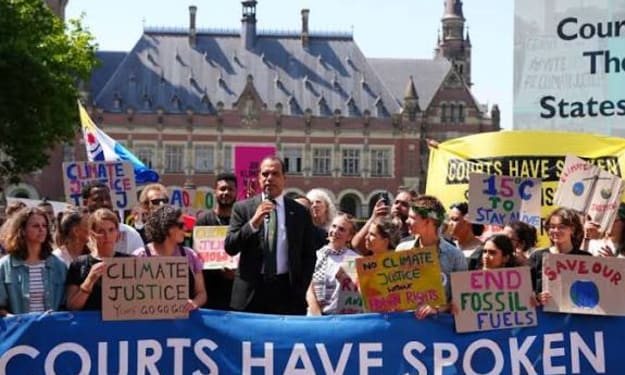
The United States has come under scrutiny after reports emerged that it applied diplomatic pressure on Vanuatu at the United Nations following a landmark advisory ruling by the International Court of Justice on climate change obligations. The ICJ ruling, hailed by climate-vulnerable nations as a historic step toward accountability, declared that states have a legal duty to protect the environment and prevent harm caused by greenhouse gas emissions. The opinion strengthened arguments that wealthy and high-emitting countries could be held responsible under international law for climate damage affecting vulnerable nations. Vanuatu, which led years of campaigning to bring the issue before the court, celebrated the decision as a victory for small island states threatened by rising seas and extreme weather. However, diplomatic sources say the United States has since sought to limit how the ruling is interpreted and applied within UN forums. Diplomatic Tensions After Historic Decision According to officials familiar with the discussions, U.S. representatives warned Vanuatu and allied countries against pushing for binding resolutions or enforcement mechanisms that could expose major economies to legal or financial consequences. While the ICJ’s opinion is not legally binding, it carries significant moral and political weight and is expected to influence future climate negotiations and litigation. A senior diplomat from a Pacific nation described the pressure as “deeply disappointing,” adding that the ruling was meant to amplify the voices of countries most affected by climate change rather than silence them. “The court affirmed what we have known for decades—that those who contribute most to climate change must act to prevent harm,” the diplomat said. “Attempts to water down that message undermine the spirit of international cooperation.” US Position on Climate Responsibility The U.S. government has not denied engaging in talks with Vanuatu but maintains that its actions are intended to preserve consensus and prevent divisions within the UN system. A spokesperson said Washington supports global climate action through existing agreements, including the Paris Agreement, and remains committed to reducing its emissions. However, officials cautioned against what they called “overreach” in interpreting the ICJ opinion as a basis for new legal liabilities. They argued that climate challenges should be addressed through diplomacy and cooperative frameworks rather than through courts. “Climate change requires collective solutions,” the spokesperson said. “We must avoid approaches that risk fragmenting international efforts or creating legal uncertainty.” A Victory for Climate-Vulnerable Nations For Vanuatu and other island nations, the ICJ decision represents a milestone after years of advocacy by youth groups, environmental organizations, and Pacific governments. The ruling recognized that environmental harm caused by climate change can violate human rights and international law, giving vulnerable states a stronger platform in negotiations with major emitters. Environmental activists accused the United States of attempting to weaken the ruling’s impact. Several non-governmental organizations called on Washington to respect the court’s findings and support efforts to translate them into meaningful action. “This ruling is about survival,” said a spokesperson for a global climate justice network. “It affirms that powerful nations cannot ignore the consequences of their emissions on communities that are losing land, livelihoods, and lives.” Broader Implications for Global Politics The controversy highlights a growing divide between industrialized countries and developing nations over responsibility for climate damage. While wealthier states emphasize voluntary commitments and technological solutions, vulnerable countries increasingly demand legal recognition of loss and damage. Analysts say the dispute also reflects fears among major economies that the ICJ ruling could open the door to lawsuits or compensation claims. Several governments are reportedly reviewing their legal exposure and diplomatic strategies in light of the decision. “The court’s opinion changes the conversation,” said an international law expert based in Europe. “Even if it is advisory, it sets a standard that future climate negotiations cannot ignore.” What Comes Next Vanuatu is expected to continue pushing for stronger language on climate responsibility in upcoming UN resolutions. Supporters hope the ICJ ruling will be referenced in future climate talks and used to strengthen global commitments to reduce emissions and protect vulnerable communities. Whether U.S. pressure will succeed in moderating that push remains uncertain. For now, the episode underscores how climate change is no longer only an environmental issue, but a legal and diplomatic battleground shaping relations between powerful states and those most at risk. As the international community grapples with rising temperatures and intensifying climate impacts, the ICJ’s landmark ruling—and the response to it—may mark a turning point in how responsibility for climate change is defined on the world stage.
By Fiaz Ahmed a day ago in The Swamp
Why Black History Matters in America?
The United States of America is celebrating their 250th anniversary in 2026. I'm proud to be an American and as someone who was born here, I wouldn't imagine myself living anywhere else. This is a country where opportunities are possible. Where anyone can be successful in anything they desire to do. Equality, community, and togetherness are the backbones of what America is and should be about. However, we have an administration who wants to erase and disregard those who have made positive, meaningful impacts in our country, specifically Black figures, such as Martin Luther King, Jr., Rosa Parks, and Maya Angelou. President Trump and his administration have been constantly complaining and fighting against what they call the "Woke agenda". They use this excuse as a distraction from other issues they refuse to address, such as the high cost of living, climate change, and inflation. That equality is dividing America, when in reality, it's bringing us together. Being woke is not tied to a specific political party. No matter where you stand on the political spectrum, you can still care about other people and their plights. Compassion and empathy for others isn't tied to a political party, either. We were taught as children to treat others the way we want to be treated and not judge others because they're different from us. Caring about others isn't a personal attack on your beliefs. It doesn't make you any less of a person. People who are easily offended over African American figures, past or present, or anything related to it, are grasping at straws. Current and future generations need to know who people like Harriet Tubman and Shirley Chisholm were, especially in the classroom. Black History is part of American History. It should be recognized, not hidden or forgotten. Besides, you can't shield children from everything, just because your feelings are easily hurt.
By Mark Wesley Pritchard 13 days ago in The Swamp


Comments
There are no comments for this story
Be the first to respond and start the conversation.