
Denmark and Canada Ink New Defense Cooperation Agreement
Formal / News Style Pact strengthens military collaboration and Arctic security amid rising geopolitical tensions New agreement expands joint training, intelligence sharing, and regional defense coordination 🔹 Neutral & Informative Two NATO allies deepen strategic partnership in the Arctic and North Atlantic Defense ministries outline plans for joint exercises and technology cooperation 🔹 Impactful Bilateral deal signals renewed focus on northern security and allied unity

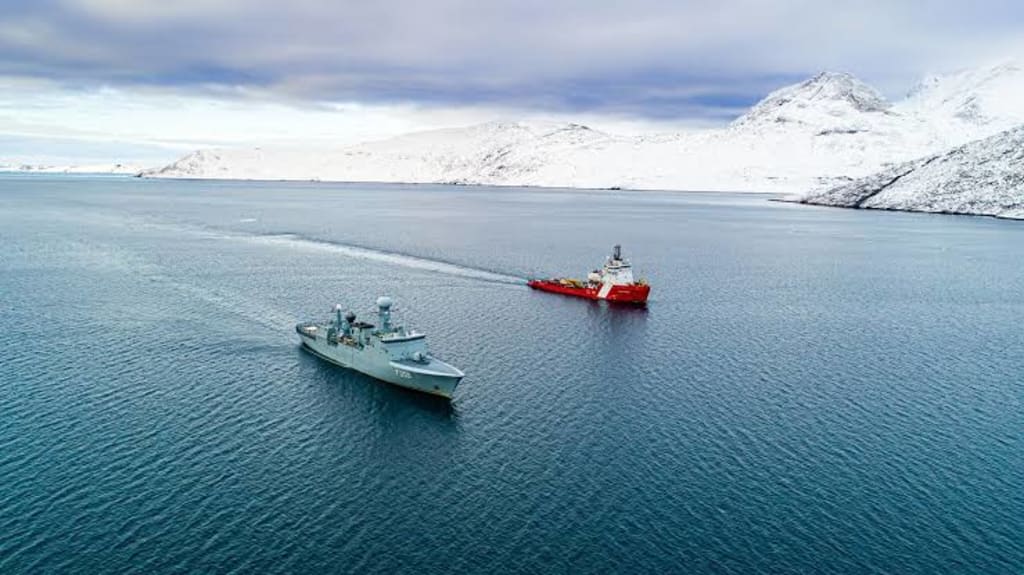
Denmark and Canada have signed a new defense cooperation agreement aimed at strengthening military collaboration, enhancing joint training, and reinforcing security across the Arctic and North Atlantic regions. The pact reflects growing concern among Western allies about emerging geopolitical challenges and the need for closer coordination between like-minded nations.
The agreement was formally announced in Copenhagen following high-level talks between defense officials from Denmark and Canada. Officials described the deal as a “strategic partnership framework” that will expand cooperation in areas including maritime security, intelligence sharing, cyber defense, and joint military exercises.
Strengthening Arctic Security
A central focus of the agreement is the Arctic, where melting ice and increased shipping activity have heightened strategic competition. Both Denmark and Canada are Arctic nations with long coastlines and responsibility for vast northern territories. Officials said the pact would improve surveillance, search-and-rescue capabilities, and coordination in responding to emergencies or security threats in the region.
“The Arctic is becoming more accessible and more contested,” a Danish defense official said. “This agreement ensures that Denmark and Canada can work more closely to maintain stability, protect sovereignty, and uphold international law.”
Canada’s defense ministry echoed that message, emphasizing that cooperation with Denmark supports its broader strategy to modernize Arctic defense infrastructure and improve readiness in extreme environments.
Military Training and Exercises
Under the new framework, the two countries will expand joint military exercises involving naval, air, and land forces. These exercises will focus on cold-weather operations, maritime patrols, and interoperability between the armed forces of both nations.
Canadian forces are expected to participate more frequently in Danish-led exercises in Greenland and the North Atlantic, while Danish units will take part in Canadian training programs in northern provinces. Defense planners say these exchanges will help both militaries refine tactics and share expertise in operating under harsh climatic conditions.
The agreement also includes provisions for officer exchanges, joint research projects, and collaboration on defense technology and innovation.
NATO and Allied Coordination
Both Denmark and Canada are members of NATO, and officials stressed that the agreement complements existing alliance commitments rather than replacing them. The pact is seen as part of a wider effort by NATO countries to strengthen regional partnerships in response to rising tensions with Russia and increased military activity in the Arctic and Baltic areas.
Security analysts note that bilateral defense agreements allow allies to move faster and tailor cooperation to specific regional challenges. “This deal shows how NATO members are building layers of cooperation beyond the alliance framework,” said Lars Henriksen, a Copenhagen-based expert. “It sends a signal of unity and preparedness.”
Economic and Industrial Dimensions
In addition to operational cooperation, the agreement opens the door to closer ties between Danish and Canadian defense industries. Officials said future collaboration could include joint procurement projects, shared maintenance facilities, and research into new surveillance and communications technologies.
Both governments view defense cooperation as a way to strengthen their industrial bases while ensuring that their armed forces remain equipped with modern and compatible systems.
Political Significance
The signing comes at a time when European and North American allies are reassessing their security strategies amid global uncertainty. Recent conflicts and shifting power dynamics have prompted renewed emphasis on deterrence and collective defense.
Leaders in both countries framed the agreement as a long-term commitment rather than a short-term response to any single crisis. “This is about building resilience and readiness for the future,” said a Canadian official involved in the negotiations. “Our partnership with Denmark reflects shared values and shared responsibilities.”
Looking Ahead
Implementation of the agreement will begin later this year, with the first round of expanded joint exercises planned for early next year. Working groups from both defense ministries will meet regularly to coordinate policy, training schedules, and technological cooperation.
While the deal is unlikely to dramatically change the balance of power on its own, experts say it strengthens the web of alliances that underpin Western security. For Denmark and Canada, the agreement represents a practical step toward deeper military integration and a stronger collective posture in the Arctic and beyond.
As geopolitical competition intensifies in northern regions, the new defense cooperation pact underscores how smaller and mid-sized allies are taking proactive measures to safeguard their interests and contribute to broader international stability.
About the Creator
Fiaz Ahmed
I am Fiaz Ahmed. I am a passionate writer. I love covering trending topics and breaking news. With a sharp eye for what’s happening around the world, and crafts timely and engaging stories that keep readers informed and updated.
Keep reading
More stories from Fiaz Ahmed and writers in The Swamp and other communities.
German Population Set to Shrink 5% by 2050
Germany’s population is projected to decline by nearly five percent by 2050, according to new demographic forecasts that underscore the country’s growing challenges with aging, labor shortages, and long-term economic sustainability. The findings highlight the urgent need for policy reforms in immigration, family support, and workforce participation as Europe’s largest economy confronts a shrinking and older population. The report, released by the Federal Statistical Office of Germany (Destatis), estimates that Germany’s population will fall from roughly 84 million today to about 80 million by mid-century if current trends persist. The decline is driven primarily by low birth rates and rising life expectancy, which together are reshaping the country’s demographic profile. Aging Nation, Fewer Workers Germany has one of the lowest fertility rates in Europe, averaging around 1.4 children per woman—well below the replacement level of 2.1. At the same time, advances in healthcare mean that people are living longer, increasing the proportion of elderly citizens. By 2050, nearly one-third of Germany’s population is expected to be over the age of 65. The number of people of working age, between 20 and 64, is forecast to shrink significantly, placing strain on pension systems, healthcare services, and public finances. Economists warn that a smaller workforce could slow economic growth and weaken Germany’s global competitiveness. Industries already facing labor shortages—such as manufacturing, healthcare, and technology—may struggle to fill positions, even as demand for skilled workers continues to rise. “This is not just a population issue, it’s an economic and social transformation,” said a Berlin-based demographic analyst. “Without intervention, the imbalance between retirees and workers will become increasingly difficult to manage.” Role of Immigration Immigration remains the main factor capable of moderating Germany’s population decline. The country has relied heavily on foreign workers over the past decade, particularly following the influx of refugees in 2015 and expanded labor migration from Eastern Europe. However, the new projections suggest that even sustained immigration at current levels may not be enough to prevent an overall population decrease. Officials say higher and more targeted migration will be necessary, especially for sectors experiencing acute skill shortages. Germany has already introduced reforms to attract skilled workers from abroad, including simplified visa procedures and recognition of foreign qualifications. Policymakers are also debating further measures to make the country more attractive to international talent amid competition from other European nations and North America. Regional Imbalances The demographic decline will not be evenly distributed across the country. Rural areas and parts of eastern Germany are expected to experience sharper population losses, while major cities such as Berlin, Munich, and Hamburg may continue to grow due to internal migration and international arrivals. This uneven trend raises concerns about infrastructure, housing, and public services. Schools and hospitals in shrinking regions could face closures, while urban centers may struggle with housing shortages and rising living costs. Local governments are already planning for these shifts by consolidating services in rural areas and investing in urban transport and housing projects. Policy Challenges Germany’s demographic outlook is forcing leaders to rethink long-term policy priorities. Pension reform has become a central issue, as fewer workers will be supporting a growing number of retirees. Healthcare spending is also expected to rise sharply as the population ages. Family policies are another focus area. The government has expanded childcare services and parental benefits in an effort to encourage higher birth rates, but results so far have been modest. Analysts argue that no single policy will reverse the trend. Instead, a combination of higher workforce participation among women and older workers, increased immigration, and productivity gains through automation will be required. A Broader European Trend Germany is not alone in facing demographic decline. Many European countries, including Italy and Spain, are experiencing similar patterns of low fertility and aging populations. However, Germany’s size and economic influence make its situation particularly significant for the European Union as a whole. A shrinking German population could have ripple effects across the bloc, affecting labor mobility, fiscal stability, and political influence. Looking Ahead While a five percent decline may appear modest, experts stress that the deeper impact lies in the changing age structure of the population. Fewer young people and more elderly citizens will reshape everything from the labor market to education systems and healthcare planning. The Destatis projections serve as a warning that demographic change is no longer a distant concern but an imminent reality. How Germany responds over the next decade will determine whether the country can adapt successfully to a smaller, older population—or face mounting social and economic pressures by mid-century.
By Fiaz Ahmed about 17 hours ago in The Swamp
The Saddest Thing - The Billionaires Who Rule America Aren't Even Enjoying Themselves
This single post says more about our ruling class than a thousand policy papers. The saddest thing about today's system is that the men robbing the rest of us - sabotaging our economic prospects, our pensions, our access to affordable healthcare - are not even happy.
By Scott Christenson🌴12 days ago in The Swamp


Comments
There are no comments for this story
Be the first to respond and start the conversation.