
China Tells Top Refiners to Halt Diesel and Gasoline Exports
China orders top refiners to halt diesel and gasoline exports to prioritise domestic supply amid Middle East tensions and global fuel market disruptions.

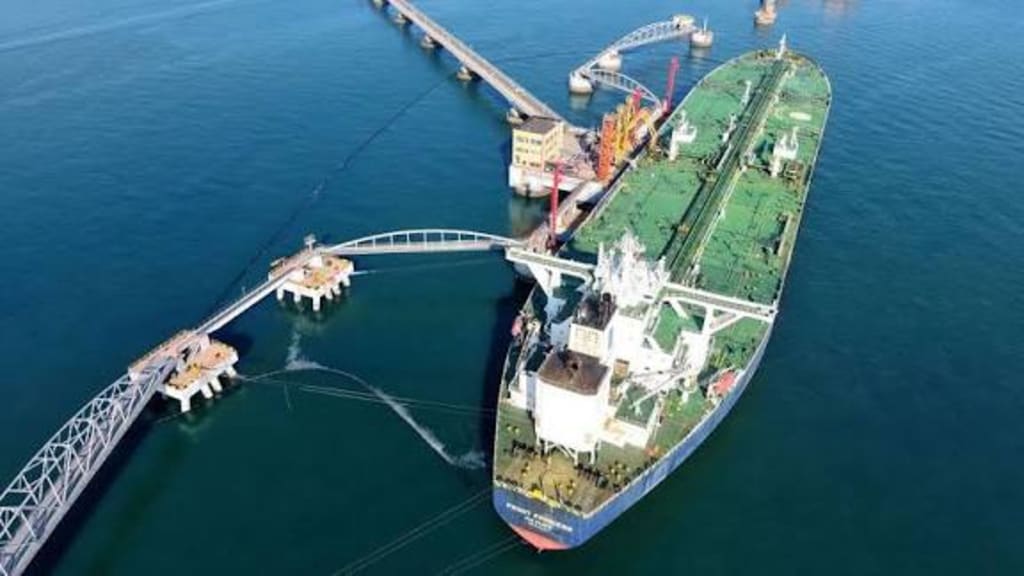
China has instructed its largest oil refiners to suspend exports of diesel and gasoline, a dramatic move that reflects growing global energy market fears as Middle Eastern tensions disrupt crude supply chains. The directive was issued amid escalating conflict in the Gulf, where military action involving the United States, Israel and other forces has closed key shipping routes through the Strait of Hormuz — a vital channel responsible for transporting roughly one‑fifth of the world’s seaborne oil.
According to industry sources, representatives from the National Development and Reform Commission (NDRC), China’s top economic planning body, met with executives from major refiners including PetroChina, Sinopec, CNOOC, Sinochem Group, and private refiner Zhejiang Petrochemical. The refiners were told to “immediately suspend exports of diesel and gasoline, stop signing new export contracts, and negotiate to cancel already agreed shipments,” according to Bloomberg News sources. Exceptions were made for jet fuel and bunkering supplies destined for bonded storage or transit to Hong Kong and Macau.
Strategic Concerns Over Fuel Supplies
China is a net importer of crude oil, with around 57 % of its direct seaborne crude imports coming from the Middle East in 2025. Those supplies have become increasingly vulnerable as the war in the Gulf disrupts tanker movements through the Strait of Hormuz — a chokepoint whose closure often sends shockwaves through global energy markets.
The sudden halt in diesel and gasoline exports is part of a broader pattern of energy risk management across Asia. Nations dependent on Middle Eastern crude are reducing exports of refined products and adjusting domestic refinery operations in anticipation of prolonged supply uncertainty. Japan, for example, has already asked its government to tap strategic reserves to keep fuel markets stable.
China’s move comes not because it is a major source of fuel exports — its refined product shipments are modest compared with leaders such as South Korea and Singapore — but because Beijing wants to prioritise domestic fuel availability amid growing uncertainty in energy markets. State planners are keen to ensure that internal demand for diesel and gasoline is met even as global crude disruptions worsen.
Impact on Regional Markets
The suspension of diesel and gasoline exports by Chinese refiners is expected to tighten markets across Asia. Diesel is a cornerstone fuel for trucking, shipping, and industry, while gasoline touches everything from passenger vehicles to logistics and agriculture. Reduced shipments from China — even temporarily — may strain supply balances in countries like South Korea, Japan, and Indonesia, which both import fuel and source crude through disrupted Middle Eastern channels.
Refining margins across the region have already surged as a result of crude supply constraints. In markets such as Singapore, refining profits have hit multi‑year highs, pushing up prices for jet fuel and diesel as global refining capacity faces pressure.
Industry and Policy Reactions
The directive to halt exports has prompted varied reactions from analysts and markets. Regional refiners, particularly those outside China, have seen stock rallies based on expectations that reduced Chinese competition could boost demand for their own products. For example, shares of India’s major refiners such as Reliance Industries and MRPL rose sharply after the news broke, reflecting investor optimism about tighter regional supply and higher margins.
Governments and industry bodies are also monitoring the situation closely. Regional energy ministers and trade groups are evaluating whether strategic reserves need to be deployed or whether alternative crude sources can be secured to mitigate shortages. Some have urged refiners to cut production to conserve crude stocks, while others push for diplomatic moves to stabilise navigation through the Strait of Hormuz.
Longer‑Term Implications
While China’s suspension of diesel and gasoline exports is formally described as a temporary measure, its broader implications are significant:
Supply Security Focus: China is signalling that fuel security is a national priority when global supplies are at risk.
Market Ripples: Asian fuel markets may see more volatility as both crude and product flows adjust to geopolitical realities.
Refining Strategy: Refiners may increasingly align with national policy goals rather than purely export‑driven strategies.
Market watchers caution that if crude supply interruptions persist, refiners worldwide may have to recalibrate production, prioritise domestic markets, and negotiate new trade arrangements, potentially reshaping the global energy landscape.
Conclusion
China’s instruction to halt diesel and gasoline exports marks a rare intervention by Beijing into refined fuel trade policy, driven by concern over Middle East supply shocks and the potential for prolonged disruptions. By prioritising domestic fuel security, China joins a broader regional pattern of precautionary measures that could reshape energy markets, refine global pricing structures, and influence everything from logistics costs to consumer fuel availability in the months ahead — underscoring the profound downstream effects of geopolitical conflicts on everyday energy supplies.
About the Creator
Fiaz Ahmed
I am Fiaz Ahmed. I am a passionate writer. I love covering trending topics and breaking news. With a sharp eye for what’s happening around the world, and crafts timely and engaging stories that keep readers informed and updated.
Keep reading
More stories from Fiaz Ahmed and writers in The Swamp and other communities.
The Last Time a U.S. Navy Submarine Sunk an Enemy Ship in Combat
The U.S. Navy’s submarine force is among the most powerful and secretive elements of America’s military, but in the nearly 80 years since World War II, its boats have rarely been called on to directly sink enemy ships in combat. The last confirmed instance of an American submarine sinking an enemy vessel in open wartime conditions occurred during the Gulf War in 1991, when a Los Angeles‑class nuclear‑powered fast attack submarine engaged and destroyed an Iraqi Tench‑class patrol ship in the northern Arabian Gulf. That action — swift, precise, and largely unheralded at the time — marked the closing chapter of a long tradition of submarine warfare that had its most intense chapters during the Pacific campaigns of World War II. Since then, strategic deterrence, surveillance, intelligence gathering, and special operations support have become the primary missions of U.S. submarines, even as their weaponry and reach have grown far more capable. The 1991 Engagement: Submarine Combat in the Gulf In January 1991, during Operation Desert Storm, the United States and coalition forces launched a massive campaign to expel Iraqi forces from Kuwait after Saddam Hussein’s invasion of 1990. The conflict featured overwhelming air and ground power, but the U.S. Navy’s submarines also played critical roles in controlling littoral waters, collecting intelligence, and denying the Iraqi military freedom of movement. The submarine USS Baton Rouge (SSN‑689), a Los Angeles‑class fast attack boat, was operating in the northern Arabian Gulf when it detected an Iraqi patrol ship attempting to harass coalition vessels. Using its sophisticated sonar and combat systems, the submarine tracked the target and made the decision to engage under established rules of engagement governing wartime operations. At approximately 3 nmi from the target, Baton Rouge fired a Mark 48 torpedo, the same heavyweight anti‑ship/anti‑submarine weapon that remains a staple of U.S. submarine armament today. The torpedo struck the Iraqi patrol ship, which rapidly sank. There were no U.S. casualties, and the action was completed without broader escalation — reflecting both the tactical precision and strategic restraint that characterise modern U.S. submarine warfare. Though this engagement marked the last official sinking of an enemy warship by a U.S. submarine in direct combat, submarines continued to contribute significantly in other ways throughout the Gulf War and in subsequent conflicts, including launching Tomahawk land‑attack cruise missiles and supporting special forces. From World War II to the Gulf: The Evolution of Submarine Warfare The submarine’s role in combat was drastically different during World War II, when they were at the vanguard of naval warfare in both the Atlantic and Pacific Theatres. In the Pacific, U.S. submarines targeted Japanese shipping relentlessly, contributing to the isolation and eventual defeat of Japan by cutting supply lines and sinking warships and merchant vessels alike. By contrast, the late 20th‑ and early 21st‑century conflicts have seen submarine operations geared more toward deterrence, power projection, and precision strike. Nuclear‑powered submarines now conduct intelligence, surveillance, and reconnaissance (ISR) missions and carry Tomahawk missiles capable of striking targets thousands of miles inland — making traditional surface engagements rarer. The Modern Strategic Context Today’s submarines remain among the most advanced weapons systems in the U.S. arsenal. The latest Virginia‑class attack boats combine stealth, long endurance, and multi‑domain strike capabilities. Yet direct surface engagements like the one in 1991 are unlikely to be common. Modern naval strategy emphasises deterrence and precision fires, using submarines to gather information, conduct covert operations, and strike land targets rather than to seek out enemy ships. The changing character of naval combat also reflects broader geopolitical shifts. Many potential adversaries lack significant surface fleets, focusing instead on missile systems, submarines of their own, or asymmetric sea denial strategies. When surface combat occurs in future conflicts, the consequences — including civilian harm and escalation — will also weigh on commanders’ decisions about whether and how to engage. Why the 1991 Engagement Still Matters The action in the northern Arabian Gulf remains significant for several reasons: Historical continuity: It was the last time an American submarine sank an enemy warship in traditional naval combat. Tactical precision: The engagement demonstrated the ability of submarines to strike decisively and safely in crowded littoral waters. Strategic restraint: The action was tightly controlled, aligning with broader military objectives without triggering disproportionate escalation. Submarines today may seldom end their missions with a sunken enemy ship on the bottom of the sea, but their impact on global security is no less profound. From ballistic missile deterrence to covert ISR and land‑attack missions, the silent service continues to shape strategic outcomes in ways that often remain invisible to the general public. If future conflicts bring renewed surface engagements, lessons from the 1991 Gulf War action — precision, restraint, and integration with broader strategy — will inform how submarine commanders act. Until then, the sinking by Baton Rouge stands as the most recent chapter in a long and storied tradition of U.S. submarine warfare.
By Fiaz Ahmed about 8 hours ago in The Swamp
The Saddest Thing - The Billionaires Who Rule America Aren't Even Enjoying Themselves
This single post says more about our ruling class than a thousand policy papers. The saddest thing about today's system is that the men robbing the rest of us - sabotaging our economic prospects, our pensions, our access to affordable healthcare - are not even happy.
By Scott Christenson🌴27 days ago in The Swamp



Comments
There are no comments for this story
Be the first to respond and start the conversation.