
China Says It Seeks Communication With U.S. but Vows to Hold Its 'Red Lines'
China signals willingness to maintain talks with the U.S. while warning it will firmly defend sovereignty, Taiwan, and other “red lines” amid escalating tensions.

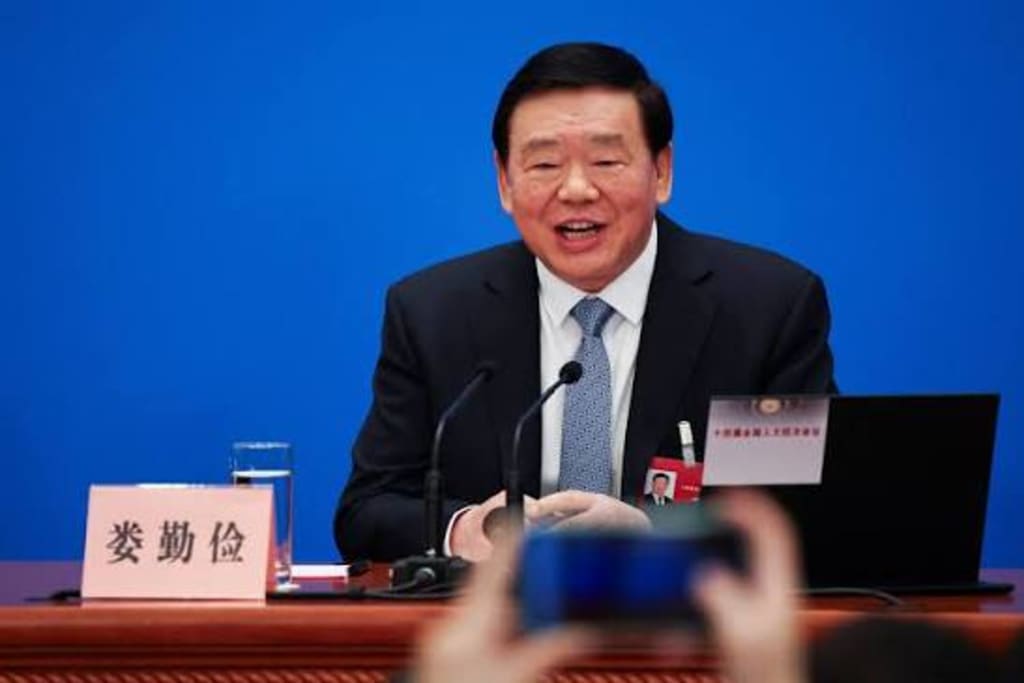
China has signaled a willingness to maintain dialogue with the United States amid growing tensions over trade, technology, and regional security, but officials emphasized that Beijing will firmly defend what it describes as its “red lines.” The statement comes at a time of heightened friction across multiple fronts, including Taiwan, the South China Sea, and sensitive export controls, reflecting China’s desire to balance engagement with assertiveness.
According to Chinese foreign ministry spokespersons, Beijing is prepared to pursue “constructive and pragmatic” channels of communication with Washington to prevent misunderstandings and manage competition. “We do not seek conflict, but we will not compromise on core national interests,” said the spokesperson. “China’s sovereignty, territorial integrity, and key security concerns are non-negotiable, and any attempt to cross these red lines will be firmly resisted.”
Dialogue Amid Rising Tensions
The statement follows recent U.S. diplomatic and military activity in East Asia, including increased naval presence near disputed areas and ongoing restrictions on Chinese access to certain high-tech goods. U.S. officials have reiterated the importance of maintaining a rules-based order while protecting American economic and security interests.
Analysts suggest that Beijing’s announcement is intended both for a domestic audience and international observers. Domestically, emphasizing red lines reinforces the government’s narrative of strength and vigilance. Internationally, it signals that China is open to talks, even as it seeks to deter what it perceives as encroachment on its sovereignty.
Core Issues at Stake
Several flashpoints underpin the current strain in U.S.–China relations:
Taiwan: Chinese officials continue to assert that Taiwan is an inalienable part of China, while U.S. policy supports defensive capabilities for the island without endorsing formal independence. Military exercises, arms sales, and diplomatic visits have contributed to heightened tensions.
Technology and Trade: Washington has imposed restrictions on exports of advanced semiconductors and other critical technologies to China, citing national security concerns. Beijing views these measures as attempts to curb its technological rise and has warned of retaliatory actions.
South China Sea and Regional Security: U.S. naval patrols and freedom-of-navigation operations challenge Beijing’s claims in disputed maritime zones. China maintains that it will protect territorial waters and maritime rights in the region.
Seeking Stability While Asserting Authority
Despite these tensions, both sides recognize the need to manage competition to avoid escalation. U.S. and Chinese officials have previously engaged in high-level talks to clarify intentions and set frameworks for cooperation in trade, climate, and global health. Chinese analysts argue that careful management of communication channels is critical to prevent miscalculations that could trigger conflict.
“The message from Beijing is clear: we are willing to talk, but our core interests are off-limits,” said a regional security expert. “This is about asserting authority without losing the benefits of dialogue.”
Global Implications
The U.S.–China relationship remains a key determinant for global stability. Investors, international organizations, and regional powers are closely watching how both countries navigate tensions while maintaining channels for crisis management. Disruption in communication or escalation over red-line issues could have significant consequences for global trade, energy supply chains, and military balance in Asia.
Looking Ahead
Analysts expect China to continue emphasizing dialogue, particularly in forums such as the U.S.–China Strategic and Economic Dialogue and military-to-military communication channels. At the same time, Beijing is likely to publicly reaffirm its red lines on sovereignty, Taiwan, and national security, ensuring that any engagement with Washington occurs on terms favorable to Chinese interests.
For Washington, the challenge lies in maintaining a balance: encouraging constructive communication while defending allies, upholding international norms, and protecting strategic interests. Both countries appear committed to managing tensions without triggering open confrontation, but the line between engagement and escalation remains thin.
The coming months will be critical in determining whether U.S.–China relations can sustain strategic dialogue while respecting red lines, or whether competitive pressures and domestic politics in both countries will intensify confrontation.
This approach captures China’s dual strategy of openness to dialogue combined with a firm defense of core national interests amid complex regional and global dynamics.
About the Creator
Fiaz Ahmed
I am Fiaz Ahmed. I am a passionate writer. I love covering trending topics and breaking news. With a sharp eye for what’s happening around the world, and crafts timely and engaging stories that keep readers informed and updated.
Keep reading
More stories from Fiaz Ahmed and writers in The Swamp and other communities.
Years-Long Delays to F-16 Fighter Deliveries to Ukraine Were a Leading U.S. Mistake in the War, Top General Concludes
A senior U.S. military commander has acknowledged that prolonged delays in delivering advanced fighter aircraft to Ukraine were among the most significant strategic mistakes made by United States and its allies during the early phases of the war. The assessment highlights how hesitation over escalation risks and training challenges may have limited Kyiv’s ability to contest airspace and strike Russian forces more effectively. The comments came as Western governments review their support strategies following months of intense fighting and renewed Russian offensives. According to the general, the failure to move faster on providing F-16 Fighting Falcon jets gave Moscow a critical window to adapt its air defenses and harden frontline positions. A Missed Opportunity in the Air War When Russia launched its full-scale invasion in 2022, Ukraine relied largely on aging Soviet-era aircraft. Ukrainian pilots proved remarkably resilient, but they faced growing disadvantages against Russian missile systems and electronic warfare. Western officials initially ruled out supplying modern fighter jets, fearing that such a step could provoke a wider confrontation with Moscow. In retrospect, the top general said, that caution came at a cost. “We underestimated how quickly Ukraine could absorb and employ Western aircraft,” he noted in remarks to defense analysts. “By the time the decision was finally made, the operational environment had become far more complex.” The approval for F-16 transfers did not come until well into the conflict, followed by lengthy training programs for pilots and maintenance crews. Delivery schedules were further slowed by the need to upgrade airfields, install compatible logistics systems, and integrate Western weapons into Ukrainian command networks. Strategic Consequences Defense experts argue that earlier deployment of F-16s could have reshaped the air campaign. The jets’ advanced radar, precision-guided munitions, and ability to network with NATO intelligence systems might have allowed Ukraine to strike supply hubs, protect its cities from missile attacks, and challenge Russian aircraft more aggressively. Instead, Ukraine spent much of the war fighting a largely defensive air battle, relying on surface-to-air missiles and improvised tactics. By the time the first F-16s were ready for combat roles, Russia had already reinforced its air defenses and dispersed key assets. “Timing is everything in war,” said one former NATO planner. “Weapons delivered too late can lose much of their strategic value, even if they are technologically superior.” Political and Military Hesitation The delays reflected deep political divisions in Washington and European capitals. Some policymakers worried that supplying fighter jets would blur the line between defensive aid and direct involvement. Others argued that training Ukrainian pilots would take years, making the effort impractical. Those assumptions proved only partially correct. Ukrainian crews completed accelerated training programs faster than expected, and early test flights demonstrated their ability to adapt to Western systems. This, the general suggested, shows that the initial reluctance was based more on political caution than military reality. Congressional critics have since questioned whether the same hesitation affected other key weapons decisions, including long-range missiles and advanced drones. Lessons for Future Conflicts The acknowledgment of error has broader implications beyond Ukraine. It underscores the challenge of balancing escalation risks with the need for timely support to partners under attack. Modern wars move quickly, and delays measured in months or years can be decisive. Military planners are now reassessing how quickly advanced platforms can be transferred and integrated in future crises. The general called for streamlined approval processes and pre-arranged training programs with allied nations to avoid similar bottlenecks. “There must be a standing framework for rapid capability sharing,” he said. “Otherwise, we will always be reacting too slowly to fast-moving threats.” Impact on the War’s Trajectory While F-16s are now entering Ukrainian service, their impact may be more limited than originally hoped. Russia’s layered air defenses and growing use of drones mean that air superiority remains elusive. Still, Ukrainian commanders believe the jets will enhance air defense and provide new strike options. The admission of miscalculation does not change past decisions, but it shapes how history will judge Western strategy. For many in Kyiv, the lesson is painful but clear: had advanced aircraft arrived sooner, the balance of power in the sky — and possibly on the ground — might have looked very different. As the war continues, the debate over delayed fighter deliveries stands as a case study in how strategic caution, however well intentioned, can have lasting consequences on the battlefield.
By Fiaz Ahmed about 21 hours ago in The Swamp
A Gathering of Evil Bosses
“I’m the queen of chin jutting while I smooth my hair, attacking, insulting, and deflecting to protect my appointer.” “Oh, please, Blondi, my hair is curled, highlighted, and longer than yours. I feature television commercials telling immigrants that we will give them a free plane ride home, and if they voluntarily turn themselves in, they will be allowed to legally apply for re-entry. It runs everywhere, and I look good in it! You can’t compete because of your blond hair. Mine is nicer, and my lips are prettier than yours.”
By Andrea Corwin 15 days ago in The Swamp
Iran’s Supreme Leader Ayatollah Ali Khamenei, Who Led the Islamic Republic Since 1989, Is Dead at 86
Ayatollah Ali Khamenei, the supreme leader of the Iran for more than three decades, has died at age 86, Iranian state media confirmed, marking a historic turning point for Tehran and a potential reshaping of Middle East geopolitics. His death was announced Sunday following a major joint military operation by the United States and Israel that reportedly struck his compound in Tehran over the weekend.
By Fiaz Ahmed Brohi4 days ago in The Swamp




Comments
There are no comments for this story
Be the first to respond and start the conversation.