
China Grows Military-Grade Rubber in the Gobi Desert as War Reshapes Global Supply Chains
Strategic cultivation of synthetic and hardy rubber signals Beijing’s push for self-reliance amid rising geopolitical tensions

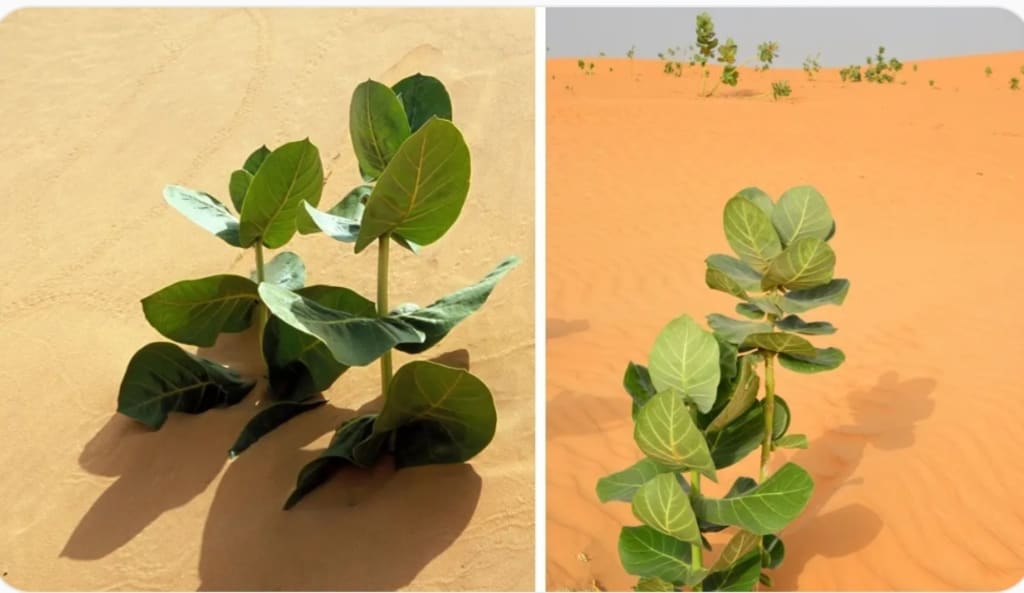
China has taken an unexpected but strategically significant step by cultivating military-grade rubber in the harsh environment of the Gobi Desert. The move comes as global conflicts, trade restrictions, and geopolitical rivalries continue to reshape supply chains for critical materials. Rubber—essential for military vehicles, aircraft components, missiles, and logistics equipment—has emerged as a strategic resource, and Beijing appears determined to reduce its dependence on foreign suppliers.
This initiative reflects a broader shift in China’s industrial and defense planning, where economic security and military readiness are increasingly intertwined.
---
Why Rubber Matters in Modern Warfare
Rubber may not attract the same attention as rare earths or semiconductors, but it is indispensable to modern militaries. Military-grade rubber is used in tires for armored vehicles, aircraft landing gear, fuel seals, gaskets, shock absorbers, and protective equipment. Its performance requirements are extreme: it must withstand high temperatures, pressure, abrasion, and chemical exposure.
Historically, much of the world’s natural rubber supply has come from Southeast Asia, particularly Thailand, Indonesia, and Malaysia. This geographic concentration has long been considered a strategic vulnerability—especially during times of war or political instability.
For China, which relies heavily on imported natural rubber, supply disruptions pose a serious national security concern.
---
War and the Weaponization of Supply Chains
Recent global conflicts and trade disputes have accelerated the weaponization of supply chains. Sanctions, export controls, and shipping disruptions have forced many countries to reassess their dependence on foreign materials critical to defense and industry.
China’s leadership has repeatedly emphasized the need for “self-reliance” in key sectors, particularly those linked to national security. Rubber now joins a growing list of strategic materials—including energy, food, and advanced manufacturing inputs—where domestic production is being prioritized.
The cultivation of military-grade rubber in the Gobi Desert is part of this broader recalibration.
---
Why the Gobi Desert?
At first glance, the Gobi Desert seems like an unlikely place to grow anything, let alone rubber. However, Chinese researchers and agricultural engineers have been experimenting with drought-resistant rubber-producing plants and synthetic rubber feedstocks that can survive in arid, extreme conditions.
Unlike traditional rubber trees, which require tropical climates, these alternative sources are engineered or selectively bred to tolerate poor soil, limited water, and temperature extremes. Advances in irrigation, soil treatment, and biotechnology have made cultivation in hostile environments increasingly feasible.
The Gobi Desert also offers strategic advantages:
Vast, sparsely populated land
Reduced risk of foreign surveillance or disruption
Proximity to industrial and military hubs in northern China
---
Synthetic and Hybrid Rubber Solutions
China’s approach does not rely solely on natural rubber. Instead, it combines biological cultivation with advanced synthetic rubber production. Synthetic rubber, derived from petrochemicals, already plays a major role in military applications due to its durability and consistency.
By integrating desert-grown raw materials with synthetic processing, China aims to create hybrid rubber products that meet strict military standards while reducing reliance on imports. This hybrid model allows for scalability, quality control, and rapid adaptation during wartime conditions.
Military analysts note that this strategy mirrors China’s efforts in other sectors, where redundancy and diversification are built into supply systems to ensure resilience under pressure.
---
Economic and Strategic Implications
The decision to grow military-grade rubber domestically has implications far beyond agriculture. It signals that Beijing expects long-term geopolitical competition, where access to basic materials could be constrained or contested.
From an economic perspective, domestic rubber production could stabilize prices and protect Chinese manufacturers from global market volatility. From a military standpoint, it ensures that critical equipment production remains uninterrupted even during conflicts or sanctions.
This move also highlights a broader trend: the blurring of lines between civilian industry and military supply chains. Infrastructure, agriculture, and technology development are increasingly designed with dual-use potential in mind.
---
Environmental and Practical Challenges
Despite its strategic appeal, the project faces significant challenges. Rubber cultivation in desert conditions is resource-intensive, particularly in terms of water and energy. Environmental concerns have been raised about the long-term sustainability of large-scale agriculture in fragile ecosystems like the Gobi.
Chinese officials and researchers argue that controlled irrigation, recycling systems, and limited cultivation zones will minimize environmental impact. They also emphasize that the project is as much about research and strategic capability as it is about immediate mass production.
Whether this balance can be maintained remains an open question.
---
A Signal to the World
China’s rubber initiative sends a clear message to global markets and policymakers: critical materials are no longer just commodities—they are strategic assets. As wars and geopolitical rivalries reshape trade flows, countries are increasingly willing to invest in unconventional and costly solutions to secure their supply chains.
For other nations dependent on imported rubber, China’s move may serve as a wake-up call. Diversification, stockpiling, and domestic alternatives are likely to gain renewed attention worldwide.
---
Conclusion
China’s decision to grow military-grade rubber in the Gobi Desert reflects a new era of strategic planning shaped by conflict, competition, and supply chain insecurity. By turning an inhospitable landscape into a source of critical military material, Beijing is betting on self-reliance as a cornerstone of national security.
While challenges remain, the project underscores a powerful reality of the modern world: in an age of geopolitical tension, even something as ordinary as rubber can become a strategic weapon.
About the Creator
Keep reading
More stories from Salaar Jamali and writers in The Swamp and other communities.
CME Raises Gold and Silver Margins After Historic Price Plunge
Titl Subtitle The precious metals market was shaken this week after a historic plunge in gold and silver prices triggered swift action from the CME Group, the world’s largest futures exchange. In response to extreme volatility and sharp losses, CME announced an increase in margin requirements for gold and silver futures, a move aimed at stabilizing trading conditions and reducing systemic risk.
By Salaar Jamaliabout 5 hours ago in The Swamp




Comments
There are no comments for this story
Be the first to respond and start the conversation.