
“Adapt, Shrink, or Die”: How U.S. Aid Conditions Could Reshape the United Nations
Experts warn that Washington’s terms for a $2bn aid package may undermine UN independence
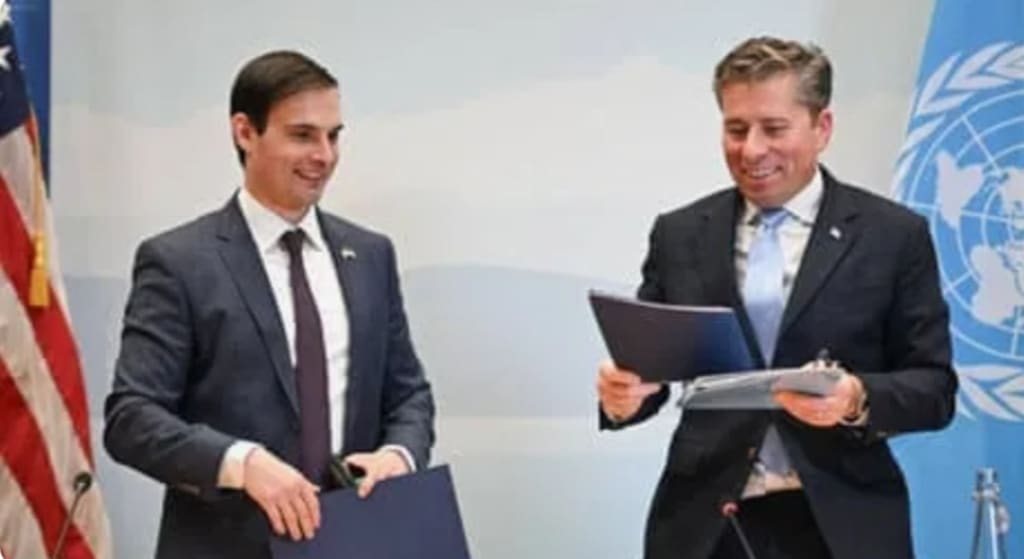
A growing debate is unfolding within international policy circles following reports that the United States has attached strict conditions to a $2 billion aid package for the United Nations. The message, described by experts as “adapt, shrink, or die,” signals a potential turning point in the relationship between Washington and the world’s most prominent multilateral institution. Critics argue that these terms could force the UN to align more closely with U.S. priorities, raising serious concerns about independence, neutrality, and the future of global governance.
The Power Behind the Purse Strings
The United States has long been one of the UN’s largest financial contributors, providing funding for peacekeeping operations, humanitarian programs, and development initiatives. This financial leverage has historically given Washington significant influence, but the latest conditions attached to aid represent a more explicit use of power.
According to policy analysts, the proposed terms demand structural reform, budget reductions, and program realignment in exchange for continued funding. While supporters frame these measures as necessary efficiency reforms, critics see them as an attempt to reshape the UN into an institution that mirrors U.S. strategic interests.
“Adapt, Shrink, or Die”: A Stark Choice
The phrase itself has sparked alarm. Experts say it reflects a transactional approach to multilateralism, where funding is contingent on compliance rather than shared global responsibility. The implication is clear: institutions that fail to conform risk financial collapse.
For the UN, which operates across humanitarian aid, climate policy, conflict resolution, and human rights monitoring, such pressure could limit its ability to act independently—especially in situations where U.S. interests conflict with international consensus.
What the Changes Could Mean
If implemented, the conditions could result in scaled-back programs, reduced staffing, and narrowed mandates. Some agencies may be forced to prioritize donor preferences over urgent humanitarian needs, particularly in regions where U.S. foreign policy is contested.
Experts warn that shrinking operations could disproportionately affect vulnerable populations. Refugee support programs, food security initiatives, and peacekeeping missions often rely heavily on consistent funding. Any disruption could have immediate real-world consequences.
The Question of UN Independence
At the heart of the debate lies a fundamental question: Can the UN remain neutral if its survival depends on political compliance?
Critics argue that the proposed conditions blur the line between reform and control. While reform is widely acknowledged as necessary within the UN system, tying financial support to ideological or strategic alignment risks eroding trust among member states.
Smaller nations, in particular, may fear that the UN’s role as a mediator and protector of international law could be compromised if it becomes overly dependent on one powerful donor.
Washington’s Perspective
From the U.S. perspective, calls for reform are not new. American officials have long criticized the UN for bureaucracy, inefficiency, and lack of accountability. Supporters of the aid conditions argue that taxpayers deserve transparency and measurable outcomes.
They contend that reform-driven funding is not coercion but responsible governance. In this view, the UN must modernize to remain relevant in a rapidly changing global landscape.
A Broader Trend in Global Politics
The situation reflects a wider shift in international relations. Multilateral institutions are increasingly pressured by nationalist agendas and donor-driven priorities. Similar dynamics have emerged in global health, climate financing, and development aid.
Experts note that this trend risks weakening the multilateral system itself. When cooperation is replaced by conditional loyalty, global institutions lose their ability to act as neutral platforms for collective problem-solving.
Reactions from the International Community
Diplomats and analysts from Europe, Africa, and Asia have expressed concern over the potential precedent. If one major donor successfully reshapes the UN through financial pressure, others may follow suit, leading to fragmentation and politicization.
Some member states have called for diversified funding sources to reduce dependency on any single contributor. Others argue that a renewed commitment to shared responsibility is essential to protect the UN’s core mission.
The Human Cost of Political Pressure
Beyond policy debates, the consequences of funding cuts would be felt most acutely by civilians in crisis zones. UN agencies often operate where no other support exists. Budget reductions could mean fewer vaccines, reduced food aid, and limited conflict mediation.
Humanitarian organizations warn that political bargaining over funding puts lives at risk, transforming aid into a tool of influence rather than compassion.
Conclusion
The U.S. “adapt, shrink, or die” approach to UN funding represents a critical moment for global governance. While reform is necessary, experts caution that coercive financial conditions threaten the UN’s independence and legitimacy.
As the debate continues, the world faces a choice: preserve multilateral institutions as neutral guardians of global cooperation, or allow them to become extensions of powerful national interests. The outcome will shape not only the future of the United Nations, but the stability of the international system itself.
About the Creator
Keep reading
More stories from Ayesha Lashari and writers in The Swamp and other communities.
How Thousands of Secret Russian Documents Were Exposed
In an age where information moves faster than ever, secrecy has become increasingly difficult to maintain. This reality was underscored when thousands of secret Russian documents were exposed to the public, revealing sensitive details about government operations, military planning, and internal communications. The disclosure has sent shockwaves through intelligence communities worldwide and raised urgent questions about cybersecurity, transparency, and the vulnerability of state secrets.
By Ayesha Lashariabout a month ago in The Swamp
How to Watch Back-to-Back Northern Lights for a Third Time This Week
Aurora borealis enthusiasts have reason to celebrate: the Northern Lights are set to appear for a third consecutive time this week, offering an unprecedented streak of celestial displays. These mesmerizing lights, caused by charged particles from the sun colliding with Earth’s atmosphere, are a highlight of winter skies in northern regions, and scientists say this week’s back-to-back events could be some of the most vivid in years.
By Aarif Lashari2 days ago in The Swamp
Brooklyn Beckham Ignores Family’s Reunion as He Shares Loved-Up Nicola Peltz Pictures — and a $111,000 Bottle of Wine
Brooklyn Beckham has once again found himself at the center of public attention—not for what he said, but for what he didn’t. As the Beckham family reportedly reunited with loved ones in a moment meant to symbolize togetherness, the eldest Beckham son appeared to ignore the occasion entirely. Instead, Brooklyn chose to share affectionate images with his wife, Nicola Peltz, alongside a striking detail that did not go unnoticed: a bottle of wine reportedly worth $111,000.
By Aarif Lashari6 days ago in The Swamp
A Letter to the Firestarter
Dear Firestarter, We can all see you, we've been watching you since you began. In case you didn't know we were here before you and we will be here after. We witnessed your rise, your setbacks, your guilt and your lies. We witnessed you start the fire.
By Donny Foley4 days ago in Poets




Comments
There are no comments for this story
Be the first to respond and start the conversation.