
4 Journalists Detained in Cameroon Reporting on Trump’s Deportations
A chilling reminder of the risks journalists face when exposing hidden immigration policies

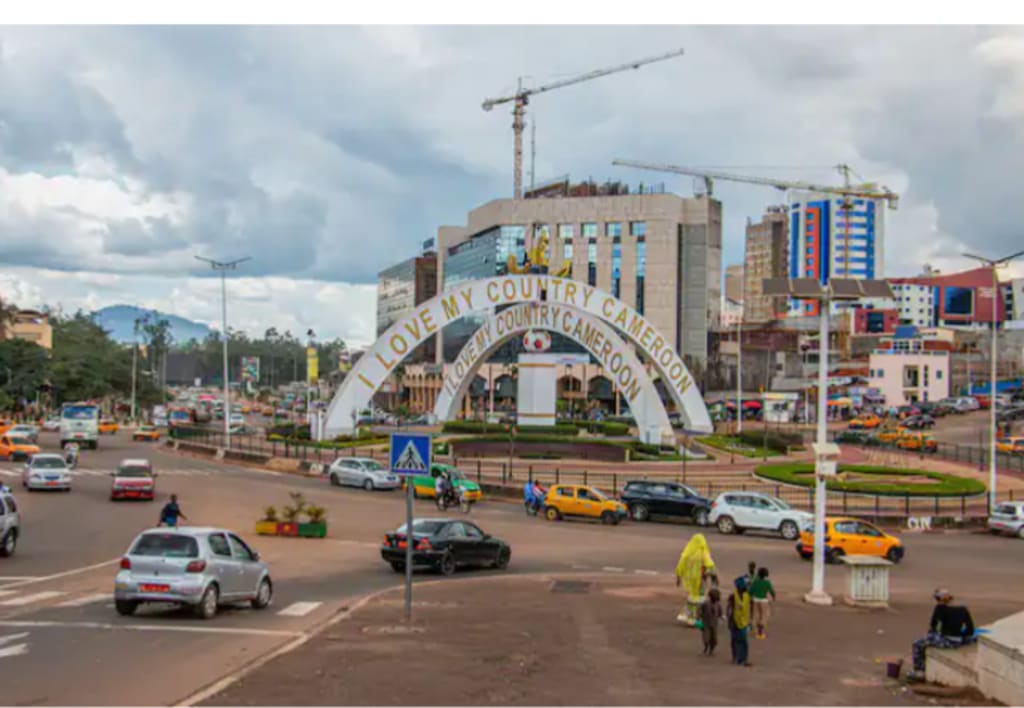
In a troubling development that has sparked international concern, four journalists and a lawyer were detained in Cameroon while investigating a controversial deportation policy linked to former U.S. President Donald Trump. Their detention has reignited debates about press freedom, migrant rights, and the secrecy surrounding so-called “third-country deportations.”
The journalists were reportedly documenting the living conditions and legal status of migrants sent from the United States to Cameroon—many of whom had no prior connection to the country. What began as routine reporting quickly turned into a tense confrontation with authorities, raising serious questions about transparency and accountability.
What Happened in Yaoundé?
The journalists were working in Cameroon, specifically in the capital city of Yaoundé, where a group of deported migrants was being housed in a government-controlled compound. They were accompanied by a lawyer representing several of the migrants.
According to accounts from those involved, plainclothes officers stopped them as they attempted to leave the facility. Their phones, cameras, and laptops were confiscated, and they were taken to a police station for questioning. The group was held for several hours without formal charges.
One journalist described the experience as intimidating and emotionally exhausting. Another reported that physical force was used during the arrest. Although they were eventually released, their equipment was not immediately returned, limiting their ability to continue reporting.
For many press freedom advocates, the incident reflects a growing pattern of harassment toward journalists who investigate sensitive political or human rights issues.
The Deportation Program Under Scrutiny
At the heart of the story is a deportation policy implemented during the Trump administration that involved sending migrants to “third countries” rather than their nations of origin. This meant individuals from countries such as Ghana, Ethiopia, Zimbabwe, or the Democratic Republic of Congo were flown to Cameroon—even when they had no family, legal status, or support network there.
Some of these migrants had already received legal protections in the United States, including “withholding of removal,” which prevents deportation to their home countries due to fear of persecution. However, the policy exploited a legal gray area by relocating them elsewhere.
Critics argue this strategy was designed to bypass humanitarian safeguards and reduce asylum claims without addressing the root causes of migration. Supporters of stricter immigration enforcement saw it as a tool for deterrence. Either way, the program operated with little public oversight.
The journalists in Cameroon were attempting to uncover how this policy was affecting people on the ground—how migrants were being treated, what legal rights they had, and whether international law was being respected.
Why Journalists Were Targeted
Cameroon has long been a difficult environment for independent journalism. Reporting on politically sensitive topics, especially those involving foreign governments or security operations, is often met with resistance.
By documenting deportees and questioning the legality of their detention, these journalists crossed into territory authorities considered off-limits. Their presence threatened to expose information that governments on both sides might prefer to keep quiet.
Press advocacy groups have described the detention as an act of intimidation meant to discourage further investigation. Confiscating equipment, detaining reporters without charges, and using force sends a message not only to those involved but also to others who might attempt similar reporting.
International Reactions
The incident drew condemnation from human rights organizations and media watchdogs. Groups such as the Committee to Protect Journalists and Reporters Without Borders emphasized that journalists must be allowed to work freely, especially when reporting on vulnerable populations like migrants.
In the United States, lawmakers raised concerns about the secrecy surrounding the deportation agreements. Some called for greater transparency and accountability in immigration policy, arguing that democratic societies cannot function when key decisions are hidden from public view.
So far, neither Cameroonian authorities nor U.S. officials have provided clear explanations for the journalists’ detention or the legal status of the migrants being held in Yaoundé.
A Broader Crisis of Press Freedom
This case highlights a global problem. Journalists increasingly face harassment, detention, or violence for covering issues related to migration, corruption, and government power. From war zones to detention centers, reporting the truth often comes with personal risk.
In Cameroon, previous journalists have been arrested or imprisoned for doing their jobs. The latest incident adds to a long list of examples showing how fragile press freedom can be when political interests are involved.
When journalists are silenced, the public loses access to critical information. Migrants’ stories go untold, policies remain unexamined, and accountability disappears.
What Comes Next?
Although the journalists have been released, many questions remain unanswered. What will happen to the migrants still being held in Cameroon? Will the confiscated equipment be returned? And will authorities allow continued reporting on this issue?
Lawyers representing deported migrants say they will continue to challenge the legality of the program. Advocacy groups are calling for international oversight and stronger protections for reporters working in high-risk environments.
For now, the incident stands as a stark reminder of the dangers faced by journalists who investigate powerful systems.
Final Thoughts
The detention of four journalists in Cameroon is more than a local incident—it is a warning sign. It shows how immigration policy, secrecy, and press suppression can intersect in ways that threaten both human rights and democratic values.
Journalism exists to shine light into dark places. When that light is blocked, injustice thrives unseen. Whether in the United States, Cameroon, or anywhere else in the world, the freedom to report must remain non-negotiable.
Because without journalists, the truth has no voice—and without truth, there can be no justice.
About the Creator
Sajida Sikandar
Hi, I’m Sajida Sikandar, a passionate blogger with 3 years of experience in crafting engaging and insightful content. Join me as I share my thoughts, stories, and ideas on a variety of topics that matter to you.
Keep reading
More stories from Sajida Sikandar and writers in The Swamp and other communities.
India Tells University to Leave AI Summit After Presenting Chinese Robot as Its Own, Sources Say
What was meant to be a celebration of technological progress turned into a public relations headache after an Indian university was reportedly asked to leave a major artificial intelligence summit for presenting a Chinese-made robot as its own invention.
By Sajida Sikandar2 days ago in The Swamp
A Gathering of Evil Bosses
“I’m the queen of chin jutting while I smooth my hair, attacking, insulting, and deflecting to protect my appointer.” “Oh, please, Blondi, my hair is curled, highlighted, and longer than yours. I feature television commercials telling immigrants that we will give them a free plane ride home, and if they voluntarily turn themselves in, they will be allowed to legally apply for re-entry. It runs everywhere, and I look good in it! You can’t compete because of your blond hair. Mine is nicer, and my lips are prettier than yours.”
By Andrea Corwin 4 days ago in The Swamp
Poland Pulls Out of Treaty Banning Antipersonnel Mines, Says It Will Use Them to Defend Against Russia
Poland has formally withdrawn from the 1997 Anti‑Personnel Mine Ban Treaty, commonly known as the Ottawa Convention, and announced it will resume production and potential deployment of antipersonnel mines along its eastern border as part of its defence strategy against growing concerns over Russian aggression. The move marks a significant shift in Warsaw’s defence policy and has attracted international attention from governments, human rights organisations and military analysts alike. Withdrawal from the Ottawa Treaty On 20 February 2026, Poland officially exited the Ottawa Convention, which prohibits signatory states from producing, stockpiling and using antipersonnel landmines — weapons widely criticised for their long‑term danger to civilians in conflict zones. Poland had ratified the treaty in 2012 and completed the destruction of its stockpile by 2016, fully complying with the ban until now. Deputy Defence Minister Paweł Zalewski told the Associated Press that the withdrawal was driven by what Warsaw sees as a deteriorating security environment in Eastern Europe and the need to fortify its borders with both Russia and Belarus under the country’s ongoing Eastern Shield defence initiative. He said antipersonnel and anti‑tank mines would be considered “important elements” of Poland’s defensive structure if confrontation with Russia became imminent. Poland’s Prime Minister Donald Tusk said that, following the exit, Warsaw would soon have the capability to deploy minefields along its eastern frontiers within 48 hours if necessary, part of broader efforts to strengthen territorial deterrence. euronews Strategic Rationale and Regional Context Poland’s decision comes amid persistent security anxieties linked to Russia’s full‑scale invasion of Ukraine and what Warsaw and other NATO capitals view as unpredictable Russian military behaviour. Russia has never ratified the Ottawa Convention, and neither have other major powers such as the United States and China. The Week Neighbouring NATO states — including Finland, Estonia, Latvia and Lithuania — have already either announced intentions to withdraw or completed their departures from the treaty, citing similar defence concerns. Warsaw’s action aligns with this wider reassessment of land‑mine related restrictions by countries bordering Russia and Belarus, all seeking greater tactical latitude in case of conflict escalation. The New Voice of Ukraine “Given the length of our eastern border and the nature of the threat we face,” Tusk said, “we must have every tool necessary for defence.” He added that readiness to lay antipersonnel mines was intended as a deterrent rather than an indication of aggressive intent. The New Voice of Ukraine Defence Plans and Production Polish officials have stated that the country will restart domestic production of antipersonnel mines alongside anti‑tank variants, aiming for self‑sufficiency rather than reliance on imported ordnance. This marks a reversal of a decade of compliance with international norms intended to eliminate mines altogether. Anti‑tank mines, which detonate under the weight of vehicles rather than individuals, were not banned under the Ottawa Convention and have been part of Warsaw’s defensive planning for some time. But the resumption of antipersonnel mine manufacturing — which targets individual foot soldiers — represents a more controversial shift. The Week Human Rights and Safety Concerns Human rights organisations have strongly condemned the decision, warning that antipersonnel mines have a long history of indiscriminate and lasting harm to civilian populations, often remaining lethal long after conflicts end. Mines have caused extensive casualties in countries such as Cambodia, Angola, and Bosnia and Herzegovina, where they remain a danger decades after war has ceased. Zalewski responded to these criticisms by emphasising that Poland intends to keep mines in reserve and use them only in the event of a “realistic threat” of Russian aggression, and not to exclude affected land from normal civilian use during peacetime. He said that Warsaw aimed to balance strong defence with safety considerations, but many observers doubt that risk can be fully mitigated once mines are deployed. NATO and Allied Reactions The policy shift has raised questions among NATO allies about coordination and broader defensive strategy along the alliance’s eastern flank. While many NATO members have similarly revised their positions on landmine bans, the issue remains divisive within the alliance, particularly where civilian humanitarian concerns intersect with military preparedness. The Week Officials stress that Poland remains committed to NATO collective defence and to upholding other international legal obligations, even as it diverges on this particular treaty commitment. They argue that defending soberly and effectively against potential aggression requires flexibility in military planning. Conclusion Poland’s withdrawal from the Ottawa Convention and its resumption of antipersonnel mine production highlights a profound shift in security policy driven by geopolitical realities and concerns over Russian intentions. The move reflects broader trends among NATO states on the eastern edge of the alliance, but also renews debates about the humanitarian and civilian implications of landmine use. While Warsaw insists its stance is defensive and measured, human rights groups and some international observers fear that reintroducing mines could bring long‑term dangers to civilian populations and complicate post‑conflict recovery if hostilities were ever to erupt. Whether this policy will deter aggression or create new risks remains at the centre of a growing international conversation.
By Fiaz Ahmed 2 days ago in The Swamp
The Cave Part 6
If you have ever heard a tale about yourself that you cannot remember and doubtless think is made up, you will know how I felt when Tharkin related all that the eagle had seen of me before my memories were scattered. Of far distances and traveling companions that I did not recall, camping out under the stars and making our way to the mountains with deliberate purpose. The great bird had lost contact with my party once we entered the forests, and the seven other members were not seen again by him or his brethren since.
By Jamye Sharp7 days ago in Chapters




Comments
There are no comments for this story
Be the first to respond and start the conversation.