
Should Your Business Launch a Crypto Token in 2026? Complete Beginner Guide
A practical, founder-focused guide to help businesses decide whether launching a crypto token in 2026 is a smart growth strategy or an unnecessary risk.

In 2026, crypto tokens are no longer experimental toys for tech-native startups. They have matured into real business tools used for fundraising, customer engagement, loyalty programs, digital ownership, and even revenue sharing.
What began as a niche movement led by blockchain enthusiasts has evolved into a serious business strategy adopted by fintech companies, gaming studios, marketplaces, real estate platforms, and SaaS providers. Businesses today are launching tokens not just to raise capital, but to build ecosystems, reward users, create new revenue channels, and turn customers into stakeholders.
At the same time, the space has grown more complex.
Regulations are tighter. Users are smarter. Investors expect utility, not hype. And token launches without a clear business purpose struggle to survive beyond the first few months.
So the question most founders now ask is not “Can we launch a token?”
It is “Should we?”
This guide is written for entrepreneurs, product leaders, and business owners who want a grounded, practical understanding of crypto tokens in 2026. We will walk through what tokens really are, why businesses launch them, what benefits they bring, where most projects fail, and how to decide if launching a token actually makes sense for your company.
This is not a hype piece. It is a business-first exploration.
What Does It Really Mean to Launch a Crypto Token?
At its core, launching a crypto token means creating a digital asset on a blockchain that represents some form of value, access, ownership, or participation within your business ecosystem.
Unlike traditional equity or reward points, tokens live on public or permissioned blockchains. They can be transferred globally, stored in user wallets, traded on exchanges, integrated into smart contracts, and programmed with rules such as vesting, staking, or governance rights.
But here is the key point many beginners miss:
A crypto token is not a product by itself.
It is an economic layer added on top of your existing or planned business.
The token only succeeds if the underlying business succeeds.
When companies rush into token launches without a real product, clear utility, or sustainable revenue model, the token becomes speculative. When tokens are designed around actual business activity, they become powerful growth tools.
In 2026, successful business tokens typically support one or more of the following:
- Access to products or services
- Rewards for user participation
- Governance or voting rights
- Staking or yield mechanisms tied to platform usage
- Payment for fees or subscriptions
- Digital ownership of assets or content
The token becomes a connective tissue between users, products, and value creation.
Why Are Businesses Launching Tokens in 2026?
The motivation behind business token launches has shifted dramatically over the last few years.
Earlier cycles focused heavily on fundraising. Today, founders are more interested in long-term ecosystem building.
Here are the primary reasons businesses choose to launch tokens in 2026.
1. Raising Capital Without Giving Up Equity
Tokens allow companies to raise funds globally without selling shares or bringing in traditional venture capital.
Instead of equity dilution, founders distribute tokens that derive value from platform usage, transaction volume, or ecosystem growth. This model appeals especially to startups that want to retain ownership while still accessing global liquidity.
For early-stage businesses, token sales, presales, or community rounds can provide runway faster than conventional funding routes.
However, this only works when the token has genuine utility. Investors today avoid empty fundraising tokens.
2. Turning Users Into Stakeholders
One of the most powerful aspects of tokens is alignment.
Customers who hold tokens are no longer just users. They become participants in the business.
They promote the product.
They give feedback.
They help onboard new users.
They care about long-term success.
This creates a network effect that traditional loyalty programs cannot replicate.
Many platforms now use tokens to reward activity such as:
- Making purchases
- Creating content
- Providing liquidity
- Referring users
- Completing tasks
- Participating in governance
The result is deeper engagement and lower customer acquisition costs over time.
3. Creating New Revenue Streams
Tokens unlock monetization models that were previously impossible or difficult to implement.
Examples include:
- Transaction fees paid in tokens
- Premium access tiers unlocked through token holding
- Staking programs tied to platform services
- NFT integrations backed by utility tokens
- Marketplace commissions distributed through token economics
Instead of relying solely on subscriptions or advertising, businesses can build token-powered economies around their products.
4. Building Global Communities From Day One
Traditional businesses expand market by market.
Token-based platforms launch globally on day one.
Anyone with an internet connection and a wallet can participate. This opens access to international users, contributors, and investors without complex onboarding infrastructure.
For Web3-native businesses, this global reach is often the biggest advantage of tokenization.
The Real Benefits of Launching a Token for Your Business
Let us move beyond theory and look at tangible business advantages.
When executed properly, a token launch can deliver the following outcomes.
Faster Market Entry
Tokens allow startups to bootstrap communities before full product rollout. Early adopters become beta users, testers, and advocates.
Instead of building quietly for years, founders can validate demand quickly.
Community-Led Growth
Your marketing becomes decentralized.
Token holders share content, invite friends, and build grassroots communities because they benefit directly from growth. This organic reach often outperforms paid advertising in Web3 environments.
Transparent Economics
All token transactions are visible on-chain. This transparency builds trust with users and investors, especially compared to opaque traditional reward systems.
Programmable Incentives
Smart contracts automate rewards, vesting schedules, governance voting, and staking. This reduces operational overhead while ensuring fairness and consistency.
Liquidity for Participants
Unlike loyalty points, tokens can often be traded. Users are not locked into your platform to realize value, which makes participation more attractive.
But Here Is the Hard Truth: Most Tokens Fail
Despite all these benefits, the majority of business tokens launched in recent years have struggled or collapsed.
The reasons are remarkably consistent.
Lack of Real Utility
If the token does not serve a clear purpose inside the product, users lose interest. Price speculation alone does not sustain ecosystems.
Weak Tokenomics
Poor supply planning, excessive early allocations, or aggressive unlock schedules flood the market with tokens. This destroys price stability and trust.
No Product Market Fit
Some teams launch tokens before validating their core business idea. Without real demand, token incentives cannot manufacture success.
Regulatory Blind Spots
Ignoring compliance can lead to shutdowns, frozen funds, or legal action. In 2026, regulators actively monitor token projects across many jurisdictions.
Overpromising, Underdelivering
Projects that rely on hype rather than execution quickly lose credibility.
These failures are why experienced founders now approach token launches with the same rigor as any serious business expansion.
Is Your Business Actually Ready for a Token?
Before thinking about blockchain or fundraising models, you need to answer one critical question:
Does a token improve your business, or just complicate it?
Here are foundational criteria successful projects usually meet.
You Have a Clear Product Vision
Tokens amplify existing value. They do not create it from nothing.
If your product roadmap is vague, launching a token will magnify that uncertainty.
You Understand Your User Journey
You should know where tokens fit into onboarding, engagement, retention, and monetization. Random reward mechanisms rarely work.
You Have a Sustainable Revenue Model
Tokens are not substitutes for business fundamentals. They should support revenue, not replace it.
You Are Prepared for Long-Term Commitment
A token launch is not a campaign. It is an ongoing responsibility involving community management, updates, governance, and economic maintenance.
You Can Handle Transparency
Everything becomes public. Wallet movements, treasury balances, and supply changes are visible. If your organization is uncomfortable with this level of openness, tokenization may not be right for you.
Common Business Types That Benefit Most From Tokens
Not every company needs a token. But certain models align especially well.
These include:
- Marketplaces connecting buyers and sellers
- Gaming platforms with in-game economies
- Content platforms rewarding creators
- DeFi and fintech applications
- Real-world asset platforms
- SaaS tools with strong communities
- Social networks
- Learning platforms
In these environments, tokens naturally support interaction, incentives, and value exchange.
Traditional offline businesses can also benefit, but usually only when paired with digital experiences or loyalty ecosystems.
At this point, you should have a grounded understanding of what launching a crypto token really means in 2026, why businesses pursue it, and what separates successful projects from failed experiments.
Popular Token Models Businesses Use in 2026
Once founders understand why they want a token, the next question becomes how that token should function. There is no universal model. Successful projects choose structures that align with their business goals, user behavior, and revenue streams.
Below are the most common token approaches used by real businesses today.
Utility-First Tokens
This is the most widely adopted model.
The token acts as fuel inside your platform. Users spend it to access features, unlock premium tools, pay transaction fees, or activate services.
Examples include:
- Paying platform commissions
- Unlocking advanced analytics
- Accessing gated content
- Using marketplace features
- Purchasing digital goods
The value of the token grows as platform usage increases.
This model works best when your product already has clear user demand.
Staking-Based Ecosystems
Here, users lock tokens to earn rewards or gain privileges.
Businesses use staking to:
- Reduce circulating supply
- Encourage long-term holding
- Reward loyal users
- Grant access to higher service tiers
- Enable governance rights
Staking works especially well for platforms with recurring usage, such as SaaS tools, marketplaces, or financial products.
Governance Tokens
These tokens give holders voting power over platform decisions like feature updates, treasury usage, or roadmap priorities.
Governance tokens turn users into co-builders. This increases transparency and trust but also requires careful design. Poor governance structures often lead to low participation or decision paralysis.
This model suits community-driven platforms.
Hybrid Tokens
Most serious projects now combine multiple models.
For example:
- Utility + staking
- Utility + governance
- Staking + rewards + access tiers
Hybrid tokens allow businesses to balance engagement, monetization, and decentralization without relying on a single mechanism.
How Real Businesses Are Using Tokens Today
Instead of abstract theory, let’s look at real-world patterns.
Marketplaces
Tokens are used to pay listing fees, reward sellers, and incentivize buyers. Staking often unlocks reduced commissions or higher visibility.
Gaming Platforms
Tokens reward gameplay, unlock assets, enable NFT upgrades, and power in-game economies.
SaaS Products
Users stake tokens for premium features, API access, or enterprise tools. Subscription models merge with token economics.
Content Platforms
Creators earn tokens for engagement. Users tip creators or unlock exclusive content using tokens.
Real-World Asset Platforms
Tokens represent fractional ownership or grant access to yield opportunities backed by physical assets.
Across all these sectors, the winning formula remains consistent:
The token supports business activity. It does not replace it.
What Does It Actually Cost to Launch a Crypto Token?
Many founders underestimate costs because they only think about smart contract development.
In reality, launching a serious business token involves multiple layers.
Here is a realistic breakdown.
Technical Development
This includes:
- Token smart contract creation
- Vesting and staking contracts
- Admin dashboards
- Wallet integrations
- Security audits
Typical range: $8,000 to $40,000+, depending on complexity.
Tokenomics Design
Professional tokenomics involves:
- Supply modeling
- Allocation strategy
- Vesting schedules
- Reward systems
- Inflation or deflation logic
Poor tokenomics kills projects faster than bad marketing.
Expect $3,000 to $15,000 for proper design.
Legal and Compliance
This is no longer optional in 2026.
Depending on jurisdiction, you may need:
- Legal opinions
- Token classification analysis
- KYC/AML flows
- Terms and disclosures
Budget $5,000 to $25,000+.
Marketing and Community Building
Without users, tokens fail.
Costs include:
- Community setup
- Content creation
- PR
- Influencer outreach
- Launch campaigns
This can range from $5,000 to six figures depending on ambition.
Ongoing Operations
After launch, you must maintain:
- Community management
- Technical updates
- Treasury oversight
- Governance processes
A token launch is not a one-time expense.
Regulatory Reality in 2026: What Founders Must Know
Regulation is now part of token strategy.
Most countries classify tokens into categories such as utility, payment, or security-like instruments. The classification determines what rules apply.
Key compliance trends in 2026:
- KYC is standard for token sales
- Clear utility disclosure is expected
- Marketing claims are monitored
- Treasury transparency matters
- Investor protection frameworks are expanding
Ignoring regulation can result in blocked exchanges, frozen funds, or forced shutdowns.
Smart founders design tokens conservatively, focusing on utility first and avoiding profit promises.
Legal guidance early saves enormous trouble later.
A Practical Step-by-Step Token Launch Framework
If your business decides to move forward, here is a grounded process followed by mature teams.
Step 1: Define Business Objectives
Ask:
- Why do we need a token?
- What problem does it solve?
- How does it support revenue?
If answers feel vague, pause.
Step 2: Design Token Utility
Map token usage directly to product flows.
Where will users earn tokens?
Where will they spend them?
Every loop should connect to real activity.
Step 3: Build Tokenomics
Create supply limits, vesting schedules, reward mechanics, and treasury rules.
This stage determines long-term stability.
Step 4: Address Legal Structure
Clarify compliance, jurisdiction strategy, and disclosures before launch.
Step 5: Develop Smart Contracts
Build token contracts, staking systems, dashboards, and integrations.
Security audits are mandatory.
Step 6: Prepare Community and Marketing
Launch content, onboarding flows, documentation, and engagement channels.
Early education matters more than hype.
Step 7: Soft Launch and Iterate
Start with limited distribution. Gather feedback. Adjust mechanics.
Avoid full-scale launches without testing.
A Founder’s Decision Checklist
Before committing, answer these honestly:
- Do we have a real product or active roadmap?
- Does the token improve user experience?
- Can we sustain community engagement long term?
- Are we ready for transparency?
- Do we understand regulatory responsibilities?
- Can we afford ongoing operations?
If more than two answers feel uncertain, delay your token.
Should Your Business Launch a Crypto Token in 2026?
Here is the balanced truth.
You should launch a token if:
- Your product benefits from shared ownership or incentives
- You have a community-driven model
- You understand token economics
- You are building a long-term ecosystem
You should not launch a token if:
- You only want fast fundraising
- Your product is undeveloped
- You lack operational capacity
- You are uncomfortable with public accountability
Tokens are powerful business tools when used correctly.
They are destructive distractions when used prematurely.
Final Thoughts
In 2026, crypto tokens have matured from speculative instruments into economic infrastructure for digital businesses.
The most successful founders treat tokens like product architecture, not promotional assets. They design carefully, launch slowly, listen closely to users, and iterate continuously.
If your business already delivers value, a token can amplify growth, loyalty, and global reach.
If it does not, a token will only expose weaknesses faster.
The decision is strategic, not technical.
Approach it like any major business expansion. With clarity, patience, and discipline.
About the Creator
Keep reading
More stories from Jennifer Atkinson and writers in The Chain and other communities.
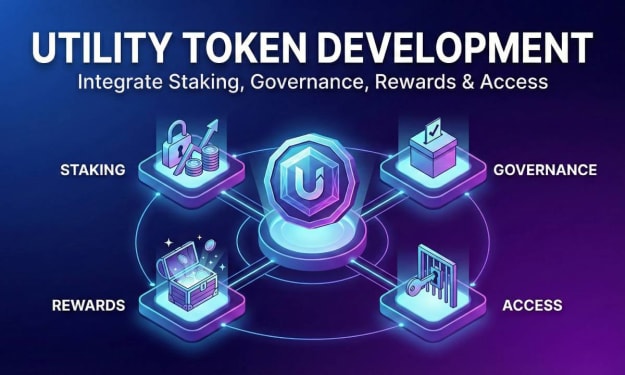
Utility Token Development: How to Add Staking, Governance, Rewards, and Access to Your Token?
A token without utility rarely maintains relevance beyond early interest. When users hold a token but cannot actively use it, motivation fades and trust weakens. Utility gives a token purpose by embedding it into the everyday functioning of an ecosystem. Instead of being just another asset to trade, the token becomes something users depend on for participation, benefits, and influence.
By Jennifer Atkinsona day ago in The Chain
Analyse this!
Wanna know how to improve your writing? There is a simple, quick, tried and tested method. Tried and tested by who? By me, as it happens, and I can guarantee that it will work for you. I know what I am talking about. Not always, of course, but certainly in this case.
By Raymond G. Taylor3 days ago in Writers



Comments
There are no comments for this story
Be the first to respond and start the conversation.