
Threads of Identity
How Style Shapes Who We Are


Mehreen had always seen style as more than just clothes. To her, it was an extension of personality, a language spoken without words. As a teenager, she often experimented with colors, textures, and fabrics, blending patterns that most people considered mismatched. Her friends called her daring, while others whispered that she looked “strange.” Mehreen didn’t mind. She knew that style was personal, a way to express the self in a world that often demanded conformity.
In school, Mehreen was sometimes teased for her bold choices, but she wore them like armor. A bright red jacket over a flowy dress, sneakers with glitter, scarves wrapped creatively—it was her signature. To her, every outfit told a story. The red jacket represented courage, the dress freedom, the sneakers a playful connection to childhood, and the scarves a memory of her grandmother who had taught her that colors could heal. Through these choices, Mehreen felt confident, grounded, and connected to her past.
One day, her school announced a creative competition where students were encouraged to present a “personal statement” through any medium: writing, painting, or style. Mehreen knew immediately she wanted to use her fashion sense. For her, this was not about winning; it was about showing how style could speak for someone when words were impossible. She spent weeks selecting outfits, arranging accessories, and documenting how each choice reflected a part of her life.
When the day arrived, Mehreen walked into the hall full of nervous and excited students. Some wore traditional formal clothing, others had creative props, but Mehreen knew her style would stand out—not because it was flashy, but because it was authentic. She presented her vision to the judges, explaining how her choices represented courage, joy, individuality, and memory. She spoke confidently, showing that fashion could be intentional and meaningful, not just decorative.
The judges were captivated. They asked questions about her combinations, her choices, and her inspiration. For the first time, Mehreen realized that style could open doors not only for personal expression but also for connection. People began to see that fashion was not shallow; it was a tool for storytelling, emotion, and identity. Her outfit was more than fabric—it was a statement about who she was and what she valued.
After the competition, Mehreen noticed a change in how her peers interacted with her. Some approached her for advice, others expressed admiration, but what mattered most was the way she inspired confidence in others. She began mentoring younger students, teaching them to embrace their unique choices and to wear what made them feel powerful. Style became a bridge between generations, experiences, and personalities.
Mehreen also learned something important about courage. Style, she realized, was not only about standing out. It was about staying true when others expected conformity, about choosing what represented you over what was socially accepted. Every scarf, jacket, and accessory became a symbol of her identity, each decision reinforcing self-respect and confidence.
Over time, Mehreen’s sense of style evolved with her, reflecting not only fashion trends but also the phases of her life. She mixed vintage clothing with modern pieces, experimented with textures and patterns, and incorporated meaningful jewelry from her family. Each outfit became a conversation, not about clothes, but about story, personality, and authenticity.
By the end of the school year, Mehreen understood that style is far more than appearance—it is an expression of self, a shield, a memory, and a language. She had learned that what people wear can inspire, empower, and connect, far beyond what words can achieve. And most importantly, she knew that confidence, carried through every outfit, is the most beautiful accessory of all.
From that point forward, Mehreen dressed not to impress others, but to celebrate herself. Her style told stories of courage, creativity, and individuality. It reminded her daily that fashion is not superficial—it is potent, meaningful, and human.
About the Creator
Sudais Zakwan
Sudais Zakwan – Storyteller of Emotions
Sudais Zakwan is a passionate story writer known for crafting emotionally rich and thought-provoking stories that resonate with readers of all ages. With a unique voice and creative flair.
Keep reading
More stories from Sudais Zakwan and writers in Styled and other communities.
The Girl Who Wore Confidence
Amara had always loved fashion, but not in the way most people did. For her, style was not about labels, expensive outfits, or following trends blindly. Style was about expression, about showing the world who she was without saying a word. Even as a child, she would mix colors that didn’t “match,” wear hats she found in second-hand stores, and layer scarves in ways her friends called strange. She didn’t care. She knew that what mattered was the energy she carried.
By Sudais Zakwana day ago in Styled
The Rikki La Rouge Fashion House
Doing a fashion line was one of my entertainment dreams and now it has been made a reality by me the dreamer who makes his or her own dreams come true. everything that people say in the industry about going for your dreams and that anything is possible you just got to believe and also have a plan and a goal. Also I thank God that I could do anything in the entertainment field at all and I just can't say enough. One of my primary favorite fashion designers is Versace. May he rest in Peace and style.
By Revista Miko4 days ago in Styled
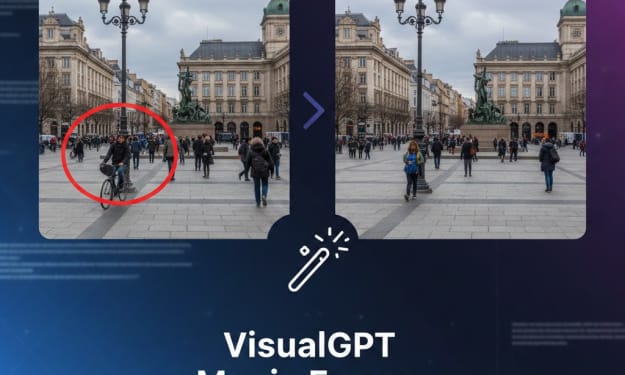
VisualGPT Magic Eraser: AI Object Removal for Clean and Usable Images
Understanding Image Cleanup and Optimization Using Magic Eraser and ImageEditor Digital images are frequently reused across platforms, formats, and contexts. During this process, images often accumulate unwanted elements such as watermarks, translated text remnants, interface overlays, or background distractions. These elements may not seem critical at first but can reduce clarity and usability when images are repurposed for documentation, education, or publishing.
By Abbasi Publisher7 days ago in Styled
Our Song
Evening has given way to night. Gently, I settle next to you on the comfortable, old love seat and reach for your hand. You snatch it away, again. It cuts me to the quick, but I hide the pain, understanding that the reaction is but part of your demented state. Since the accident, your presence here in our cozy home has been clouded by a haze I can't see. Nevertheless, I feel the frigidity of your expressions and it serves as an excruciating reminder of the immeasurable distance between us.
By Dana Crandell6 days ago in Fiction



Comments
There are no comments for this story
Be the first to respond and start the conversation.