
When Insecurity Feeds You: The Silent Struggle of Eating to Feel Enough
When Body Image Becomes the Battlefield

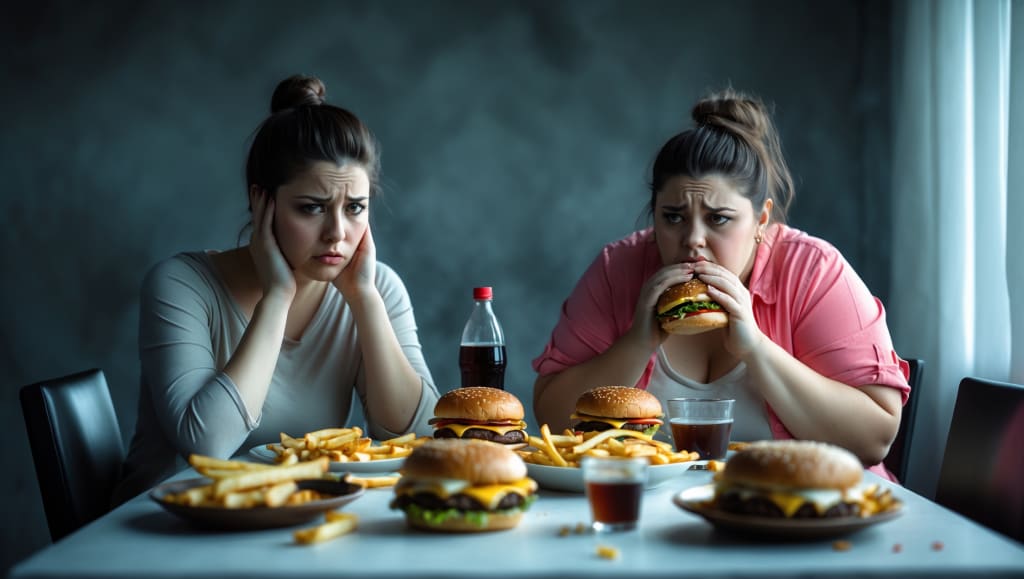
"Sometimes, I eat not because I'm hungry - but because I'm trying to quiet the voice that says I'm not enough."
We don't talk enough about this.
In a world obsessed with control, aesthetics, and hustle, food becomes more than fuel. It becomes a coping mechanism. A shield. A language of comfort when the mirror lies and the mind spirals.
The Not-So-Obvious Face of an Eating Disorder
When people think of eating disorders, they often picture someone shrinking - barely eating, with bones showing. But that's only one face of it. The other - often ignored - is those who eat too much, too often, not out of joy or celebration, but from shame, anxiety, or self-hate.
This isn't just "emotional eating." It's a cycle of self-punishment dressed up as self-soothing.
The Psychology Behind It
According to psychologists, binge eating disorder (BED) is the most common eating disorder in the United States, affecting more people than anorexia and bulimia combined. It's marked by recurrent episodes of consuming large quantities of food - often rapidly and to the point of discomfort - followed by feelings of guilt, shame, or distress.
But beyond definitions, it's about a deeper hunger. Not of the body, but of the soul.
Insecurity doesn't always whisper "you're too fat."
Sometimes, it screams "you're unworthy,"
and food becomes the loudest reply.
A 2022 study published in the Journal of Eating Disorders found that body dissatisfaction and internalized weight stigma were strong predictors of binge eating tendencies. And social media plays no small role.
From Comparison to Consumption
Scrolling through Instagram, TikTok, or even Pinterest feels like a battlefield of bodies. Perfect abs. Flawless skin. Calorie-deficit recipes tucked between gym selfies and "what I eat in a day" videos.
Young people, especially women and queer folks, internalize these messages. They start eating more (or restricting) not for health - but in response to how they feel about themselves.
This is where insecurity feeds you. Literally. You eat to rebel against expectations. To drown feelings. Or to chase a sense of worth, even if momentarily.
"I'm not thin enough to be loved,
so I eat to feel something."
"I'll never be small enough to be seen,
so I might as well disappear in food."
When Eating Becomes Identity
Here's the hardest part: food begins to define your days. Your wins and losses revolve around meals. Did you eat too much? Did you skip? Did you have "control" or "mess up again"?
It's an invisible struggle - because society doesn't recognize someone in a bigger body as someone who might be sick. There's still a harmful belief that eating disorders only look one way - fragile, small, visible. But those who binge or overeat out of trauma are often met with judgment instead of empathy.
Healing Starts With Naming
Naming the problem is step one. Understanding that eating to numb your insecurity is not weakness - it's a response to a deeper wound. And it deserves healing, not shame.
Some helpful practices to begin reclaiming your relationship with food:
- Therapy - especially CBT and trauma-informed modalities
- Journaling what triggers you to eat outside hunger
- Gentle nutrition - not restrictive diets, but intuitive eating
- Body-neutral movement - moving for joy, not punishment
- Curating your digital feed - unfollow fitspo, follow real people
You are not a failure for struggling.
You are not a mess for overeating.
You are not shattered. You are responding to pain the only way you were taught.
But there are kinder ways now.
It's Not About the Food. It's About Feeling Enough.
To anyone out there who eats to feel enough - you are not alone. You are not weak. And no, your value does not fluctuate with your weight.
Food isn't the enemy. Neither is your body. The real villain is the voice that told you you must look a certain way to be worthy of love, rest, or attention.
And you don't need to fight your body to silence that voice - you just need to stop believing it.
Resources:
- National Eating Disorders Association (NEDA): https://www.nationaleatingdisorders.org
- Journal of Eating Disorders (2022): "Predictors of binge-eating behaviors in young adults"
- Intuitive Eating Workbook by Evelyn Tribole & Elyse Resch

About the Creator
Dishmi M
I’m Dishmi, a Dubai-based designer, writer & AI artist. I talk about mental health, tech, and how we survive modern life.
Subscribe for healing advice, human stories & future thoughts!



Comments
There are no comments for this story
Be the first to respond and start the conversation.