
QUIET YOUR MIND, EASE YOUR WORRIES
The Benefits Of Meditation And Mindfulness For Stress And Anxiety Reduction


Introduction
Stress and anxiety are common mental health issues that affect millions of people worldwide. According to the World Health Organization (WHO), anxiety disorders are the most common mental health disorders globally, affecting an estimated 264 million people. Stress and anxiety can have a significant impact on an individual's quality of life, and if left untreated, can lead to other health problems such as depression, high blood pressure, and heart disease.
Meditation and mindfulness are two practices that have gained popularity in recent years as a means of reducing stress and anxiety. In this essay, we will explore the benefits of meditation and mindfulness for stress and anxiety reduction.
What is Meditation?
Meditation is a mental practice that involves focusing the mind on a particular object, thought, or activity. The goal of meditation is to calm the mind and bring about a sense of inner peace and relaxation. Meditation can be practiced in various ways, such as mindfulness meditation, loving-kindness meditation, mantra meditation, and transcendental meditation.

Mindfulness Meditation:
Mindfulness meditation is a type of meditation that involves paying attention to the present moment without judgment. The practice involves focusing on the breath or body sensations and observing thoughts and emotions as they arise without getting caught up in them. Mindfulness meditation has been shown to be effective in reducing stress and anxiety by promoting a state of relaxation and reducing negative thinking patterns.
Loving-Kindness Meditation:
Loving-kindness meditation is a type of meditation that involves cultivating feelings of love, kindness, and compassion towards oneself and others. The practice involves visualizing oneself and others and repeating phrases such as "May you be happy, healthy, and free from suffering." Loving-kindness meditation has been shown to increase positive emotions, reduce negative emotions, and improve social connections.
Mantra Meditation:
Mantra meditation is a type of meditation that involves repeating a word or phrase to help focus the mind and induce a state of relaxation. The word or phrase can be anything that is meaningful to the individual, such as "Om," "peace," or "love." Mantra meditation has been shown to be effective in reducing stress and anxiety by promoting a state of relaxation and reducing negative thinking patterns.

Transcendental Meditation:
Transcendental meditation is a type of meditation that involves repeating a mantra silently to oneself while sitting with closed eyes for 20 minutes, twice a day. The practice aims to promote deep relaxation and reduce stress by inducing a state of restful alertness. Transcendental meditation has been shown to be effective in reducing stress, anxiety, and depression.
What is Mindfulness?
Mindfulness is a mental state of awareness that involves paying attention to the present moment without judgment. Mindfulness involves being fully present in the moment and observing thoughts, feelings, and sensations without getting caught up in them. Mindfulness can be practiced in various ways, such as mindfulness meditation, mindful breathing, mindful walking, and mindful eating.
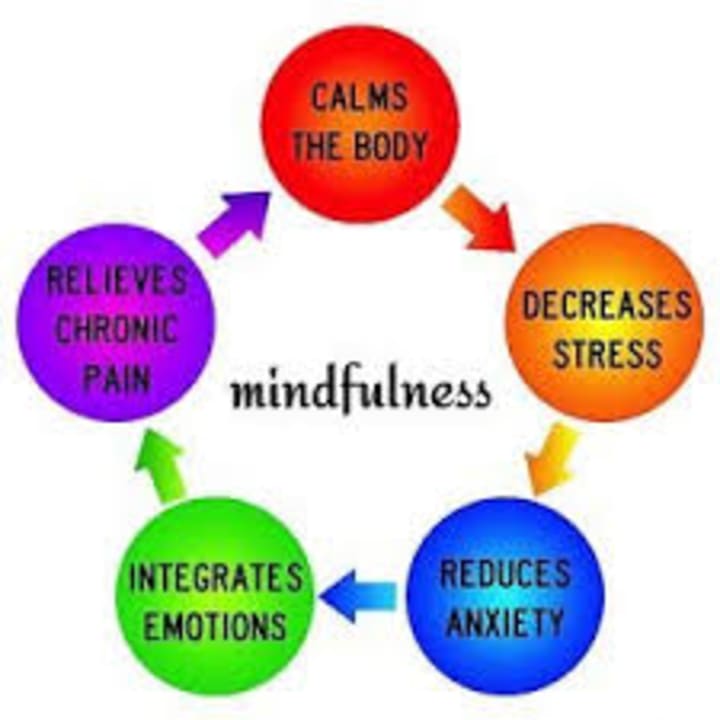
Mindful Breathing:
Mindful breathing involves paying attention to the breath as it enters and leaves the body. The practice involves taking slow, deep breaths and observing the sensations in the body as the breath moves in and out. Mindful breathing has been shown to be effective in reducing stress and anxiety by promoting relaxation and reducing negative thinking patterns.
Mindful Walking:
Mindful walking involves paying attention to the sensations in the body as one walks. The practice involves walking slowly and deliberately, observing the movement of the body, and being fully present in the moment. Mindful walking has been shown to be effective in reducing stress and anxiety by promoting relaxation and reducing negative thinking patterns.
Mindful Eating:
Mindful eating involves paying attention to the sensations in the body as one eats. The practice involves eating slowly and deliberately, observing the taste, texture, and smell of the food, and being fully present in the moment. Mindful eating is a form of mindfulness that can help individuals develop a healthier relationship with food and reduce emotional eating.
Emotional eating is a common response to stress, anxiety, and other negative emotions, where individuals use food as a way to cope with their emotions. Mindful eating can help individuals break the cycle of emotional eating by increasing their awareness of their thoughts, feelings, and physical sensations.
Research has shown that mindful eating can improve dietary habits and reduce overeating. One study found that participants who practiced mindful eating consumed fewer calories and reported greater satisfaction with their meals compared to those who ate mindlessly.
Benefits of Meditation and Mindfulness for Stress and Anxiety Reduction:
There is growing evidence that meditation and mindfulness practices can help reduce stress and anxiety. Here are some of the ways in which meditation and mindfulness can benefit individuals struggling with stress and anxiety:
1. Promotes Relaxation:
One of the primary benefits of meditation and mindfulness practices is their ability to promote relaxation. Mindfulness practices such as mindful breathing and mindful walking can help individuals relax by reducing tension in the body and calming the mind. Meditation practices such as loving-kindness meditation and mantra meditation can also induce a state of relaxation by promoting positive emotions and reducing negative thinking patterns.
2. Reduces Negative Thinking Patterns:
Stress and anxiety can cause individuals to ruminate on negative thoughts and feelings, which can exacerbate their symptoms. Meditation and mindfulness practices can help individuals break free from negative thinking patterns by increasing their awareness of their thoughts and emotions. By observing their thoughts without judgment, individuals can learn to let go of negative thoughts and cultivate more positive and optimistic thinking patterns.
3. Improves Emotional Regulation:
Meditation and mindfulness practices can also improve emotional regulation by increasing individuals' awareness of their emotions and providing them with tools to manage them effectively. Mindfulness practices such as mindful breathing and mindful walking can help individuals regulate their emotions in the moment, while meditation practices such as loving-kindness meditation and mantra meditation can help individuals cultivate more positive emotions and reduce negative emotions.
4. Enhances Self-Awareness:
Meditation and mindfulness practices can help individuals develop greater self-awareness by increasing their ability to observe their thoughts, emotions, and physical sensations. This increased self-awareness can help individuals recognize patterns in their thinking and behavior that may be contributing to their stress and anxiety. By becoming more aware of these patterns, individuals can take steps to change them and reduce their symptoms.
5. Improves Cognitive Functioning:
Chronic stress and anxiety can impair cognitive functioning, making it difficult for individuals to concentrate, remember information, and make decisions. Meditation and mindfulness practices can help improve cognitive functioning by reducing stress and anxiety levels and promoting relaxation. Studies have shown that mindfulness practices can improve working memory, attention, and cognitive flexibility.
6. Enhances Resilience:
Meditation and mindfulness practices can also enhance individuals' resilience to stress and adversity. By developing greater self-awareness and emotional regulation skills, individuals can better cope with stress and bounce back from difficult situations. Mindfulness practices such as loving-kindness meditation can also help individuals cultivate feelings of compassion and connection, which can improve their resilience to stress and adversity.
Conclusion
Stress and anxiety are common mental health issues that can have a significant impact on an individual's quality of life. Meditation and mindfulness practices such as mindfulness meditation, loving-kindness meditation, mantra meditation, and mindful eating can help individuals reduce their symptoms by promoting relaxation, reducing negative thinking patterns, improving emotional regulation, enhancing self-awareness, improving cognitive functioning, and enhancing resilience. By incorporating these practices into their daily lives, individuals can improve their mental health and well-being and lead more fulfilling lives.
About the Creator
Sukriti gupta
If you are looking for insightful and informative content on a wide range of topics, then you have come to the right place. I'm excited to share my insights on topics such as personal growth, nature, history, stories and much more.
Keep reading
More stories from Sukriti gupta and writers in Psyche and other communities.
THE ART OF BEING ALONE
Introduction Being alone is often seen as a negative experience, associated with loneliness, isolation, and even depression. However, being alone can also be a positive and transformative experience. Solitude can provide us with the opportunity to reflect, rejuvenate, and grow personally and professionally.
By Sukriti gupta3 years ago in Psyche




Comments
There are no comments for this story
Be the first to respond and start the conversation.