
Addiction Recovery Guide. Breaking Free & Staying Resilient.
For all addictions. Also beyond chocolate, coffee, and alcohol.


Being addicted to either something and/or someone is more common than you think. It is commonplace and natural to think of drugs, food and drinks (mainly the alcoholic variety) when it comes to addictions; yet people can be addicted to a myriad of substances, people, and circumstances. What starts as an obsession breeds an addiction.

Buying the same breakfast item every single morning, paying the same price without consciously thinking about your actions. That is an addiction, stemming way beyond a habit, irrespective as to whether or not this same breakfast item is nutritionally healthy, or (on the flip-side) would put Popeye to shame.

Other forms of addictions include (yet are not limited to) work/workaholism, overconsumption and spending, excessive screen time, gambling, and s*x to name. There is nothing wrong with new years resolutions, yet like any ingrained habit, it takes a minimum of 21 days for the unconscious mind to break any pattern that once started consciously. This is not your fault. This article is not intended to play the blame game. Change begins with safety, and then resilience. This is why new years resolutions do not always come to fruition. Turning points and markers in the calendar such as Valentines Day and Easter can be catalysts for change and new beginnings; yet your body may not respect the traditional calendar, depending on the season your internal rhythm is in right now.

For example, it could be summer right now where you are geographically based; however, if your body has copped a few significant blows in a short space of time (such as two operations and a job loss); your body is therefore experiencing a low tide season of rest and recovery, common to the hibernation energies of winter.

In seasons of rest and recovery, your body is recalibrating. The nervous and other systems are learning to be safe again.

This is why having an addiction or two (beyond a vice) can form quite quickly. What began as a terrible day or a down moment, or even an accident can quickly turn a treat or circumstance into an obsession.

The prime directive of the unconscious mind is to protect you, and this level of your mind thinks that a certain addiction (even say, to the strongest drugs on the planet) is safe. It's absurd, I know. Things do not always make sense. Habits and then obsessions and addictions start with a habit that forms through repetition and belief, and then the unconscious does what it does best. For example, you are tired and run down from working too hard and too much. A daily cup of joe becomes your lifeline due to the caffeine element, rather than a pleasurable treat that can be sipped mindfully. Becoming addicted to something is a coping mechanism for tough times. For example, and according to Deakin University, Australian children spent an extra 27 hours a week on computer screens during the 2021 Covid lockdowns.

The struggle is real. Just because you are addicted to something (or if that something happens to be plural) - you are not broken. This is not due to a lack of willpower. Addictions (can and do) begin as a by-product of stress, anxiety, exhaustion, burnout, unresolved trauma, unmet needs and/or simply a bad day once again. A setback. Being hard on yourself for any addiction (no matter the magnitude) is not helpful when you want to recover and heal from such.

There is no need to opt for a harsh recovery. You can book into rehab if you want, yet doing this is not necessary, unless you find yourself on a hard substance.

Firstly, the shift towards healing and letting yourself go from one addiction at a time (if you so choose to do so) starts when you focus on having a mindset of support towards yourself and others. This begins to regulate your nervous system, so that it feels safe, heard, and supported. (No different to how us humans always need to be seen and heard.) The quality question beckons: "Who can help me let go of this particular addiction?" Give your mind space to help you think through the solutions, and then act on that advice.

Be gentle and patient. Healing speeds up when the shame around the addiction dissolves. Talk to yourself like you would a best friend without trying to change anything at the onset. The relevant addiction once served you a purpose and a greater appreciation of something. Only you can figure out what that is for yourself. This article is intended to help you do that.

It is also wise and fruitful to invest in a nice notebook and pen that you can afford, and such is to be used as a gratitude journal. The aim is to write down at least five things every day that you are grateful for, that are working in your life. What you are grateful for might be for something as simple as living in a home - even if it is not your dream home. In this stone age, people have been known to have found money on the street - even if its only loose change. The focus shifts on feeling good and towards what you want. This means that the relevant addiction (again, one at a time) that you are wanting to free yourself and your psyche from has space to transmute and transform. You do not need to hit rock bottom to change, although major change has to start (no choice) from there.

Furthermore, continue to ask quality questions. Asking yourself "what's wrong with me?" and "Why am I addicted to this?" is counterproductive and harmful. There is nothing wrong with you. You are not broken. You are not a project for yourself and/or for someone else to fix. You are not damaged goods. Instead, ask yourself "What do I need right now?" And the answer is the complete opposite to the addictive substance. For example, water instead of coffee or a cigarette. Exercise instead of stuffing your emotions with more food. A hug rather than rough s*x. Again, examples only, and common responses to such a question. The feedback from asking this great question may cost you a bit more money in the short-term, although surprisingly not as much as you think. Processed, unhealthy food costs the same (sometimes a bit more) that fresh produce does at the supermarket.

There is something powerful and confronting, however not forceful and overly traumatic about writing a letter (one page is adequate) to a specific problem in your life with your non-dominant hand. Sure, this task may be a heavy ask, as it is also un-motivating and painful; yet this is cheap personal development and therapy if you are a willing participant. For example, if you have a strong addiction to chocolate; write this letter to the specific chocolate addiction, and what comes up will be incredibly surprising. This is the unconscious mind opening up candidly and honestly. The next step is to then write a letter (still with your non-dominant hand of course) as if the addiction is responding to you. If you cannot understand some parts of your handwriting right now; give yourself some more compassion. It will be messy at first.

Watching out for milestone events such as anniversaries can trigger addictions. No different to cake at Birthday's, and chocolate at Easter and Christmas. If triggers arise regardless, it is a wise idea to journal your feelings at the time. They say that success leaves clues. Observe. Be and stay curious to your life, no matter how busy and chaotic life can get sometimes. If you need a helping hand to journal your feelings as triggers that feed addictions; you can also calmly ask yourself another quality question in breaking free and staying resilient: "What is this urge trying to give me?"

Instead of junk food, your body is crying out for some water, and/or for some exercise and movement. Other calming solutions (remember, there is always a solution to every single problem or challenge) include deep breathing/breath work, meditation, mindfulness, rest, and sleep.

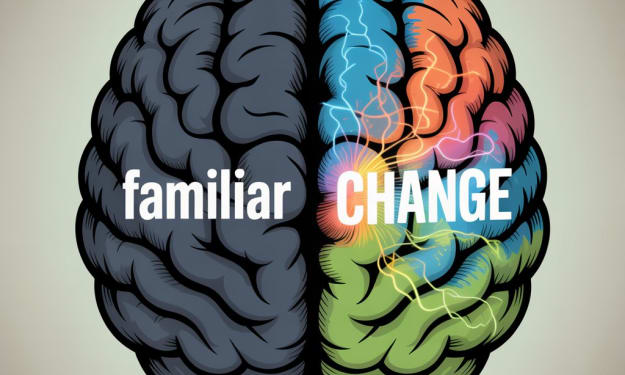
In concluding this article, when it comes to overcoming addictions, no matter their magnitude, the brain always craves comfort and healthy replacements. Abstaining (also known as cold turkey) never works in the long-run. Neither does tit-for-tat, where addiction is immediately rewarded with something healthy. For example, alcohol with relaxation.

In the spirit of seeking support in overcoming one addiction at a time, you need to communicate your needs to others you trust. If not a trusted therapist or other confidante will suffice. People are not mind readers. When you are clear and specific on what you want (with anything in life, not just overcoming one addiction at a time); you are in a golden position to communicate your needs clearly. With productive and helpful changes, resilience builds brick by brick (metaphorically speaking).

Now the time has come to leave you (until my next article) with another song. Martika does a fantastic job of using 'toy soldiers' as a metaphor on how destructive drug addictions are in particular, based on this artists first hand experience of witnessing a close friend becoming so helpless, in addition to struggling and losing her identity from "It's true, I did extend the invitation." And all thanks to cocaine. No doubt, this song resonates, because the lyrics remain consistent around addiction and loss; something that everyone with a pulse (yes, that includes you dear reader) has experienced. If you have never been addicted to drugs before, it does not matter because you have definitely been addicted to something else. Now you know what you need to do, in order to break free and stay resilient when overcoming an addiction. Here is the song that emphasises the real damage of innocent addictions. Toy Soldiers by Martika:
About the Creator
Justine Crowley
In a career crossroads all of a sudden. Re-discovering freelance writing.
Author of 12 Non-Fiction eBooks - Smashwords as the distributor
Author of Kids Coloring Print Books on Amazon
Lives in Sydney, Australia. Loves life.
Keep reading
More stories from Justine Crowley and writers in Psyche and other communities.
Why Decluttering is a Journey - Not a One Time Fix
Beyond our stuff, material goods and possessions; there is more to decluttering our homes and personal space than simply asking the question as to whether or not each and every item in your home sparks joy. I am in awe of Marie Kondo and other minimalists who share and inspire in a noisy world of obsession and wanting more, more, and more each and every single day; yet the items in our home can cut beyond skin deep. The key is to also take inspiration from Jerry Seinfeld, and not allow our homes to be garbage processing centres, the latter of which anyone reading this article does not want. Read on.
By Justine Crowley25 days ago in Psyche
The Real Reason You Keep Falling Back Into Old Habits
The Real Reason You Keep Falling Back Into Old Habits You decide to change. You try. You fail. Over and over. It’s not lack of willpower. It’s not laziness. Here’s the science behind why your old habits keep winning—and what you can actually do about it.
By Muhammad Haris khan 6 days ago in Psyche



Comments
There are no comments for this story
Be the first to respond and start the conversation.