
Stop Chewing! A Simple Guide to Stopping Destructive Dog Behavior
Subtitle: Why Your Dog Chews Everything — and How to Finally Stop It.

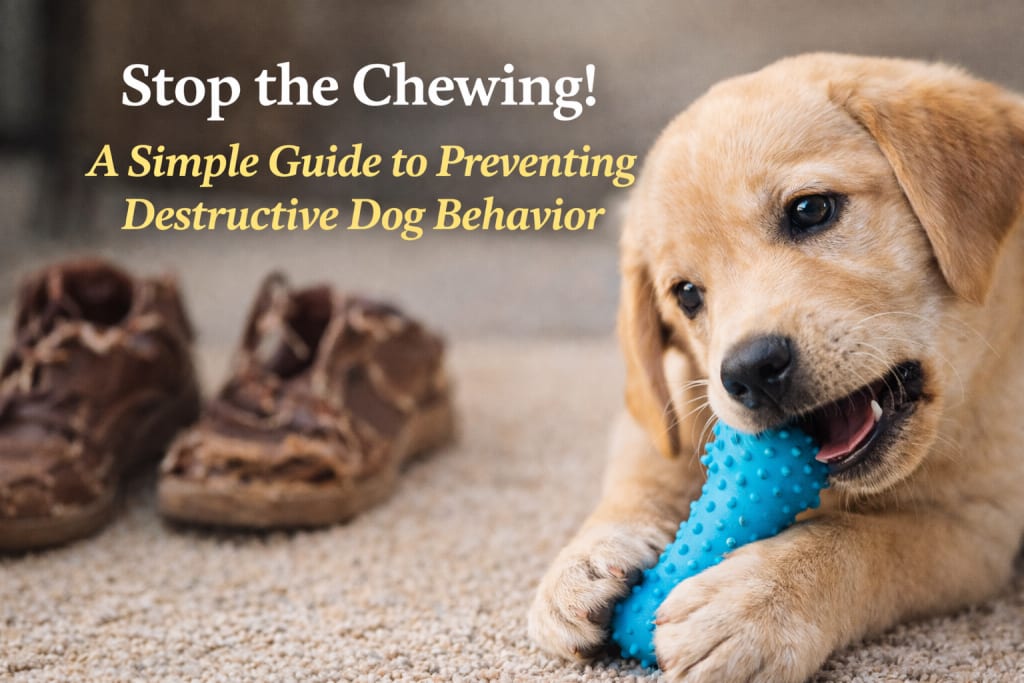
If you’ve ever walked into your living room only to discover tiny white snowflakes from your couch cushions scattered across the floor, or your favorite pair of shoes transformed into a rough chew toy, you’re not alone. Chewing is one of the most common (and craziest) behaviors dog owners face. But here’s the good news: Destructive chewing isn’t a permanent habit. With a little patience, the right tools, and a good understanding of why your dog is chewing, you can stop the good behavior.
Welcome to your simple, stress-free guide to ending destructive chewing — without yelling, punishment, or frustration.
Why dogs chew in the first place.
Before you can solve the problem, you have to understand it. Dogs don’t chew things “to be bad.” They chew because it fulfills a natural need.
1. Dogs chew to explore.
Dogs use their mouths the same way children use their hands. Everything goes in their mouths — shoes, socks, remote controls, pillows — because they’re learning what the world is like.
2. Chewing soothes teething.
Around 3-6 months of age, teething pain sets in. Chewing helps relieve stress.
3. Adult dogs chew out of boredom.
A dog with nothing to do will find something to do. Chewing releases energy, relieves stress, and keeps them busy.
4. Chewing can be distressing.
Separation anxiety, fear of loud noises, or a change in routine can lead dogs to chew for emotional relief.
5. Some dogs chew because it's fun.
Plain and simple — some dogs genuinely enjoy chewing.
Knowing the why behind the behavior is half the battle. Now let's fix it.
How to Stop Destructive Chewing for Good.
Here are the most effective, proven strategies for stopping your dog from chewing things they shouldn't.
1. Provide plenty of chew-approved items.
Dogs definitely chew. The trick is giving them something their teeth deserve.
Great options for chew toys include:
- Durable rubber toys (Kong, Nylabone)
- Rope toys
- Frozen carrot sticks (amazing for dog teeth!)
- Frozen peanut butter stuffed toys
Rotate the toys every few days to keep them excited
2. Exercise your dog—more than you think
A tired dog is a well-behaved dog.
Many chewing problems disappear when dogs get enough physical and mental activity.
Depending on age and breed, aim for:
- Puppies: 20-30 minutes of play, several times a day
- Adult dogs: At least 45-60 minutes of exercise
- High-energy breeds: 90+ minutes daily
Walks, retrieves, tug-of-war, puzzle toys—mix it up!
3. Puppy-proof (or dog-proof) your home
If your dog can reach it, they’ll probably chew it.
Keep these items out of reach:
- Shoes
- Phone chargers
- Children’s toys
- Pillows
- Books
- Socks
- TV remotes
Think of this as the first step in training—not permanent, but essential.
4. Use taste deterrents where needed.
Deterrents like bitter apple or lemon-based sprays can make your dog reconsider chewing your furniture.
Pro tip:
Always let them taste the spray on a paper towel so they understand that it’s unpleasant.
5. Redirect immediately — never punish.
If you catch your dog chewing on the wrong thing:
- Stay calm
- Say “no” or “ah ah” in a firm tone.
- Give them an appropriate chew toy.
- Praise them when they chew on the right thing.
Punishing a dog after the fact doesn’t work — they won’t understand why you’re upset.
6. Address anxiety-driven chewing.
Signs of anxiety chewing:
- Only happens when you’re gone.
- Happens during storms.
- Dog is pacing, whining, shaking.
Helps include:
- Routine building
- Calming music
- Scented clothes left behind.
- Crate training
- Professional behavior modification if severe.
7. Don’t give up too soon.
Consistency is everything.
Dogs learn through repetition, and each redirection teaches them, “It’s okay to chew. It’s not.”
Most dogs improve significantly in just 2-4 weeks.
When chewing is actually a good thing.
Believe it or not, chewing has benefits:
- Reduces stress.
- Keeps teeth clean.
- Prevents boredom.
- Increases mental stimulation.
The goal is not to stop chewing, but to control it.
Final thoughts
Chewing is natural. Destructive chewing is not. But with the right approach — patience, appropriate toys, exercise, and understanding — you can transform your dog from a couch destroyer into a calm, well-behaved companion.
And the best part?
Your shoes will finally be safe again.
About the Creator
Paw Planet
Start writing...🐾 Paw Planet is where puppy love meets storytelling—sharing heartwarming tales, training tips, and adventures of wagging tails. A home for dog lovers who believe every paw print tells a story. 🐶✨
Keep reading
More stories from Paw Planet and writers in Petlife and other communities.
The Little Guardian with the Giant Heart
Bohdi was used to being underestimated. Weighing in at under six pounds, with a smooth short coat the color of toasted honey and ears that seemed too big for his head, most people looked at him and smiled politely. Some chuckled lightly. Others used the same words every time.
By Paw Planet about 19 hours ago in Petlife
The Summer I Was Chosen by a Northern Mockingbird
During the long, suspended days of the pandemic, a wild mockingbird began visiting my driveway and chose me, again and again. What started as a strange encounter became a brief, meaningful connection that I still carry with me.
By Erica Roberts 22 days ago in Petlife




Comments
There are no comments for this story
Be the first to respond and start the conversation.