
Silent Scars
When parents fight loudly, children suffer quietly, carrying emotional wounds that last far into adulthood

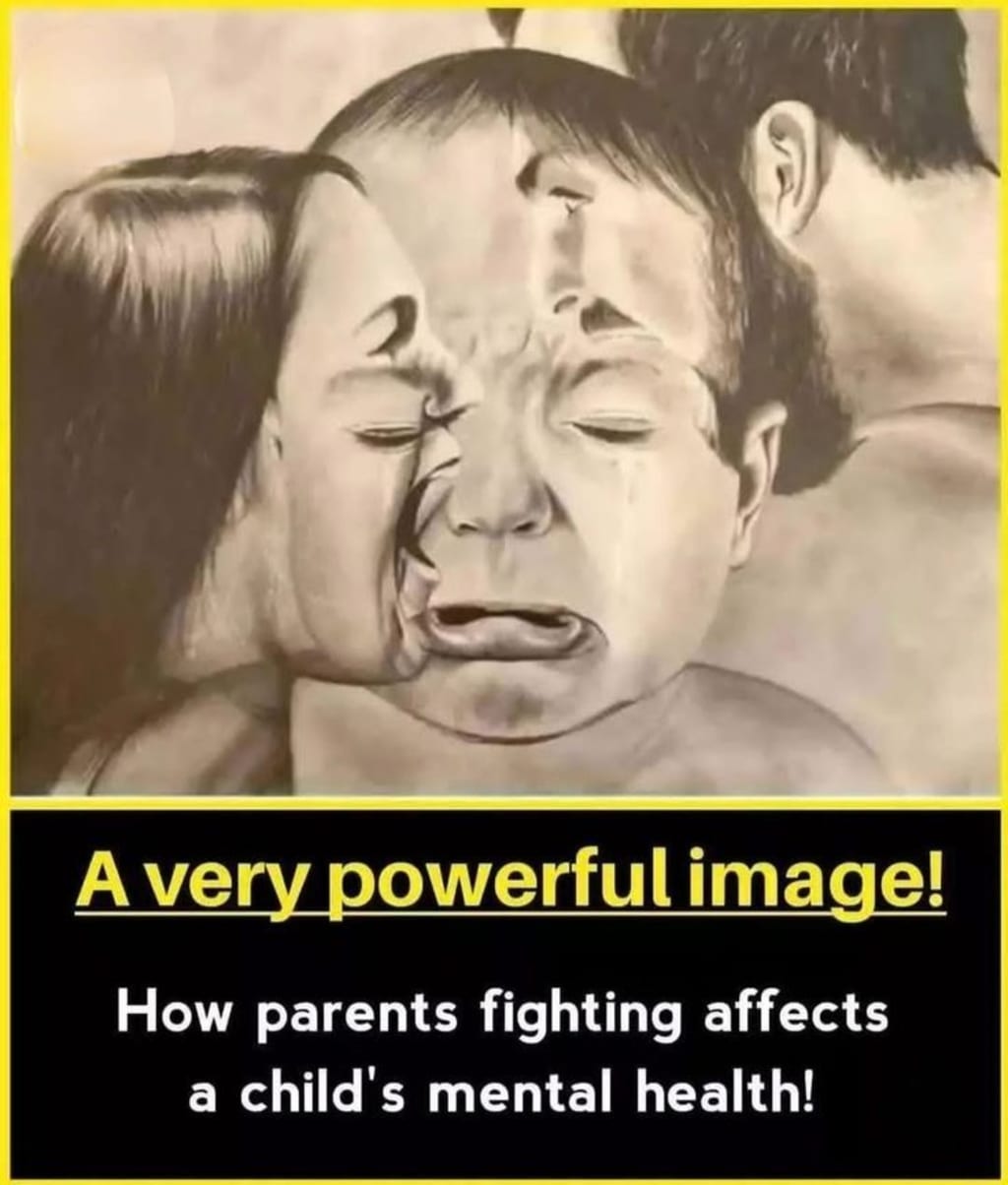
In a small house filled with everyday noise, a different kind of sound echoed through the walls every night — shouting.
Not laughter. Not conversation. Not warmth.
Shouting.
A mother’s angry voice. A father’s harsh reply. Doors slamming. Words thrown like stones.
And in the middle of it all, sitting silently on the floor of his room, was eight-year-old Ayan, holding his ears tightly, trying to block out the noise that pierced deeper than sound.
He was not part of the argument.
But he was the one most affected by it.
Every time his parents fought, Ayan felt something strange in his chest — fear, confusion, and guilt. He did not understand what was happening, but he believed one thing with all his heart:
“Maybe it’s because of me.”
Children often think this way. They do not know adult problems. They do not understand stress, money issues, or relationship conflicts. They only understand emotions. And when the people they trust most start fighting, their safe world begins to shake.
Ayan stopped playing as much. He stopped laughing loudly. He started staying quiet, watching carefully, trying to predict when the next argument would begin. His little mind was no longer focused on toys or school.
It was focused on survival.
One evening, the argument became worse than usual. His father shouted loudly. His mother cried. A glass broke against the wall. Ayan ran into the corner of his room and covered his head, trembling.
That night, he did not sleep.
He stared at the ceiling and listened to the silence after the storm, wondering if tomorrow would be the same.
This is what many children experience every day in homes where parents think, “It’s just a fight. Kids will forget.”
But children do not forget.
They absorb.
They store.
They carry.
As months passed, Ayan’s teacher noticed changes. He was distracted in class. He became easily scared when someone raised their voice. He struggled to focus. He started drawing pictures of broken houses and sad faces.
When asked what was wrong, he only said, “Nothing.”
Because children often do not have the words to explain emotional pain.
At home, his parents never noticed. They were too busy with their own arguments. They believed their fights were between them only. They never realized their son was silently breaking inside.
Children living in such environments begin to develop anxiety. They feel unsafe even when nothing is happening. They become overly alert, always expecting something bad. Their minds remain in a constant state of fear.
Ayan began biting his nails. He started waking up at night from nightmares. He felt scared when his parents talked loudly, even if they were not fighting.
His childhood was slowly being replaced by worry.
One day at school, during a small disagreement between classmates, Ayan suddenly shouted and pushed another child. Everyone was shocked. This quiet boy had reacted with unexpected anger.
But this anger did not start at school.
It started at home.
Children learn behavior by watching their parents. When they see shouting, they learn shouting. When they see anger, they learn anger. When they see disrespect, they learn disrespect.
Parents are the first teachers, even when they do not realize it.
Years passed.
Ayan grew older, but the effects of those early years stayed with him. He found it difficult to trust people. He feared conflicts. Loud voices made his heart race. He avoided close relationships because, in his mind, love meant shouting and pain.
He carried silent scars into adulthood.
One day, as a young man, he visited a counselor who asked him a simple question:
“What do you remember most from your childhood?”
Ayan replied without thinking, “My parents fighting.”
Not birthdays.
Not holidays.
Not happy memories.
Just fights.
This is the lasting impact of parental conflict on a child’s mental health.
Children do not need perfect parents.
They need peaceful parents.
They need a home where they feel safe, where voices are calm, where disagreements are handled with respect, and where love is louder than anger.
Arguments between parents are natural. Disagreements are part of life. But how parents handle those disagreements decides whether a child grows with confidence or fear.
If parents shout, insult, and fight aggressively in front of children, the child’s brain interprets it as danger. Stress hormones rise. Emotional security weakens. Over time, this leads to anxiety, low self-esteem, anger issues, and even depression.
But there is hope.
One evening, Ayan gathered the courage to speak to his parents. With tears in his eyes, he said, “When you both fight, I feel very scared. I think something bad will happen.”
His parents were shocked.
They had never imagined their fights were hurting him this deeply.
That day, they made a decision.
They promised each other that disagreements would be discussed calmly and privately. No shouting. No insults. No fights in front of their son.
It was not easy at first. Habits are hard to change. But love for their child was stronger than their anger.
Slowly, the home environment changed.
The shouting stopped.
The tension reduced.
Laughter slowly returned.
And something beautiful happened — Ayan began to smile again.
He started talking more. Sleeping better. Playing freely. His fear began to fade because his home finally felt safe.
This is the power parents hold.
A child’s mental health is shaped more by the home environment than anything else in the world.
Your words become their thoughts.
Your behavior becomes their personality.
Your home becomes their emotional foundation.
Dear parents, before raising your voice at each other, remember the small ears listening from the next room. Before turning a disagreement into a shouting match, remember the small heart absorbing every word.
Your child may not say anything.
But they are feeling everything.
Give them a childhood filled with peace, not fear. Show them how to handle conflict with respect, not aggression. Teach them that love does not come with shouting.
Because one day, they will grow up and build their own homes based on what they learned from yours.
Let them remember laughter.
Not fights.
Let them remember safety.
Not fear.
Because the deepest scars are not on the body.
They are in the mind.
About the Creator
USA daily update
News, Politics, Technology Updates
Keep reading
More stories from USA daily update and writers in Motivation and other communities.
One Hard Thing
Stop me if you’ve heard this one before: You have the number, you know your schedule- you’ve even picked out the perfect day and time to make this appointment. Shoot, you’ve even picked out alternative days and times just in case their schedules can’t accommodate you!
By Taylor Rigsby15 days ago in Motivation
The Moment Life Finally Made Sense
I was twenty-eight when I realized I'd been living someone else's dream. It hit me on a Tuesday morning, stuck in traffic on my way to a job that paid well but left me hollow. Around me, engines hummed and horns blared, but inside my car, there was only silence—the kind that forces you to hear the thoughts you've been avoiding.
By Fazal Hadi4 days ago in Motivation




Comments
There are no comments for this story
Be the first to respond and start the conversation.