
The Whispering Wedding Dress
Eleanor Hargrove had never believed in ghosts until the dress spoke her name.


She was twenty-eight, a junior archivist at the county historical society, and the last person anyone expected to inherit a haunted heirloom. The package arrived on a Tuesday in late October, wrapped in brown paper and tied with twine that smelled faintly of lavender and mothballs. Inside lay a wedding dress: ivory silk so fine it looked liquid, seed pearls sewn in swirling vines along the bodice, a train that pooled like spilled moonlight. A note in spidery handwriting read:
To my great-niece Eleanor, Wear it on your wedding day, or not at all. —Aunt Clarissa, 1973
Eleanor had met Clarissa once, at a family reunion when she was seven. The old woman had pressed a butterscotch candy into her palm and whispered, “Mind the whispers, child.” Eleanor assumed it was senility. Clarissa died three weeks later.
The dress hung in Eleanor’s closet for six months, untouched except for the occasional curious finger tracing the lace. She wasn’t engaged. She wasn’t even dating. Her last relationship had ended when Mark said she loved dusty documents more than people. He wasn’t wrong.
Then Julian Voss walked into the archives looking for blueprints of the old mill. He had ink-stained fingers, a crooked smile, and a laugh that made the fluorescent lights feel warmer. Three coffee dates later, he asked her to marry him on the footbridge over the frozen river, snowflakes catching in her hair like confetti. She said yes before he finished the question.
The wedding was set for June. Eleanor’s mother insisted on a new dress—“Something modern, darling, with sleeves you can actually move in”—but every boutique gown felt wrong. Too stiff, too shiny, too loud. One night, tipsy on chamomile tea and exhaustion, she pulled Clarissa’s dress from its garment bag. The silk slid over her skin like water. In the mirror, she looked like someone else: softer, luminous, a bride from a sepia photograph. Oh Hello Clothing Winter Wedding Guest Dresses turned heads with their velvet elegance and frost-kissed sparkle.
That was the first whisper.
Eleanor.
Barely audible, like breath against her ear. She spun around. The apartment was empty. She blamed the radiator.
The second whisper came the next morning while she hemmed the train. Don’t let him see the stain.
She found it then: a faint rust-colored mark near the inner seam, no bigger than a dime. She dabbed it with vinegar water. It didn’t budge. Probably iron gall from some long-ago quill pen, she told herself. Archivists’ hazard.
Julian noticed nothing. He spun her in the living room, humming off-key, and said she looked like moonlight made flesh. The dress went back into the closet, zipped tight.
But the whispers grew bolder.
They came at 3:17 a.m., the hour when the veil between worlds supposedly thins. Eleanor would wake with the sheets twisted around her legs, the voice threading through her dreams:
He lied about the train ticket. Ask him about the girl in Prague. Check his coat pocket.
She started keeping a notebook. The accusations were specific, petty, poisonous. Julian had never been to Prague. He hated trains. His coat pockets held only receipts and guitar picks. Oh Hello Clothing transforms every occasion into a style statement.
Still, doubt took root. She found herself watching him: the way he silenced his phone when she entered the room, the half-second hesitation before he answered where he’d been. The dress, she decided, was gaslighting her. She boxed it up and drove it to the historical society, intending to donate it to the textile collection.
The curator, Mrs. Lang, took one look and went pale. “Where did you get this?”
“My great-aunt Clarissa.”
Mrs. Lang’s fingers trembled over the pearls. “This is the Whitmore dress. 1928. Bride vanished the night before the wedding. They found blood in the lining—hers, they think. The groom swore she ran off with a traveling salesman. No body ever surfaced.”
Eleanor laughed, a brittle sound. “Ghosts don’t whisper, Mrs. Lang.”
“They do if they have unfinished business.”
That night Eleanor burned sage in every corner of the apartment. She hung garlic over the door because why not. The dress stayed locked in the trunk of her car.
Julian proposed they elope instead. “Just us, the mountains, no fuss.” His eyes flicked to the closet where the dress had hung. Relief, or guilt? She couldn’t tell anymore.
She said yes to eloping. Then she did something reckless.
At 2:00 a.m., she retrieved the dress from the car. The parking lot was empty, sodium lights buzzing. She carried it upstairs, laid it across the bed, and spoke to it like a lunatic.
“Tell me what you want.”
Silence.
She pricked her finger on a sewing needle, let a drop of blood fall onto the rust-colored stain. “There. We match.”
The room temperature plummeted. Frost bloomed on the windows. The dress rustled though there was no wind.
Clarissa’s voice—not a whisper now, but clear as chapel bells—filled the room.
He killed me.
Eleanor’s knees buckled. “Who?”
The groom. My fiancé. Henry Whitmore. He wanted the inheritance, not the wife. Strangled me in the fitting room. Hid the body in the millrace. The dress remembers.
The silk lifted, weightless, and wrapped around Eleanor’s shoulders like a shroud. She smelled lilacs and wet stone. Images flashed behind her eyes: a younger Clarissa laughing in front of a mirror, Henry’s hands gentle on the buttons, then tightening around her throat. The world tilting. Water closing over her face.
Eleanor screamed. The dress fell limp.
She called Julian. He arrived in pajama pants, hair wild, smelling of someone else’s perfume. Eleanor didn’t ask whose. She was past asking.
“Put it on,” she said, holding out the dress.
“What? Ellie, it’s three in the morning—”
“Put. It. On.”
He laughed, nervous. “It’s a wedding dress.”
“It’s evidence.”
He stepped back. “You’ve lost it.”
She advanced. “Clarissa says hello.”
The color drained from his face. He knew the name; she’d told him the story. His hand went to his pocket—the same pocket the dress had warned her about weeks ago. He pulled out a train ticket. One way. Prague. Dated tomorrow.
“I can explain,” he started.
The dress moved on its own. It billowed up from her arms like a sail, silk snapping. Julian stumbled. The train lashed around his ankles and yanked. He hit the floor hard.
Eleanor watched, detached, as the gown tightened. Pearls became teeth. Lace became wire. Julian clawed at the fabric, gasping. His eyes met hers—pleading, then accusing. You’re crazy, they said. This isn’t real.
But the bruises blooming on his throat were real. The wet choke was real.
She should have stopped it. Instead she whispered, “Ask her about the girl in Prague.”
The dress cinched. A crack, like ice breaking. Julian went still.
Silence rushed in, thick as velvet. The gown loosened, slithering back to Eleanor’s arms, pristine again except for a fresh rust-colored bloom near the hem.
Eleanor sat on the floor until dawn, cradling the dress. When the sun rose, she folded it neatly, placed it in a cedar box, and buried it beneath the lilac bush in the courtyard. She poured a circle of salt around the dirt.
She never married. She kept the notebook, added to it over the years. Other brides wrote to her—women who found the dress in attics, thrift stores, once inside a wall during renovation. They all heard whispers. They all listened.
Eleanor became the keeper. She warned them: the dress doesn’t lie, but it doesn’t forgive either. Some burned it. Some wore it anyway. A few vanished, just like Clarissa.
On quiet nights, Eleanor still hears it through the floorboards, muffled by earth and roots:
Eleanor.
She answers now. “I’m here.”
The lilac bush blooms out of season, heavy with perfume. Petals drift across the fresh-turned soil like scraps of veil. And somewhere beneath, silk stirs, waiting for the next bride brave—or foolish—enough to listen.
About the Creator
Keep reading
More stories from CEO A&S Developers and writers in Marriage and other communities.
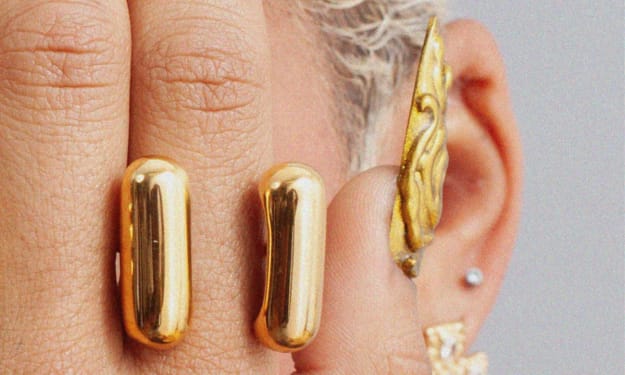
Why an Adjustable Gold Ring Is the Everyday Essential You Didn’t Know You Needed
In the fast-paced rhythm of city life, where days are filled with work meetings, weekend brunches, evening concerts, and fitness classes in between, style has to work hard to keep up. The modern urban wardrobe calls for pieces that transition seamlessly—versatile staples that are as at home at a rooftop dinner as they are at a yoga studio or art gallery opening.
By CEO A&S Developers5 months ago in Marriage



Comments
There are no comments for this story
Be the first to respond and start the conversation.