
The End of the August Rush: How Remote Work Rewrote the Rules of the British Family Holiday
Five years into the remote working era, British families are planning their time off in ways their parents would barely recognise

Two weeks in August. Majorca, perhaps, or Cornwall if the budget was a little tighter that year. It was booked in January because everyone knew that if you waited until spring, prices would be brutal and the good apartments would already be gone. The children were off school, both parents used their primary leave blocks concurrently, and the office was held together by whoever drew the short straw and was stuck behind.
It was not particularly romantic, but it worked. Everyone understood the rules. The calendar told you when to go, the school told you how long to stay, and the budget told you where.
Remote work didn’t just break those rules. For an increasing number of British families, it rewrote them completely.
The Moment Everything Changed
The transition didn’t happen cleanly or all at once. British professional life had been creeping toward remote working for years before 2020, but it was a slow, uneven crawl met with considerable employer resistance.
The events of 2020 settled that debate with a swiftness and finality that no amount of employee advocacy could have accomplished. Millions of Britons discovered something that would forever change their relationship to time, place, and the idea of a holiday: Work did not need to take place at a particular desk in a particular city.
And if work didn’t require a specific location, the entire edifice of constraints that had dictated when British families could travel suddenly seemed far more negotiable.
Freedom is Complicated
Here is the reality of suddenly getting a lot of freedom over something you have never had control over before: It is genuinely wonderful, and it is genuinely overwhelming—often at exactly the same time.
Families who had lived for years within the narrow corridor of school holidays and office leave policies were suddenly up against a vastly expanded set of choices. They could, in theory, travel in October, when prices are lower and beaches are less crowded. They might choose a week in January, when the British winter is at its most punishing and flights to the Canary Islands are cheapest.
The freedom was real, but it came with a coordination challenge no one had fully predicted.
When you have limited options, decisions are easy. For every new option you add, you also add the cognitive labor required to manage the permutations. Suddenly, parents were not just deciding between two August weeks; they were balancing twelve months of moving parts against term dates, work deadlines, price curves, and international public holidays.
The families that adapted best were those who replaced the old, rigid calendar with a highly intentional one. They didn't abandon structure; they built a structure they chose for themselves.
The Art of the "Bridge Day"
If there is one concept that has crossed over from the realm of solo travel hackers into British family holiday planning, it is the "bridge day."
The idea is straightforward: Public bank holidays create natural long weekends. One well-placed day of annual leave—the working day that falls between a bank holiday and a weekend—can turn a two-day break into a four- or five-day stretch.
For remote-working families, the ability to schedule around these periods systematically, rather than discovering them by chance, has emerged as a massive financial and psychological benefit. When you map out the spring bank holidays or the gap between Christmas and New Year's Day months in advance, you can secure ten consecutive days of rest while only burning three days of official annual leave.
The difference today is that remote workers have both the awareness and the flexibility to book these windows before prices peak.
The International Complication
For an increasing number of British families, the holiday planning landscape now includes a dimension their parents never had to consider: International public holidays.
Remote working has connected British professionals to global teams and clients. A project manager in Leeds might communicate daily with colleagues in Bangalore, Amsterdam, and Toronto. When these professional relationships develop, the public holiday calendars of other countries begin to matter immensely for both work deadlines and travel planning.
Furthermore, a family planning a vacation to Japan in late April must be aware of "Golden Week"—a cluster of national holidays that sends domestic travel prices soaring. A family visiting Barcelona needs to know which Catalan regional observances might close museums or disrupt transport.
This level of international calendar awareness was once the specialist knowledge of travel agents. Today, it is a requirement for the modern remote-working family.
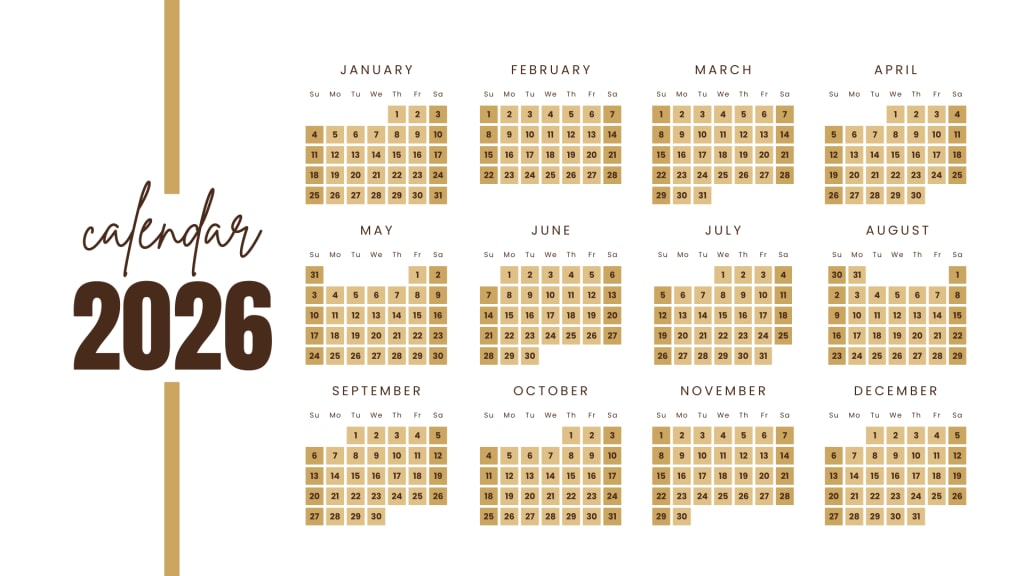
Fortunately, the infrastructure to manage this has evolved. Families are increasingly relying on deterministic engines to generate 2026 custom printable calendars that aggregate verified public holidays for over 50 countries. Instead of spending hours cross-referencing country-specific websites, parents can generate a macro-level PDF roadmap of the year and pin it to the wall, clearly marking international dates and potential travel gaps.
For planning on the go—such as verifying a date while actually booking flights—the companion Holidays Calendar 2026-2028 app on Google Play puts that same global database right on a smartphone, allowing users to instantly check if a proposed travel week conflicts with a local observance at their destination.
The Boundary Problem
Any honest account of how remote work has transformed British holidays must address the blurred boundaries it creates.
While the flexibility is incredible, it can lead to the "working holiday" trap. The parent who is on holiday in name only, reading emails every morning. The afternoon meant for the beach that is interrupted by a mandatory video call. The subtle, nagging sense that the office is always in your pocket.
The most successful remote-working families actively manage this boundary. They establish strict "offline" days. They use clear, physical schedules to communicate to their children when the laptop will be open and, more importantly, when it will be permanently closed.
A New Relationship With Time Off
What has emerged over the last five years is a fundamental re-evaluation of British time off.
It is marked by more intentional planning and a deeper understanding of both domestic bank holidays and the international public holiday landscape. Shorter, more frequent breaks spaced throughout the year have begun to replace the single, exhausting stretch of summer travel.
The remote working revolution has not turned every British family into digital nomads wandering from co-working hubs in Bali to Lisbon. But it has meaningfully expanded what is possible. For the families that have figured out how to harness this new calendar, the effects are visible in richer, less complicated, and more deliberate lives.
The script has changed. And the people writing the new version are discovering that it works beautifully.
About the Creator
Keep reading
More stories from writers in Lifehack and other communities.
How to Prevent Carpenter Ants from Invading Your Home
Carpenter ants might not carry diseases like some pests, but they can still cause serious trouble if they make themselves comfortable in your home. Unlike termites, carpenter ants don't eat wood, but they do chew through it to create tunnels and nests. Over time, this can weaken the structural integrity of your home, leading to costly repairs.
By Whitney Collins4 days ago in Lifehack
The Cairn Beside the Lake
And so it came to pass that King Ertharion, Tenth King of Lombaia, stood beside the still lake below unrelenting and unassailable cliffs with the remainder of his harried host. In what was the tenth year of his reign and his forty-fourth upon this great green earth, Menigo the Betrayer, cousin of King Ertharion, pressed home his false claim.
By Matthew J. Fromm7 days ago in Fiction




Comments
There are no comments for this story
Be the first to respond and start the conversation.