
Retaining Walls in Sydney: How to Plan, Choose Materials, and Avoid Costly Mistakes
A practical, Sydney-specific checklist for managing drainage, choosing the right wall type, and preventing expensive rework before you break ground.
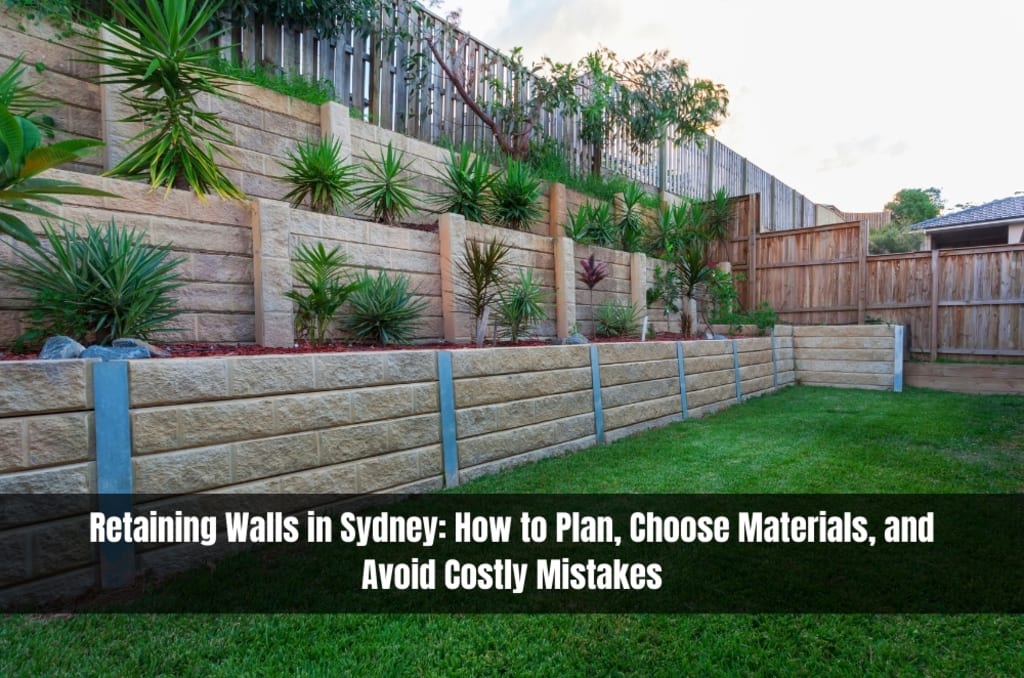
Retaining walls look simple until they start leaning, cracking, or holding water where a garden bed should drain.
In Sydney, slope, soil movement, and sudden downpours mean the “hidden” parts of a wall often matter more than the visible face.
A retaining wall is a small system: structure, backfill, and a clear path for water to leave the soil it’s holding back.
Why retaining walls fail in Sydney backyards
Most failures trace back to water pressure building up behind the wall, especially when runoff is accidentally directed into the retained area.
Reactive or mixed soils can shrink in dry periods and re-swell after rain, encouraging gradual movement.
A wall can “fail” without collapsing: bulging, stepping out of line, or letting soil wash through gaps all create long-term maintenance.
If a wall needs to hold soil, it also needs a plan for how water will exit that soil.
Decision factors that actually matter
Wall height (the retained height): Measure from the lowest ground in front to the highest retained ground behind, along the full run. Taller sections may be better handled as stepped terraces rather than one continuous wall.
Soil and future loads: Loose fill, clay-heavy zones, and heavily watered beds move more, and added loads (paths, sheds, driveways) increase pressure.
Water paths (surface + subsurface): Downpipes, paving falls, and low points decide whether the soil stays saturated after storms.
Access and constraints: Narrow side access, pools, fences, and services can limit what’s buildable and quietly drive shortcuts.
Aesthetics and connections: How the wall meets paths, stairs, lighting, and planting often determines whether it looks intentional.
If the slope, height, and water flow aren’t obvious, a short reference like the A1 Gardening & Landscaping Sydney retaining wall guide can help map options before any digging starts.
Material options: trade-offs, not “best”
Timber: Often suits smaller walls and softer garden styles, but longevity and moisture exposure are the trade-offs.
Concrete sleepers + posts: Durable and crisp-looking, but relies on correct post placement, footings, and drainage detailing.
Natural stone (incl. sandstone): High visual payoff, with higher craft and cost demands, plus staining/weep control considerations.
Segmental block systems: Flexible for many heights, though some designs need more footprint space than people expect.
Choose materials last, after the wall’s height, water plan, and site constraints are clear.
Common mistakes to avoid
Skipping drainage because it’s “not a big wall” is the fastest path to bulging and damp, algae-prone edges.
Letting downpipes or paving runoff discharge toward the retained area turns the wall into a dam.
Building one straight run through a changing slope can unintentionally create an over-height section at one end.
Backfilling with poor material or weak compaction leads to settlement that changes how water moves.
Treating the wall line as “the boundary line” can trigger neighbour issues where water flow or fence support is affected.
Ignoring trees and roots can undermine footings or change soil moisture after removal.
Small shortcuts don’t stay small once water and soil start doing their thing.
Operator Experience Moment
On outdoor jobs, I’ve seen walls that looked perfect on day one but were quietly set up to fail because the water path was never mapped.
When movement shows up later, it’s rarely a single “bad piece”; it’s usually compounding compromises made under access pressure or time pressure.
The best builds treat the wall as part of the yard’s drainage and circulation, not just a vertical edge.
A simple 7–14 day first-actions plan
Days 1–2: Measure retained height along the full line, then observe where water runs and pools after rain.
Days 3–5: Sketch the wall (including steps/terraces), mark constraints (access, fences, trees, services), and define the purpose of the retained area.
Days 6–9: Pick one material direction that fits the site, and plan where water exits so it doesn’t saturate the backfill.
Days 10–14: Stress-test for storms and future loads, then get qualified input if the wall is tall, near boundaries, or supporting significant loads.
Planning first is cheaper than rebuilding later.
Local SMB mini-walkthrough (Sydney)
An inner-west café has a narrow side yard sloping toward the rear lane.
They want a tidy terrace for bins, herbs, and a small staff break space.
Access is limited to a 900mm side gate, so every material choice must be “carry-in” friendly.
Roof runoff currently discharges at the low point and creates muddy pooling after storms.
The solution redirects water to a controlled outlet and uses stepped sections to reduce retained height.
A clean cap detail is paired with planters so the wall feels like part of the venue, not a hard barrier.
Practical Opinions
Prioritise drainage design before choosing finishes.
If access is tight, choose a system that can be installed without shortcuts.
When unsure, step the wall—terraces often outperform one tall run.
Key Takeaways
- Water management is usually the real deciding factor in retaining wall performance.
- Measure retained height properly and step walls where slope changes.
- Choose materials based on site constraints and trade-offs, not trends.
- A 7–14 day plan prevents rushed decisions that create rework.
Common questions we hear from Australian businesses
Do we need approval or special sign-off?
It depends… start by confirming the retained height, boundary proximity, and whether the wall supports extra loads like vehicle areas. Next step: document measurements and nearby structures, then talk to a qualified professional for taller or complex builds. In Sydney, drainage impacts and boundary conditions are common reasons for extra checks.
What makes a wall last longer: material or design?
In most cases… design and water management matter more than the face material. Next step: map downpipes and paving falls so water isn’t trapped behind the wall. In NSW storms, weak drainage planning is exposed quickly.
Can we build first and sort drainage later?
Usually… it costs more because retrofits mean digging behind a finished wall. Next step: decide the drainage outlet route and backfill approach before construction. In built-up Sydney blocks, access constraints make rework especially disruptive.
What early signs suggest an existing wall is failing?
Usually… look for bulging, cracking, soil washing through joints, or persistent damp patches after rain. Next step: photograph the full wall line after a storm and note pooling areas, then arrange an assessment before it worsens. Around Sydney, moisture-related movement is a frequent trigger.
About the Creator
Keep reading
More stories from Adney Versca and writers in Lifehack and other communities.
Boosting Your Property Value with Summer Paving Services
What small things can be disturbing when one nears a house? Maybe it’s the uneven, worn-down pavement or the fractured asphalt reclaimed by weeds. These little things can affect both first impressions and property value. Alternatively, a beautifully paved entrance or driveway can add considerably to a home's appeal and market value. Summer is the best time for outdoor home renovations for Sydney homeowners. Longer days and drier weather make paving projects ideal, allowing the materials to cure correctly for the best durability. Whether creating a stylish pathway or upgrading your driveway, securing professional help from fast paving Sydney residents can rely on guarantees of efficiency and quality results. As outdoor living continues to rise in popularity, investing in high-quality paving will enhance your property’s aesthetics and value while offering immediate enjoyment in your upgraded outdoor space.
By Adney Versca12 months ago in Lifehack
The Vanishing Street
Amina had walked the same route home from work for years, a quiet street lined with old buildings and small cafes. She knew every corner, every pothole, and every flickering streetlight. The familiarity was comforting, a sense of stability after long days of meetings and deadlines. One evening, after staying late at the office, she stepped onto the street and immediately felt something was off. The usual lamppost that marked the corner of her route was gone. In its place, there was a narrow alley she had never noticed before, dark and twisting. She frowned, thinking it must be exhaustion playing tricks on her eyes. Yet curiosity tugged at her, and she stepped closer to examine it.
By Sudais Zakwan2 days ago in Lifehack




Comments
There are no comments for this story
Be the first to respond and start the conversation.