


Pomegranate, also known as Punica granatum, is a fruit-bearing tree or shrub native to the region between Iran and the Himalayas in northern India. It has been cultivated for thousands of years in the Middle East, Mediterranean, and other parts of the world. Pomegranate has become increasingly popular in recent years due to its numerous health benefits, as well as its unique taste and versatility in cooking and beverage making.
Appearance and Taste
Pomegranate is a round fruit that is typically 2-5 inches in diameter. The fruit has a tough, leathery skin that ranges in color from yellow-orange to deep red. Inside the fruit, there are hundreds of edible seeds called arils, which are surrounded by a bitter, white membrane. The arils are juicy and have a sweet-tart flavor that is similar to cranberries.
Nutritional Profile
Pomegranate is a nutrient-dense fruit that is high in vitamins, minerals, and antioxidants. According to the United States Department of Agriculture (USDA), one cup of pomegranate arils contains:
Calories: 144
Protein: 2.3 grams
Fat: 1.5 grams
Carbohydrates: 37.7 grams
Fiber: 5.6 grams
Sugar: 32 grams
Vitamin C: 28% of the Daily Value (DV)
Vitamin K: 36% of the DV
Folate: 16% of the DV
Potassium: 12% of the DV
Pomegranate is also a rich source of antioxidants, particularly polyphenols. Polyphenols are plant compounds that have been shown to have numerous health benefits, including reducing inflammation, protecting against cancer, and improving cardiovascular health.

Health Benefits
Pomegranate has been studied extensively for its potential health benefits, and research suggests that it may offer a range of advantages for overall health and disease prevention.
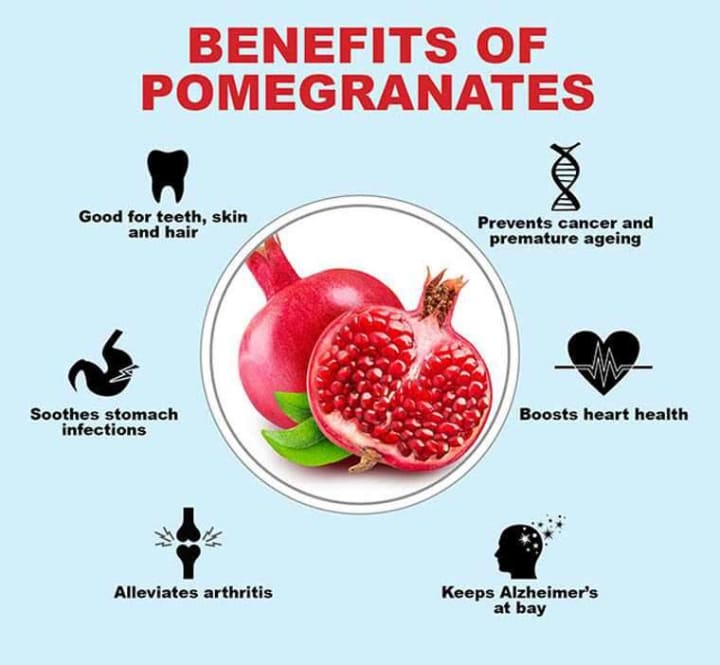
Antioxidant properties: Pomegranate is one of the richest sources of antioxidants, including polyphenols, which can help protect against oxidative stress and reduce inflammation in the body.
Heart health: Pomegranate may help improve heart health by reducing blood pressure, decreasing inflammation, and improving blood flow to the heart.
Cancer prevention: Some studies have suggested that pomegranate may have anti-cancer properties, particularly in reducing the risk of breast and prostate cancer.
Anti-inflammatory properties: Pomegranate may help reduce inflammation in the body, which is associated with a range of chronic diseases, including arthritis, diabetes, and Alzheimer's disease.
Skin health: Pomegranate may help protect the skin against sun damage and aging, due to its antioxidant and anti-inflammatory properties.
Digestive health: Pomegranate may have a positive effect on digestive health by promoting the growth of beneficial gut bacteria and reducing inflammation in the gut.
Brain health: Pomegranate may have cognitive benefits, including improving memory and reducing the risk of Alzheimer's disease.
Uses and Culinary Applications
Pomegranate can be enjoyed in a variety of ways, including as a juice, fresh fruit, or dried fruit. Here are some popular culinary applications of pomegranate:
Juice: Pomegranate juice is a popular beverage that is enjoyed around the world. It can be consumed on its own or mixed with other juices or sparkling water.
Smoothies: Pomegranate arils can be blended into smoothies for a nutritious and refreshing drink.
Salads: Pomegranate arils can be added to salads for a burst of flavor and color.
Sauces: Pomegranate juice

Heart Health
Studies have suggested that pomegranates can protect your heart in many ways, including lowering blood pressure and reducing blood sugar levels. Pomegranates have a good amount of polyphenol compounds called punicalagins or ellagitannins. These antioxidants help prevent your artery walls from thickening as well as lower the buildup of cholesterol and plaque. Pomegranate juice also has high amounts of plant pigments called anthocyanins and anthoxanthins that support good heart health.
Atherosclerosis, the buildup of cholesterol and fats in the arteries, is a common cause of heart disease. Pomegranate juice may help reduce low-density lipoprotein cholesterol — “bad” cholesterol” — that clogs arteries. It can also increase high-density lipoprotein cholesterol — “good” cholesterol” — which lowers the risk of strokes and heart attacks.
Diabetes Control
Initial studies have revealed that people with type 2 diabetes who began to drink pomegranate juice showed an improvement in insulin resistance. Pomegranates can also help people without diabetes maintain a healthy weight.

Lowering Risk of Cancer
Pomegranates are rich in antioxidants and flavonoids, both of which are known to prevent free radicals from damaging your cells. In some studies, pomegranates show potential in preventing prostate, breast, lung, and colon cancers. Additionally, preclinical studies on animals have shown that eating pomegranate can inhibit the growth of lung, skin, colon, and prostate tumors. More research is needed to understand the effects on humans.

About the Creator
Moving and Storage in Baltimore: Practical Tips for a Smoother Transition
Moving in Baltimore presents a unique set of challenges shaped by the city’s layout, historic neighborhoods, and active urban rhythm. From narrow streets and rowhouses to strict parking rules and seasonal traffic, relocating within or into Baltimore requires preparation and local awareness. Understanding how moving and storage work together can help residents manage transitions more efficiently and avoid common setbacks.
By House Doctor7 days ago in Lifehack
Choosing Moving Companies in Jupiter, Florida
Moving to or within Jupiter, Florida, is often associated with positive change. The area is known for its coastal environment, residential communities, and relaxed pace of life. However, even in a town that feels calm and welcoming, moving requires careful planning. Understanding local conditions and knowing what to expect can make the difference between a smooth transition and a stressful experience.
By House Doctor5 days ago in Lifehack




Comments (1)
healthy foods