
AI Integration Trends for Mobile App Development Los Angeles Startups
When Artificial Intelligence Stopped Being a Feature and Became the Starting Point for Product Thinking

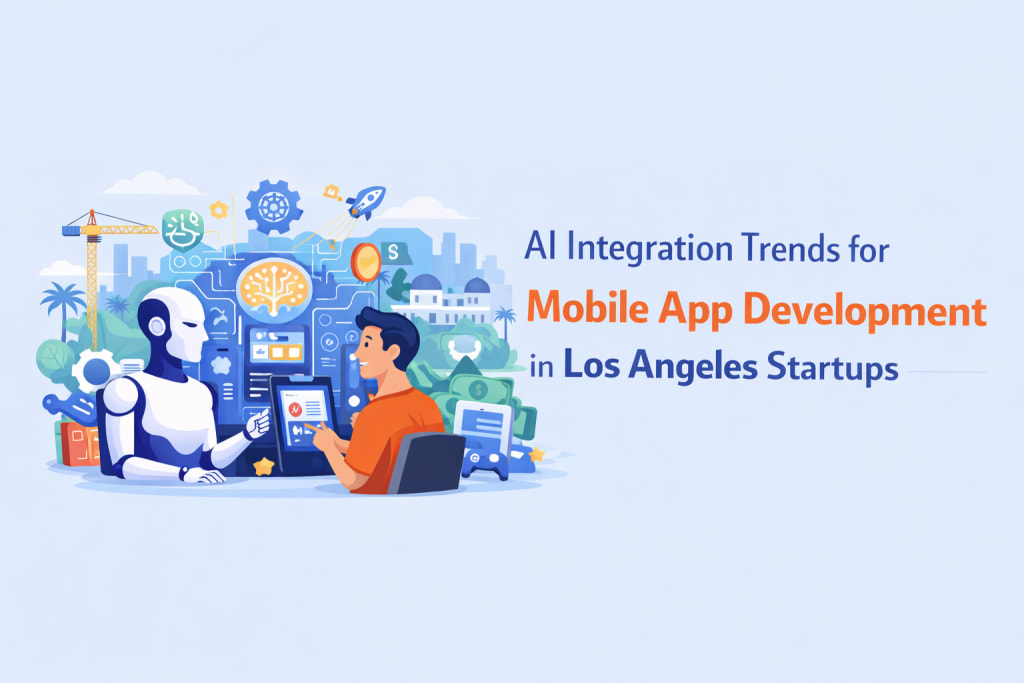
Not long ago, artificial intelligence appeared in product roadmaps as an optional addition — a feature added near the end of development to make an app feel modern. That sequence has reversed. In many Los Angeles startups today, AI sits at the center of the initial concept, shaping how apps are imagined before the first interface sketch appears.
This shift marks a deeper change in how technology companies approach product design. Instead of asking what AI can improve after launch, teams now ask what becomes possible when intelligence is built into the foundation of a digital experience. Los Angeles, with its blend of entertainment, media, commerce, and creator-driven culture, offers a unique view into how these changes unfold.
Understanding AI integration trends requires examining both technical progress and cultural forces driving experimentation.
Why Los Angeles Startups Approach AI Differently From Traditional Tech Markets
Every tech hub develops its own identity. Silicon Valley often prioritizes scale and infrastructure. New York emphasizes finance and commerce. Los Angeles draws influence from storytelling, media production, and consumer engagement.
That background shapes how startups use AI.
Rather than focusing only on backend automation, many Los Angeles teams use AI to influence user-facing experiences. Examples include:
- Personalized storytelling within entertainment apps.
- AI-driven editing tools for creators.
- Real-time content recommendations tailored to individual behavior.
According to research from Deloitte, nearly 60% of media-focused startups introduced AI-driven personalization features within the last two years, reflecting strong demand for customized digital experiences.
The result is a development culture where artificial intelligence feels less like a technical layer and more like a creative partner.
The Rise of AI-Native Product Design
One of the most noticeable trends involves AI-native design. These apps do not simply add chatbots or predictive suggestions; they build entire workflows around intelligent systems.
For example:
- Productivity tools that anticipate user needs.
- Entertainment platforms generating adaptive storylines.
- Health and wellness apps analyzing behavior patterns to suggest routines.
A McKinsey study reports that companies embedding AI deeply into product workflows can increase user engagement metrics by up to 25%. While results vary by industry, the broader takeaway is clear: AI integration changes how users interact with software.
This shift requires teams to rethink traditional development timelines. Data training, model selection, and testing processes introduce new planning stages.
Generative AI and the Expansion of Creative Possibilities
Generative AI tools have altered expectations across creative industries. Startups now experiment with features that automatically generate images, text, music, or video.
Los Angeles companies, shaped by media production culture, often explore creative AI use cases first. These include:
- Script generation for short-form content.
- Automated video editing based on audience behavior.
- Voice synthesis tools enabling personalized storytelling.
Statista reports that global investment in generative AI tools has grown rapidly, with billions directed toward platforms enabling creative automation.
The appeal lies in reducing friction between imagination and execution. Ideas that once required large production teams can now begin as experiments inside mobile apps.
Data Privacy and Ethical Concerns Influence Development Choices
As AI capabilities expand, startups face rising expectations around data privacy and ethical use.
California privacy regulations require careful handling of user information, shaping how AI systems collect and process data. Teams must consider:
- Transparency about how recommendations are generated.
- Options allowing users to control data sharing.
- Bias monitoring to prevent unintended outcomes.
Research from IBM shows that companies prioritizing ethical AI frameworks experience stronger user trust and reduced regulatory risk.
These considerations influence not only legal strategies but also product design decisions.
The Growing Importance of Real-Time Processing
Many AI-driven features rely on real-time data processing. Examples include:
- Live language translation.
- Instant content moderation.
- Predictive recommendations during streaming sessions.
Real-time capabilities introduce technical challenges. Apps must process large volumes of information quickly while maintaining performance stability.
Cloud infrastructure plays a central role, yet ongoing operational costs increase as AI usage grows. Teams must balance performance expectations with financial planning.
Cross-Industry Influence and Hybrid Experiences
Los Angeles startups frequently combine ideas from different sectors. Entertainment companies adopt gaming mechanics. Fitness apps incorporate social media features. Retail platforms use storytelling techniques.
AI acts as a bridge connecting these influences. For instance:
- Retail apps using AI-driven styling suggestions inspired by influencer culture.
- Streaming platforms blending gaming-style interactivity with narrative content.
- Education apps introducing entertainment-style personalization.
This blending reflects the city’s diverse creative ecosystem, where boundaries between industries blur.
Hiring Trends and the Search for AI-Skilled Talent
Demand for AI specialists continues to grow. According to LinkedIn workforce reports, roles involving machine learning and data science remain among the fastest-growing job categories globally.
Los Angeles startups often seek hybrid professionals — individuals comfortable working across design, engineering, and data analysis.
The need for multidisciplinary collaboration increases development complexity. Teams must align technical goals with creative direction, which affects project timelines and budgeting.
Discussions around mobile app development Los Angeles increasingly include AI architecture decisions alongside traditional design conversations.
AI as a Driver of Continuous Product Evolution
Traditional app development followed a linear model: build, launch, update occasionally. AI-driven products operate differently.
Machine learning systems improve through data feedback loops. As users interact with the app, algorithms refine predictions, recommendations, and automated actions.
This ongoing evolution changes how startups think about product ownership. Development becomes an ongoing process rather than a finite project.
Research from Gartner suggests that companies treating AI as a continuous learning system experience higher user retention rates compared with static feature-based products.
Challenges Facing AI Integration in Startup Environments
Despite excitement around AI, several challenges remain:
- High infrastructure costs for training and running models.
- Difficulty explaining AI decisions to users.
- Balancing automation with human oversight.
Startups must avoid adding AI simply for novelty. Features without clear value risk confusing users and increasing development overhead.
Industry observers note that successful AI projects often focus on solving specific user problems rather than attempting broad automation.
Future Trends Likely to Shape AI Integration
Looking ahead, several developments may influence AI-driven mobile apps:
Smaller, More Efficient Models
Advances in model compression could reduce processing requirements, making AI more accessible.
On-Device Intelligence
AI running directly on smartphones may improve privacy and reduce reliance on cloud services.
Voice and Multimodal Interfaces
Natural language interactions and visual recognition systems could redefine user interfaces.
Each trend signals a move toward more intuitive digital experiences.
A Final Reflection: AI as a Cultural Shift Rather Than Just a Technical Upgrade
Artificial intelligence represents more than new technology. It changes how startups think about creativity, user engagement, and the relationship between humans and software.
Los Angeles offers a compelling example of this shift. The city’s creative heritage encourages experimentation, blending narrative thinking with technical ambition. As AI continues evolving, mobile apps may become less like tools and more like collaborative environments where software responds dynamically to human behavior.
The real story lies not in the technology itself but in how it reshapes expectations — turning digital products into living systems that learn, respond, and evolve alongside their audiences.
About the Creator
Mike Pichai
Mike Pichai writes about tech, technolgies, AI and work life, creating clear stories for clients in Seattle, Indianapolis, Portland, San Diego, Tampa, Austin, Los Angeles and Charlotte. He writes blogs readers can trust.
Keep reading
More stories from Mike Pichai and writers in Lifehack and other communities.
What to Expect From Mobile App Development Teams in Miami?
Miami’s tech ecosystem grew fast and unevenly. According to Statista, Florida’s digital economy expanded by over 17 percent between 2022 and 2025, pulling in agencies, freelancers, boutique firms, and offshore-linked teams at very different maturity levels.
By Mike Pichai28 days ago in Lifehack
How Programmatic Advertising Enhances Precision in Digital Ad Targeting
Digital advertising has experienced a quick transformation in the last 10 years and has transformed into a far less general, more manual, and more data-driven approach to target the right audience at the right time. With the competition for consumer attention increasing, companies are exploring smarter alternatives to provide consumers with relevant messages without spending the budget. It is here that automation and data are central to the current advertising approaches.
By Jane Smithh4 days ago in Lifehack
I've Just Realized
The President doesn't understand music. There. It felt very good to write that; it's some thing I just realized today. Oh , yes; he plays it. He TRUMPets it in rallies and meetings, pumps it across the airwaves when he gathers up our minutes waiting for his late arrival.
By Judey Kalchik 7 days ago in Beat


Comments
There are no comments for this story
Be the first to respond and start the conversation.