
Why Utah’s SaaS Giants Are Finally Going Mobile-First (and Why It’s Hella Late)
Desktop is so 2022. Utah’s Silicon Slopes are ditching the browser and moving into your pocket—here's why it actually matters in 2026.

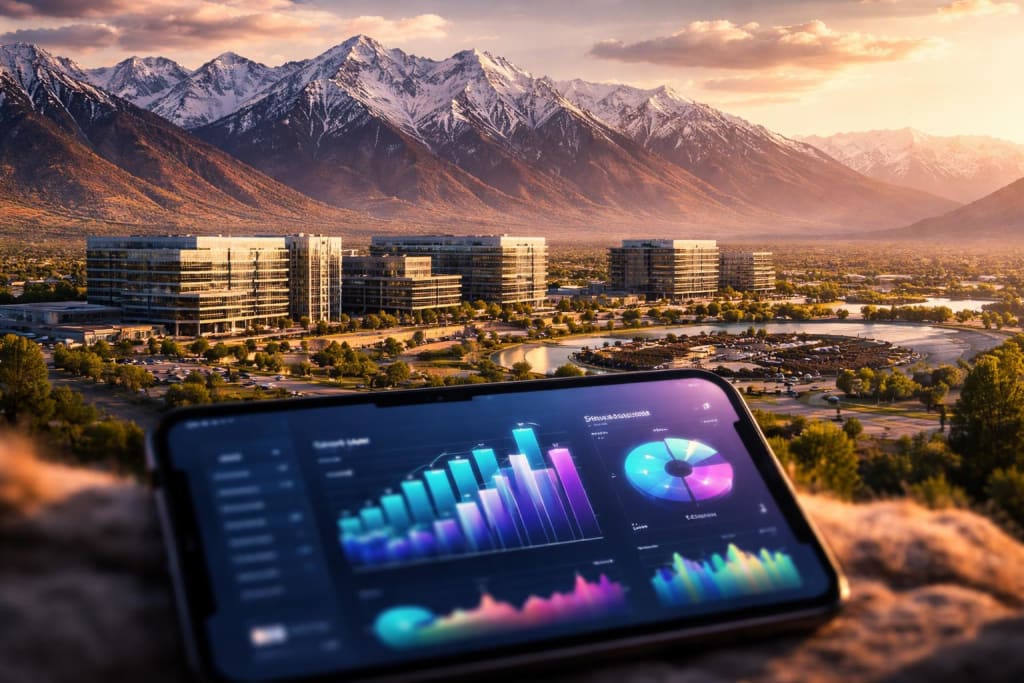
I was sitting in a coffee shop in Draper last Tuesday, staring at the Wasatch mountains and trying to pull up a quarterly report on my phone. The SaaS tool I was using—a "market leader" based right here in the Silicon Slopes—was basically a glorified spreadsheet shoved into a mobile browser. It was gnarly, and not in the cool, surf-vibe way. It was a disaster of tiny buttons and infinite scrolling.
You’d reckon that in 2026, with all the AI-driven hype we’ve been swimming in, every big tech player in Utah would have a native mobile app that actually works. But for a long time, Utah’s SaaS giants were all about the desktop. They built massive, complex platforms meant for big monitors and ergonomic chairs. Now, finally, the tide is turning. These heavy hitters are fixin' to move their entire product suites into our pockets, and they aren’t just porting features—they’re rebuilding from the ground up.
The shift to a personal stylist app for your business data is real. We’ve seen a massive surge in mobile-first personal stylist app logic being applied to enterprise software, where the app predicts what you need to see before you even ask. It’s about time. Honestly, if I have to pinch-to-zoom on one more data table, I’m going to lose it. Utah’s tech scene is finally waking up to the fact that the "desk" in desktop is increasingly optional.
The Great Migration from Browser to Pocket
Why now? Well, the data from late 2025 suggests that over 70% of enterprise decision-makers now prefer interacting with their tech stack via mobile-first interfaces during their "in-between" moments—the commute, the pre-meeting prep, or even the dreaded airport lounge wait. Utah giants like Qualtrics and Podium have realized that if they aren't on the home screen, they’re invisible.
Real talk: it’s a survival tactic. Companies in the Slopes are seeing that mobile engagement is no longer just a "nice to have" feature. According to a 2025 report from the Utah Technology Council, mobile-native usage for B2B platforms in the state grew by 45% year-over-year. The giants aren't just adding apps; they are creating mobile ecosystems that use haptic feedback, native AI, and offline-first capabilities.
A good example of this is how local firms are rethinking the entire build process. Teams working in this space, like those at mobile app development in Utah, are seeing a pivot from "lite" versions of software to fully-featured, high-performance native experiences. It’s a shift from being a spectator on mobile to being a power user.
How Qualtrics is Leading the Mobile XM Charge
Qualtrics has been hella busy lately. They’ve moved beyond just sending survey links to creating a "Pulse" mobile experience that uses AI to summarize sentiment in real-time. Instead of digging through a 50-page PDF report, managers get a notification that basically says, "Hey, your team in Sydney is feeling burnt out, maybe talk to them?"
Qualtrics Mobile Highlights:
- Predictive Alerts: Uses native machine learning to flag churn risks directly to your lock screen.
- Voice Integration: You can literally ask your phone "How’s the brand sentiment today?" and get a verbal summary.
- Offline Mode: Essential for those "off the grid" retreats in Park City where the Wi-Fi is dodgy.
"The future of Experience Management isn't a dashboard you visit once a week; it's a companion that lives in your pocket and alerts you to the 'why' behind the 'what' in real-time." — Zig Serafin, CEO of Qualtrics (Paraphrased from 2025 Tech Summit).
Podium and the Death of the Desktop Inbox
Podium was always mobile-adjacent, but their 2026 suite is a whole different beast. They’ve leaned hard into the "AI employee" concept. Their mobile app now handles about 60% of initial customer inquiries automatically. For the small business owner in Provo, this means they can actually go to their kid’s soccer game without being tethered to a laptop.
💡 Clint Berry (@clintberry): "SaaS is no longer about the platform; it's about the workflow. If that workflow doesn't start and end on a phone, you've already lost the user." — X/Twitter Context
The AI "Stylist" for Enterprise Data
We’re seeing a trend where these apps act like a personal stylist for your workday. Instead of picking out an outfit, the AI picks out the three most important metrics you need to care about today. It’s all about curation. The sheer volume of data in 2026 is overwhelming; the mobile app's job is to be the filter.
Lucid, another Utah heavyweight, has transformed their collaborative whiteboarding into a mobile-first experience. You might think whiteboarding on a 6-inch screen sounds like a nightmare. But they’ve used "Infinite Canvas" tech that allows users to use their phone as a laser pointer or a quick-entry tool for a larger shared screen. It’s brilliant, mate. It’s not about doing everything on the phone; it’s about the phone being the remote control for your productivity.
Entrata and the Resident Experience
Entrata has gone all-in on the "Resident Portal" mobile app. In 2026, if you’re a property manager in Utah and you’re still making people sign physical leases or use a clunky web portal, you’re basically a dinosaur. Their new app uses biometric signatures and instant maintenance scheduling that feels more like Uber than property management.
Entrata Mobile Feature Comparison:
- Payments: Integration with all major 2026 digital wallets (including regional crypto-tokens).
- Maintenance: Live-video diagnosis within the app to reduce unnecessary truck rolls.
- Community: A localized social feed for apartment complexes that doesn't feel like a spam folder.
Why "Silicon Slopes" is the Perfect Mobile Lab
Utah has this weirdly perfect mix for testing mobile tech. You’ve got a highly tech-literate population, a massive concentration of SaaS companies, and a lifestyle that demands mobility. People here want to be hiking in Zion or skiing in Alta, not stuck at a desk. The "Work from Anywhere" culture in Utah has forced these SaaS giants to get their act together.
I reckon the regional culture of "outdoors-first" is actually the secret sauce behind why our apps are getting better. If an app doesn't work with one-handed use while you're holding a trekking pole, is it even a good app? The developers here are finally eating their own dog food, and the result is software that feels human.
💡 Ryan Smith (@RyanQualtrics): "We aren't building for the office anymore. We are building for the gaps between life. That's where the real decisions happen." — Silicon Slopes News
"The shift toward mobile-centricity in Utah’s tech corridor is a direct response to the 'productivity anywhere' mandate of the mid-2020s. Companies that failed to adapt their UX for the thumb are now losing market share to leaner, mobile-native startups." — Sarah Jensen, Tech Analyst, Deseret News
The Tech Stack Behind the Scenes
It’s not just about the UI. The 2026 mobile pivot is powered by a massive backend shift. We’re talking about Edge Computing and 6G (where available) allowing for near-zero latency. When you open a Domo app on your phone today, the data isn't just loading; it’s being pre-rendered by an AI agent that guessed you’d open the app the second you walked into your office building.
Common 2026 Mobile Tech Patterns:
- Swift/Kotlin Supremacy: Moving away from hybrid frameworks to pure native for that buttery-smooth 120Hz refresh rate.
- Micro-Frontends: Breaking down massive SaaS platforms so you only download the "modules" you actually use on the go.
- Zero-Trust Mobile Security: Biometrics are no longer optional; they are the foundation of every enterprise login.
The Future: What’s Next for Utah’s App Scene?
Looking toward 2027, the trend is moving away from "apps" and toward "agents." We’re fixin' to see a world where you don't even "open" an app. Instead, your phone's OS will surface "Live Activities" from your SaaS tools. Imagine your lock screen telling you that your sales target was hit, with a button to instantly send a celebratory Slack message to the team—all without leaving the home screen.
The SaaS giants of the Silicon Slopes have realized that they aren't in the business of selling software anymore; they are in the business of selling time. And the best way to give someone their time back is to make sure they can get their work done in 30 seconds on a phone rather than 30 minutes at a desk. It’s a bold move, and honestly, it’s about time we stopped pretending that a 27-inch monitor is the only place "real work" happens.
I’m curious—have these new mobile versions actually made your life easier, or are you just getting more notifications while you're trying to enjoy your weekend? What’s the one Utah-made app you actually enjoy using on your phone?
About the Creator
Keep reading
More stories from Samantha Blake and writers in Journal and other communities.
A Guide to Mobile App Strategy for Indianapolis Businesses
I never planned to think deeply about mobile strategy. At first, I thought apps were mostly technical projects — hire developers, define features, launch, repeat. That assumption didn’t survive long. The more projects I watched from the inside, the more I realized strategy begins long before code exists. It starts with decisions that feel small at the time: who you build for, how quickly you expect results, how much uncertainty you’re willing to accept.
By Samantha Blake15 days ago in Journal


Comments
There are no comments for this story
Be the first to respond and start the conversation.