
The Phantom of the Bosphorus
Chapter 1: The Law of the Oars
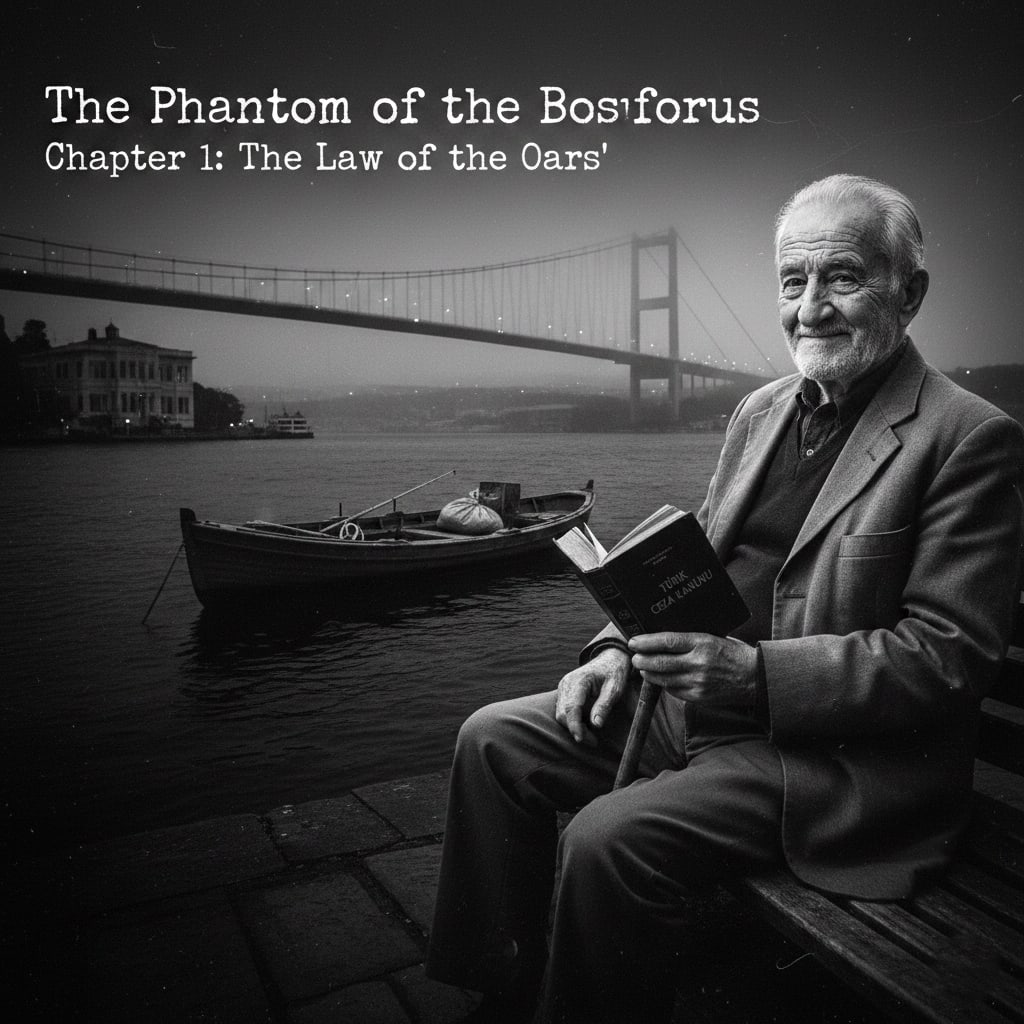
"A lockpick is a tool for a common thief, but for a master, the greatest tool is his understanding of the world’s rhythm. In Istanbul, that rhythm is dictated by the sea."
The Birth of the Ghost
The year 1972 was a time of dust and neon in Istanbul. While the city slept under a blanket of political tension and sea mist, I was undergoing a transformation. My three-month stint in the cold cells of the Beyoğlu police station had done what no school could: it had educated me. I had realized that being a street-level pickpocket was a fool’s errand. It was high risk for low reward. To truly survive in a city that eats the weak, I had to become something else. I had to become a phantom.
When I stepped out of prison, my first stop wasn't the taverns or the gambling dens. It was the Sahaflar Bazaar, the ancient alley of second-hand booksellers. I spent my last liras on two things: a copy of the Turkish Penal Code and a map of the Bosphorus currents. My friends laughed at me. "Atik has gone mad," they whispered. "He’s reading books like a lawyer while we’re out here making money." But I knew something they didn't. I knew that the law wasn't a wall; it was a map. If you knew where the lines were drawn, you knew exactly how to cross them without leaving a footprint.
Mapping the Fortresses
I turned my attention to the Yalıs—the magnificent wooden mansions that lined the Bosphorus like sleeping giants. These were the fortresses of the elite, filled with generations of stolen or inherited wealth. Gold, antiques, and cash were hidden behind those ornate windows. But they were guarded by more than just locks. The Coast Guard patrolled the waters with relentless searchlights, and private watchmen roamed the gardens.
"It’s an impossible job, Atik," said Nuri the Lock, my oldest companion. "The lights sweep the water every thirty seconds. No boat is fast enough to outrun the law."
I looked at him and smiled. "We aren't going to outrun them, Nuri. We’re going to be where they aren't looking."
I spent the next month as a "fisherman." Every night, I sat on the damp concrete of the Arnavutköy shore with a rod in my hand and a stopwatch in my pocket. I wasn't catching fish; I was catching data. I mapped the rotation of every searchlight. I noted the exact second the Coast Guard patrol boats slowed down to navigate the treacherous "Devil's Current." I realized that at exactly 3:15 AM, there was a lull. The shift change at the precinct caused a four-minute gap in the patrol’s focus. Four minutes. In the world of the Phantom, four minutes was an eternity.
The Black Boat
To claim the Bosphorus, I needed a vessel that didn't exist. I bought an old, battered rowboat from a desperate sailor in Kasımpaşa. We took it to a hidden warehouse and began the "Alchemy of the Night." We painted every inch of it—the wood, the oars, even the metal rings—with a flat, light-absorbing matte black paint I had mixed myself.
Then came the most important part: The Law of the Oars. The sound of wood hitting water or the creak of an oarlock was a death sentence. I wrapped the oars in thick layers of aged sheepskin and soaked them in oil to ensure they moved through the water like a hot knife through butter. We practiced for weeks in the dark, rowing without making a single ripple. I learned to read the Bosphorus not as water, but as a series of moving paths. I learned the "Back Currents" that could pull a boat toward the shore without a single stroke of the oar.
The First Strike
Our target was a three-story mansion in Bebek, owned by a businessman who had grown fat on government contracts. On a night when the moon was strangled by heavy clouds, we set out. The water was like liquid ink. As we approached the "Devil's Current," I felt the power of the Bosphorus trying to push us back. But I knew the law of the sea. I steered the black boat into the eddy, letting the current itself carry us toward the mansion’s private pier.
Nuri was trembling. "The light is coming, Atik! It's going to hit us!"
"Quiet," I whispered, my heart beating with a cold, steady rhythm. "The shift is changing. Look at the lighthouse."
The searchlight flickered, slowed, and then turned away toward the bridge. We had our four minutes. We slipped over the garden wall like shadows returning to their origin. Inside the mansion, the air smelled of expensive wax and old money. We didn't take everything; we only took what was portable and untraceable. Gold coins, a small velvet bag of jewels, and a stack of unmarked bills.
As we rowed back into the darkness, the searchlight swept the spot where we had just been. But we were gone. We were just a ripple in the water, a whisper in the wind. That night, the legend of the Phantom was born. I wasn't just a thief who used a boat; I was a man who had mastered the Law of the Oars.
About the Creator
Keep reading
More stories from Ercan Bilmez and writers in Journal and other communities.
Florida Joins California, Colorado, North Dakota, Montana, Iowa, and Other US States in Wooing Back Canadian Tourists with New Campaigns and Offers After a Twenty-Two Percent Drop Last Year: Everything You Need to Know
Introduction: A Tourism Wake-Up Call For decades, Canadian tourists have been among the most loyal visitors to the United States, especially to warm-weather destinations like Florida and California and scenic states such as Colorado and Montana. But last year brought a surprise: Canadian travel to the U.S. dropped by twenty-two percent, marking one of the steepest declines in recent history.
By Sajida Sikandar4 days ago in Journal


Comments
There are no comments for this story
Be the first to respond and start the conversation.