heroes and villains
Heroes and Villains throughout history that have defined their industries and workflow as we know it today. Those we look up to, and those we learn mistakes from.
Vasco da Gama: The Founder of Barbarity and Colonial Terrorism in the Garb of Discovery . AI-Generated.
Vasco da Gama is often presented in the pages of history as a great adventurer and conqueror of the seas, but the reality is quite the opposite because his arrival was no less than a human disaster for the Indian subcontinent that changed the destiny of the region. He was actually a fanatical religious plunderer and colonialist whose heart was filled with the ancient hatred of the Crusades for Muslims and immense colonial arrogance for Indians. When he left Lisbon in 1497 on the orders of King Manuel I of Portugal, the red cross symbols on his ships reflected his intentions that this journey was not just for trade but to end the dominance of Christianity and the maritime trade monopoly of Muslims by force. He left traces of his brutality in the coastal cities of Mombasa and Malindi in Africa. After leaving, when he reached Calicut in May 1498, his behavior towards the local ruler, Raja Zamorin, was contrary to any diplomatic etiquette. His most shocking incident occurred during his second voyage in October 1502, when he stopped the ship 'Miri' in the Arabian Sea, which was returning from the Hajj pilgrimage from Mecca, with more than four hundred innocent passengers on board. In addition to respectable merchants, these passengers also included women and innocent children. When the Portuguese ships surrounded them, the captain and passengers of the ship handed over twenty-two thousand gold coins and valuable goods to Gama in exchange for their lives, but this savage man refused to spare their lives even after looting all the property and belongings. British historian R.S. Whiteway writes in his book "The Rise of Portuguese Power in India" that Gama ordered the ship's ammunition depot to be set on fire, during which The scenes were heartbreaking because mothers were holding their little children in their arms and showing them to the Portuguese soldiers that perhaps they would take pity on these innocents and save them. But Gama strictly ordered his gunners to shoot and kill any passenger who jumped into the sea. In this way, the ship continued to burn in the middle of the sea for four days, including the suffering people, until all 400 people were burned alive. Gama's brutality was not limited to Muslims, but he adopted inhumane tactics to intimidate the Hindu Raja of Calicut. When Raja Zamoran sent a respected and elderly Brahmin priest as an ambassador to Gama for negotiations, the brutal Portuguese arrested the old priest and cut off his lips and ears. Then he slaughtered a dog and sewed its ears on the priest's head and returned it with an insulting letter. Sent to the Raja, this incident is mentioned with pride by the Portuguese historian Gaspar Correa himself in his work "Lendas da Índia" which exposes the Portuguese mentality of that time. During the same voyage, Gama captured about eight hundred unarmed fishermen and small local traders on the coast of Calicut and cut off their hands, noses and ears and loaded them into a large boat and put dry leaves on top of it and set it on fire and pushed this burning boat towards the shore so that the people of the city would be terrified to see the severed limbs of their loved ones. He sent a message to the Raja to cook curry for himself from these severed human limbs. These are the gruesome historical facts that the Western narrative has always hidden in the beautiful words of "transition of civilization". Gama introduced a forced permit system called "Cartaz" for the first time in the peaceful trade of the Indian Ocean using cannons and guns, under which every ship was required to be given to the Portuguese. They had to pay extortion, otherwise they would be declared pirates and drowned. In this way, he strangled the independent economy of the subcontinent and laid the foundation for centuries of colonial plunder here. Renowned modern historians like Sanjay Subramaniam make it clear in his book "The Career and Legend of Vasco da Gama" that Gama was not just an adventurer but a violent person to the point of a psychopath who enjoyed playing Holi with the blood of innocents. The stories of his atrocities are also found in the writings of French historian Geneviève Bouchon and Indian researcher K.M. Panicker, which prove that Vasco da Gama's discovery actually brought a message of slavery, religious prejudice and economic destruction to South Asia. Unfortunately, the imprint of the colonial era still remains in our educational curriculum and Pakistan studies books, where Vasco da Gama is taught as a hero and a great man who discovered the way, while a criminal silence is maintained on the massacres committed by him. Due to this curricular gap, our The new generation is unable to recognize its real enemies and friends. It is time to make these historical truths part of the curriculum and force the international community to remove the statues of war criminals like Vasco da Gama from their squares, because these statues are a humiliation to humanity and a source of suffering to the souls of millions of innocent Indians and Muslims whose blood was shed by this brutal man just to obtain gold and spices. The story of Vasco da Gama is the story of a plunderer who stained the seas with blood and history will never forgive him until his true face is fully revealed to the world. And we, as independent journalists, pledge to continue to unmask the distorted faces of history so that future generations can distinguish between truth and falsehood and recognize our true national heroes. Research and writing: Journalist Malik Sarfaraz Hussain Awan
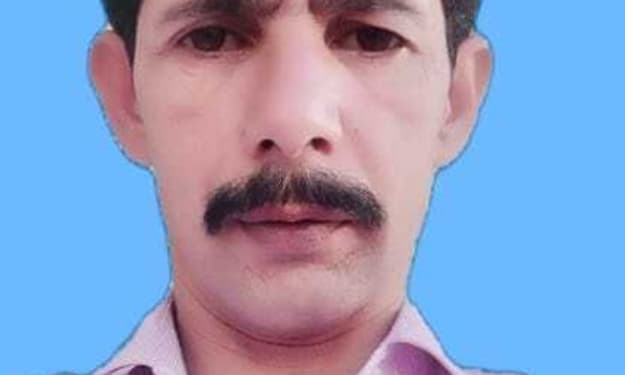
By Malik Sarfraz Hussain Awan2 days ago in Journal
Understanding a U.S. Government Shutdown
A “government shutdown” in the United States sounds like a sci-fi switch someone flipsand suddenly a whole country goes dark. Reality is messier, more legalistic, and (unfortunately) more human: it’s not the nation shutting off, it’s certain federal agencies losing legal authority to spend money, which then ripples into paychecks, services, contracts, and public trust.
By Sayed Zewayed6 days ago in Journal
A Complete Guide to Self Assessment Tax Returns in London
Navigating the UK tax system can feel labyrinthine, particularly for individuals and businesses with complex income streams. In London, where entrepreneurial activity, property investment, and freelance work thrive, understanding self assessment is not merely advisable—it is essential. This guide offers a comprehensive exploration of how self assessment tax returns work, who needs to file them, key deadlines, common pitfalls, and the value of professional support.
By Self Assessment Tax Return10 days ago in Journal
Dream Journal - Entry 2
Dream Journaling: Unlock the Hidden World Within Every night, you journey to a realm where the impossible becomes real, where you fly without wings, converse with strangers who feel like old friends, and experience emotions more vivid than waking life itself. Yet by morning, these extraordinary adventures fade like mist in sunlight, leaving only fragments—or nothing at all.
By Parsley Rose 12 days ago in Journal
“Iran VS United States, Tensions at the Breaking Point. Trump’s Next Move Could Reshape the Middle East”
1. Background: What’s Happening Now • Nationwide protests in Iran are ongoing due to a severe economic crisis, skyrocketing inflation, and public anger about conditions inside the country. • President Donald Trump has publicly threatened Iran, warning that if Tehran violently suppresses protesters or gets too aggressive, the U.S. could intervene. • Iran’s government has responded by warning of swift and comprehensive retaliation if the U.S. attacks. • Iran’s airspace and infrastructure remain tense, but some diplomatic communications have briefly reopened, signaling both sides are weighing options.
By USA daily update 16 days ago in Journal
Daily Liturgy — January 21, 2026
Today the Church celebrates the Memorial of Saint Agnes, Virgin and Martyr, and the liturgy invites us to reflect on courage, fidelity, and the quiet strength that comes from trusting God completely. As we continue through the Second Week in Ordinary Time, the readings place before us two powerful images of faith in action: the youthful confidence of David as he faces Goliath, and the steady, uncompromising mercy of Christ as He heals on the Sabbath. Together, they remind us that God’s power is often revealed not through force or status, but through obedience, humility, and love that refuses to yield to fear.
By Sound and Spirit17 days ago in Journal