
Retirement Delays of U.S. Electric Generating Capacity May Continue in 2026
Ongoing regulatory, economic, and reliability concerns are pushing back planned retirements of power plants — with big implications for energy markets, utilities, and the grid’s future.

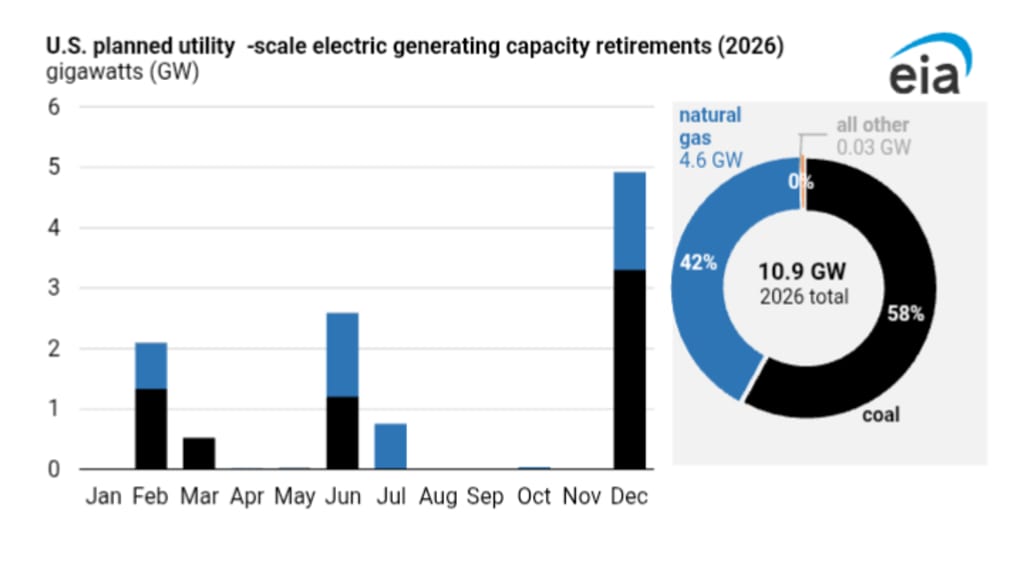
The U.S. electricity system is facing a notable trend: the planned retirement of older power plants — especially coal and even some gas units — is being delayed as uncertainties in energy markets, regulatory pressures, and grid reliability concerns mount. What was once expected to be a wave of closures of older generating capacity has slowed, and that slowdown may extend well into 2026.
These delays are not merely operational footnotes; they could reshape the nation’s energy mix, affect utility planning, influence electricity prices, and have broader implications for the transition toward cleaner generation. Here’s a look at why these retirements are slowing, what it means for the energy industry, and why this trend could continue throughout the year.
📉 A Shift in Expectations
For years, energy analysts and policymakers anticipated a steady decline in older fossil fuel‑based power plants — particularly coal — as cheaper renewable energy and natural gas, combined with environmental regulations, made these plants less competitive. But recent data and industry signals suggest that this decline is slowing.
Utilities that had planned to retire certain units are now postponing those plans. Instead of shutting plants down on schedule, some companies are keeping them online longer than originally intended. Why? The reasons are structural, economic, and increasingly tied to grid reliability.
🏭 Reliability Remains a Priority
One of the key drivers of retirement delays is concern about grid reliability.
The U.S. power grid — a complex network spanning generation, transmission, and distribution systems — must balance supply and demand continuously. When older plants retire, that capacity has to be replaced by new generation or demand‑reduction measures. But delays in building new capacity — whether renewable, nuclear, or gas‑fired — mean that retiring generation too quickly could create supply shortfalls.
Grid operators, especially in regions with high seasonal demand or limited transmission infrastructure, have urged caution. These operators warn that retiring too many plants without adequate replacement capacity could increase the risk of blackouts or reliability gaps — especially during heat waves in summer or cold snaps in winter.
As a result, utilities are recalculating the timing of retirements to ensure that capacity margins — the buffer between supply and peak demand — remain sufficient. This reassessment has resulted in delays that may extend into 2026.
💸 Economic Pressures and Market Signals
Another factor slowing retirements is economics. In many parts of the country, power markets are not delivering strong price signals for early retirement.
Although coal plants have been under economic pressure for years, some plants remain revenue‑positive due to regional market dynamics, fuel contracts, and hedging strategies. Gas plants — once seen as an easy replacement for coal — are also facing variable economics due to fluctuating gas prices and changing demand patterns.
At the same time, investment in new generation — especially utility‑scale renewables and battery storage — has slowed in some regions due to permitting delays and rising costs for materials and labor. With new capacity coming online more slowly than expected, retiring existing plants too soon could leave utilities without enough generation to serve their customers.
These economic realities are influencing decisions on the ground, prompting utilities to keep older capacity running longer.
🏛️ Regulatory and Policy Uncertainty
The regulatory environment is another major factor.
Energy policy in the U.S. is shaped at federal, state, and local levels. While federal incentives — such as tax credits for renewable energy — have encouraged clean energy development, they have not eradicated the complexity of permitting, grid interconnection rules, and regional regulatory differences.
For example, some states require utilities to maintain specific reliability criteria or to meet capacity requirements through resource adequacy programs. In states with aggressive clean energy mandates, utilities must balance those goals with the practical need to keep the lights on. Navigating these sometimes competing priorities has slowed decision‑making and led to retirement extensions.
Uncertainty about future carbon regulations, potential changes to wholesale electricity markets, and shifting political landscapes adds another layer of complexity. Utilities are often hesitant to retire capacity in the absence of clear policy signals that guarantee replacement resources will be available in time.
🔋 The Renewable Transition Isn’t Perfectly Smooth
While renewable energy deployment continues at a strong clip, replacing retiring capacity isn’t as simple as signing a purchase order for new wind turbines or solar panels.
Renewable generation — particularly solar and wind — is variable by nature. It depends on weather conditions and must be paired with storage or other forms of flexible generation to ensure grid stability. In some regions, the pace of energy storage deployment has not kept up with renewable growth, creating challenges for grid operators.
Even where storage is progressing, long‑duration solutions at utility scale are still in early stages. Without adequate storage, utilities may be forced to lean on existing thermal generation — the very plants they had planned to retire.
This technical reality adds another reason why retirement timelines are shifting.
🛠️ Cost and Workforce Considerations
Delaying retirements also reflects workforce and economic considerations tied to local communities.
Many older plants are located in regions where the facility is a significant employer. Sudden retirements can lead to job losses, community economic downturns, and political backlash. Extending the operational life of these plants provides time for workforce transition, retraining, and economic adjustment.
There are also cost considerations. Keeping a plant running may involve maintenance expenses, but retiring it early — and replacing that capacity — can require upfront investment that utilities may be reluctant to incur without clear financial incentives or regulatory support.
📅 Why 2026 May See Continued Delays
All of these factors — reliability concerns, economic signals, regulatory uncertainty, and workforce considerations — suggest that retirement delays could persist throughout 2026.
While clean energy growth is real and significant, the pace of retirement of older capacity is now being influenced by more practical realities. Utilities are prioritizing operational stability and economic sustainability over rapid transition timelines.
In regions where new transmission lines, storage projects, or renewable capacity see faster progress, plant retirements may proceed as planned. But on a national scale, recent trends suggest a more staggered and cautious approach.
🌍 Broader Impacts on Energy Markets
The implications of delayed retirements stretch beyond utilities.
⚡ Grid and Reliability
For grid operators, delayed retirements provide a buffer against supply shortfalls. This can help maintain reliable service in the near term, but it also raises questions about how to integrate older and newer generation efficiently.
💰 Markets and Prices
Electricity markets may see less volatility if capacity is maintained, but long‑term market signals for investment in new technologies could be muted.
🌿 Clean Energy Transition
A slower retirement pace may delay emissions reductions that come from replacing fossil generation with cleaner resources. However, it may also allow for smoother integration of renewables with less risk to reliability.
🔍 Looking Ahead
The U.S. electricity system is in transition — but not at a uniform speed. Retirement delays in 2026 will likely reflect the tension between ambitious clean energy goals and practical operational needs.
For policymakers, the coming year may prompt a renewed focus on mechanisms that support orderly retirements, ensure grid reliability, and facilitate investment in flexible generation and long‑duration storage.
For utilities and grid operators, this means balancing short‑term reliability with long‑term planning. For investors, it means watching where market signals and policy incentives align.
And for consumers, understanding these dynamics helps explain why electricity markets — and energy prices — remain at the forefront of economic and political discussions.
As 2026 unfolds, the story of electric generating capacity retirements will continue to be one of negotiation — between old and new, between reliability and innovation, and between the pace of change and the practicalities of today’s energy system
About the Creator
Sajida Sikandar
Hi, I’m Sajida Sikandar, a passionate blogger with 3 years of experience in crafting engaging and insightful content. Join me as I share my thoughts, stories, and ideas on a variety of topics that matter to you.
Keep reading
More stories from Sajida Sikandar and writers in Journal and other communities.
Week Ahead Economic Preview: Week of 23 February 2026
The week beginning 23 February 2026 is set to be a pivotal one for global financial markets, with investors closely watching a series of economic indicators and policy updates from major economies. From inflation reports and employment data to central bank guidance and geopolitical developments, the coming days will offer important clues about the direction of growth, interest rates, and investor confidence.
By Sajida Sikandarabout 4 hours ago in Journal
Court Orders and Care: Why Medical Confidentiality Sometimes Ends
The Principle of Medical Confidentiality Medical confidentiality represents a foundational pillar of healthcare, enshrined to protect patient privacy and foster trust between provider and patient. It ensures that sensitive health information—ranging from mental health diagnoses to treatment histories—remains shielded from unauthorized eyes. This confidentiality encourages candid communication, which is essential for effective diagnosis and therapy. Without this assurance, patients may withhold vital details, undermining the therapeutic process. Yet, while robust, this principle is not absolute; legal frameworks can occasionally necessitate disclosure, presenting a complex interplay between patient rights and societal interests.
By Fida Hassain5 days ago in Journal




Comments
There are no comments for this story
Be the first to respond and start the conversation.