
Oscar Winner, 88, Unleashes Profane Trump Takedown on Live TV
“I’m constantly reminded of Germany in 1935,” he said.

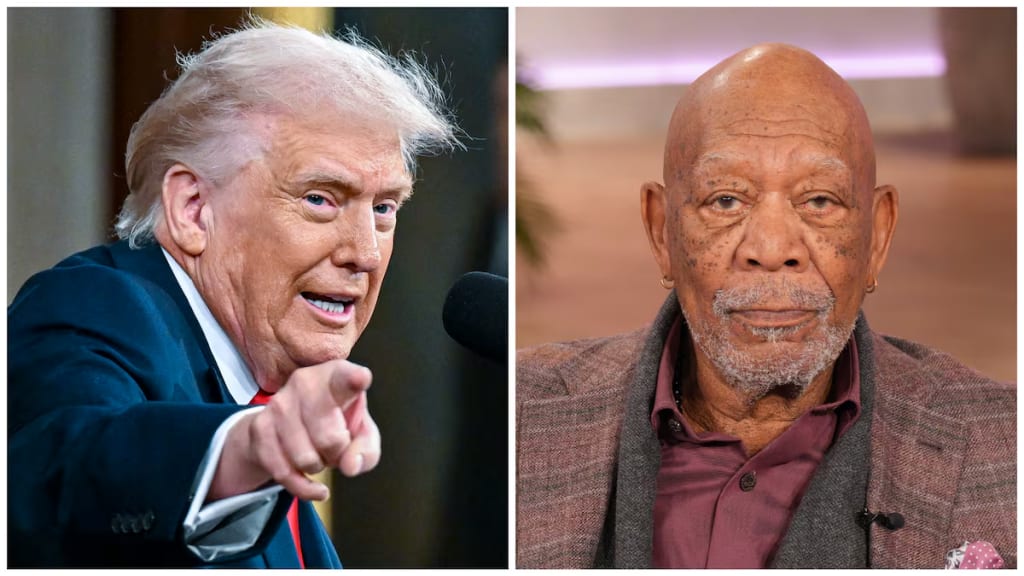
When an 88-year-old Oscar winner speaks, people listen. And when that Oscar winner is Morgan Freeman, the world leans in even closer.
During a live appearance on The Last Word with Lawrence O'Donnell on MSNBC, Freeman delivered a blistering and unapologetically profane critique of Donald Trump that immediately ignited debate across political and entertainment circles. The segment quickly went viral, dominating headlines and sparking fierce reactions on social media.
Morgan Freeman’s Live TV Moment That Shook the Political Sphere
Appearing to promote his upcoming Amazon Prime miniseries, Freeman pivoted from entertainment to politics when host Lawrence O'Donnell asked for his thoughts on the current state of the country.
“Can I use any profanity?” Freeman asked.
“You can say whatever you want,” O’Donnell replied.
Freeman didn’t hesitate. He accused the president of leading the nation in a dangerous direction, using blunt language that stunned viewers watching live. His tone was not theatrical. It was deliberate. Controlled. And deeply concerned.
The moment was more than just celebrity outrage. It was a rare instance of one of Hollywood’s most respected figures using his cultural authority to issue what sounded like a civic alarm.
Revisiting Trump’s 2024 Conviction
Freeman’s criticism centered heavily on Trump’s legal history. In May 2024, Trump was convicted on 34 counts of felony falsifying business records. Despite the verdict, he went on to win the presidency six months later.
Freeman made it clear that this sequence of events troubled him.
“I can’t personally understand how a convicted felon—convicted—gets to be president,” he said, emphasizing the word as if to underline the constitutional paradox he sees at play.
For Freeman, the issue isn’t partisan preference. It’s institutional integrity. He expressed disbelief that a criminal conviction could precede a return to the Oval Office without disqualifying consequences.
The controversy surrounding Trump’s conviction remains one of the most discussed political flashpoints in recent U.S. history, and Freeman’s remarks have reignited that debate.
A Stark Historical Comparison
Perhaps the most controversial portion of Freeman’s comments came when he drew parallels between current events and pre-World War II Germany.
“I’m constantly reminded of Germany in 1935,” he said.
Freeman referenced the rise of authoritarianism, describing imagery associated with Nazi Germany—marches through Berlin, forced roundups, and state-controlled detention systems. He questioned the administration’s proposals for expanded detention facilities and asked what purpose they ultimately serve.
Such comparisons are explosive in American political discourse. Critics argue they are hyperbolic; supporters claim they are cautionary. Regardless of where one stands, the comparison amplified the gravity of Freeman’s warning.
The actor, best known for films like The Shawshank Redemption and Million Dollar Baby, has long been associated with moral authority on screen. In this appearance, he projected that same gravity off-screen.
A Shift in Tone From Past Appearances
Freeman previously appeared on the same program to read a posthumous essay by civil rights icon John Lewis. That appearance was reflective and reverent.
This time, his demeanor was different. There was urgency in his voice.
He lamented how much the country had changed since Lewis’s death, suggesting that the United States is at an inflection point. For younger Americans, he described the current political climate as one of the most challenging periods in modern memory.
“Absolutely the worst,” Freeman said when asked whether this was the darkest time in many young people’s lives.
The Broader Celebrity-Politics Debate
Freeman’s remarks also reignite a perennial question: Should celebrities weigh in on politics?
Some argue that public figures have a responsibility to use their platforms to advocate for democratic values. Others believe entertainers should remain separate from governance debates.
However, Freeman is not merely a celebrity. He is one of the most decorated actors in Hollywood history, an Academy Award winner whose voice has narrated documentaries, presidential inaugurations, and national tributes. When someone of his stature speaks, the symbolic weight is different.
His comments were not flippant. They were framed as civic concern rather than partisan attack.
A Direct Message to Young Voters
Despite the fiery rhetoric, Freeman ended on a constructive note.
He offered a single, straightforward piece of advice: vote.
“If you are aware of where we are right now, and where we’re headed, and if you don’t agree with it, there is one true way to change the direction of our country: vote,” he said.
It was a reminder that, regardless of political affiliation, democratic participation remains the foundational mechanism for change in the United States.
Why This Moment Matters
The viral interview represents more than celebrity drama. It highlights several critical themes shaping American politics in 2026:
The long shadow of Trump’s felony conviction
The normalization of legal controversy in presidential politics
Growing generational anxiety about democracy
The expanding role of public figures in civic discourse
Freeman’s comments will undoubtedly continue to fuel discussion across newsrooms and dinner tables alike. Whether one views his remarks as courageous truth-telling or inflammatory exaggeration, the impact is undeniable.
At 88, Morgan Freeman is not chasing relevance. He already has it. What this moment demonstrates is that he intends to use it — forcefully — in what he sees as a defining chapter of American history.
About the Creator
Omasanjuwa Ogharandukun
I'm a passionate writer & blogger crafting inspiring stories from everyday life. Through vivid words and thoughtful insights, I spark conversations and ignite change—one post at a time.
Keep reading
More stories from Omasanjuwa Ogharandukun and writers in Journal and other communities.
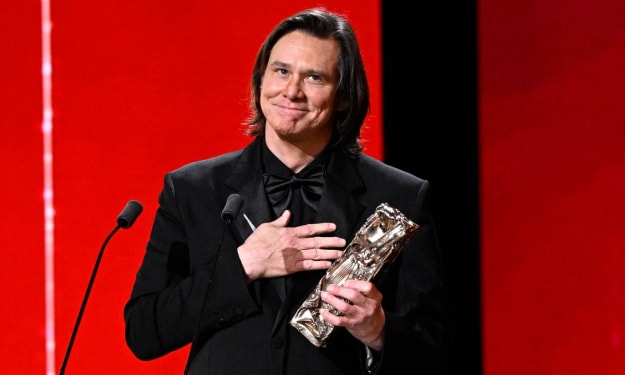
Jim Carrey Goes Viral After Unrecognizable Look at the 51st César Awards
Why did Jim Carrey’s 2026 César Awards appearance break the internet? From conspiracy theories to heartfelt tributes, here’s everything you need to know about the Hollywood icon’s viral moment in Paris.
By Omasanjuwa Ogharandukunabout 7 hours ago in Journal
Magic
Note from the Author: I want to let you know that this is an unusual story, and it has been written purely from whatever is in my unconscious mind, because before I start writing, I get into a flow state that reaches my unconsciousness. I also write in my subconscious mind, which is like a mid-flow state between the conscious and unconscious mind.
By Denise Larkin6 days ago in Fiction


Comments
There are no comments for this story
Be the first to respond and start the conversation.