
Oil Prices Up 1% as Iran Crisis Disrupts Middle East Supply
Middle East Tensions Spark Fresh Energy Market Volatility Amid Supply Concerns
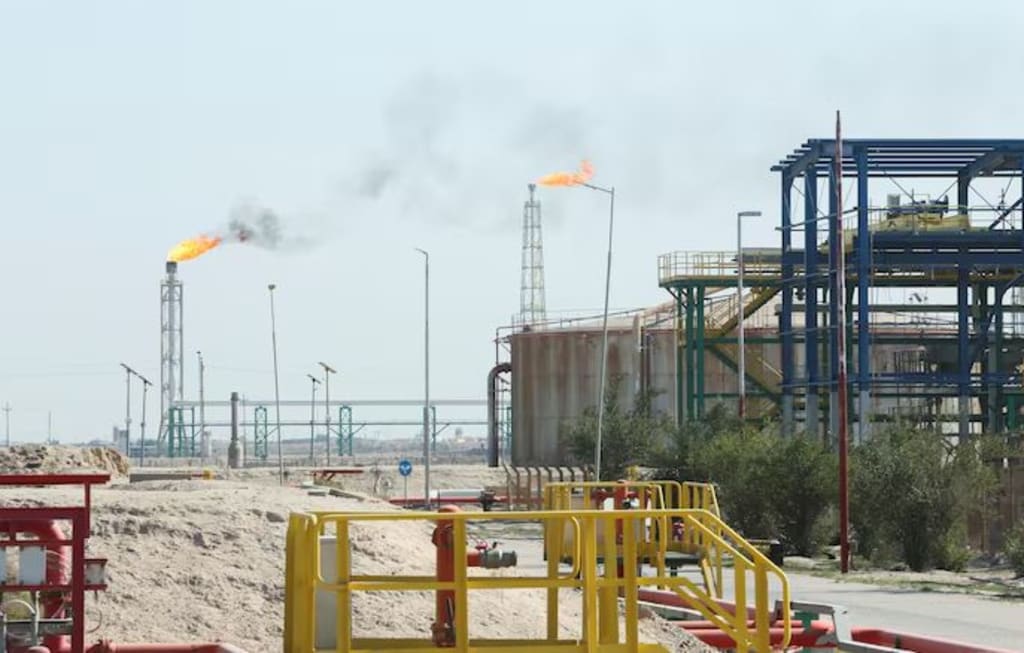
Global oil markets are once again on edge. Crude prices climbed roughly 1% this week as escalating tensions involving Iran disrupted supply routes across the Middle East. While a 1% increase may appear modest on paper, in the energy world it signals something much bigger — a growing risk premium tied to geopolitical instability in one of the most critical oil-producing regions on the planet.
Energy traders are watching developments closely, as even small interruptions in supply from this region can send shockwaves across global markets.
Why Oil Prices Are Moving Higher
The immediate driver behind the price jump is the intensifying conflict involving Iran and regional powers. Military activity near key export infrastructure has raised concerns about potential disruptions to oil shipments.
One area of particular importance is the Strait of Hormuz. This narrow waterway connects the Persian Gulf to the Arabian Sea and is responsible for transporting nearly one-fifth of the world’s daily oil supply. Any threat to traffic in this corridor quickly translates into higher energy prices.
Even if oil production itself remains intact, fear alone can be enough to move markets. Traders factor in the possibility of supply cuts before they actually happen — and that’s exactly what we’re seeing now.
The Strait of Hormuz: A Global Energy Lifeline
The Strait of Hormuz has long been considered one of the world’s most sensitive energy chokepoints. Tankers carrying crude from countries like Saudi Arabia, Iraq, Kuwait, and the UAE must pass through this narrow passage to reach global markets.
Recent threats to shipping security have:
Increased insurance premiums for tankers
Forced some vessels to reroute
Delayed deliveries
Heightened global supply uncertainty
Even temporary shipping slowdowns can tighten global supply balances, especially at a time when demand remains steady in major economies.
How Markets React to Geopolitical Risk
Oil markets are highly sensitive to geopolitical risk. When instability rises in oil-producing regions, traders add what’s known as a “risk premium” to prices. This means oil becomes more expensive not necessarily because supply has already fallen — but because it might.
The latest 1% increase reflects:
Fear of prolonged conflict
Concerns about infrastructure damage
Potential export disruptions
Broader regional instability
Historically, conflicts in the Middle East have triggered far larger price spikes. For now, markets appear cautious but not yet panicked.
Ripple Effects Across the Global Economy
Rising oil prices don’t just impact traders — they eventually affect consumers, businesses, and governments worldwide.
1. Higher Fuel Prices
When crude prices rise, gasoline and diesel prices typically follow. Consumers may soon notice:
Increased prices at the pump
Higher transportation costs
Rising shipping fees
2. Inflation Pressures
Energy is a core component of inflation. If oil prices continue climbing, central banks could face renewed pressure in their fight against rising consumer prices.
3. Stock Market Volatility
Energy-sensitive sectors such as airlines, transportation, and manufacturing often react negatively to higher oil prices. Meanwhile, energy producers may benefit from stronger crude pricing.
Could Prices Climb Further?
The big question now is whether this 1% increase is the beginning of a larger trend.
Several factors will determine the direction of oil markets:
Whether the conflict escalates or stabilizes
The security of tanker routes
Output decisions by OPEC and allied producers
Strategic petroleum reserve releases
Global economic demand trends
If shipping through the Strait of Hormuz faces sustained disruption, analysts warn that oil could climb significantly higher in the coming weeks.
On the other hand, diplomatic efforts or military de-escalation could quickly remove the risk premium and stabilize prices.
The Broader Geopolitical Picture
The Middle East plays an outsized role in global energy supply. Any instability in the region sends an immediate signal to markets worldwide. With Iran positioned strategically near major export routes, its involvement in regional conflict carries major implications.
Energy markets today are deeply interconnected. A disruption in one region can affect prices from New York to Tokyo within hours. This interconnectedness is why even relatively small percentage changes in oil prices receive such widespread attention.
What This Means for Everyday Consumers
For households, the most visible impact will likely be at gas stations. If crude prices continue rising:
Gasoline prices may increase within days
Airfare could become more expensive
Delivery and grocery costs might rise
For businesses, especially those heavily dependent on fuel, higher oil prices can squeeze profit margins and reduce operational flexibility.
Investor Perspective
Investors often view oil as both a commodity and a geopolitical hedge. When uncertainty rises, some traders shift toward energy stocks and commodities as a defensive strategy.
However, volatility also increases risk. Sharp price swings can create unpredictable trading conditions, especially if headlines drive daily market movements.
Final Thoughts
Oil prices climbing 1% may not seem dramatic at first glance, but in the context of Middle East tensions, it carries significant weight. The situation involving Iran highlights how quickly geopolitical events can influence global markets.
As long as uncertainty surrounds shipping routes like the Strait of Hormuz, energy markets are likely to remain sensitive to every new development.
For now, the increase reflects caution rather than crisis. But in the oil market, caution can escalate quickly.
The coming days will determine whether this 1% rise is a temporary reaction — or the beginning of a broader energy price surge that affects economies around the world.
About the Creator
What a 1968 Mouse Experiment Tells Us About Society
In 1968, while the human world was preoccupied with space races and social revolutions, a behavioral scientist named John B. Calhoun was building a "utopia" in a laboratory in Maryland. This utopia wasn’t for people, but for mice. Known as Universe 25, this experiment would become one of the most famous—and chilling—studies in the history of behavioral science.
By Omasanjuwa Ogharandukun6 days ago in Journal


Comments
There are no comments for this story
Be the first to respond and start the conversation.