
Karachi Stock Exchange Crashes 3,000 Points Amid Pakistan-Afghanistan War
Escalating regional conflict shakes investor confidence and sends shockwaves through financial markets

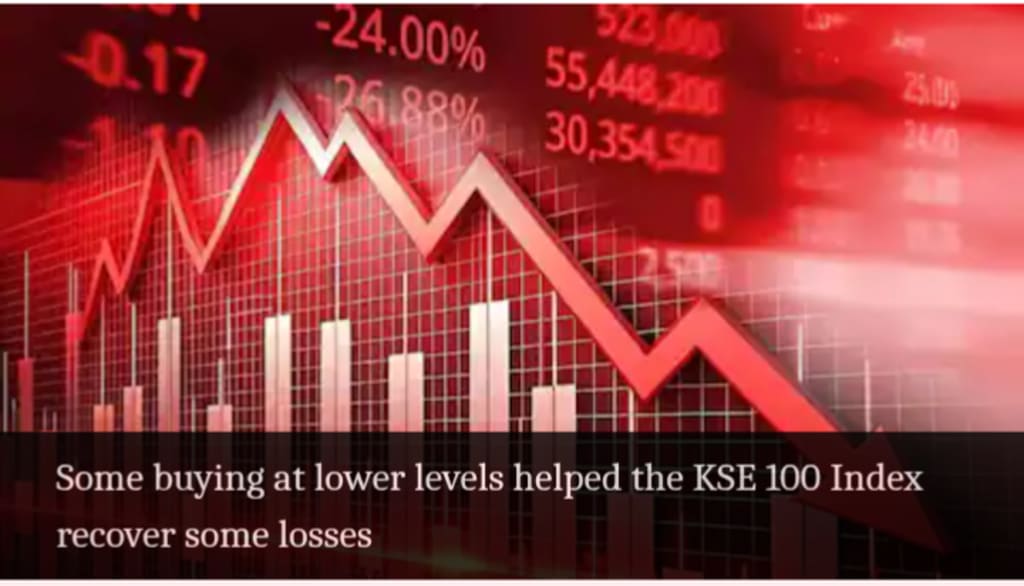
The stock market in Pakistan suffered a dramatic blow as the Karachi Stock Exchange (KSE) plunged nearly 3,000 points in a single trading session, reflecting rising panic among investors amid escalating tensions between Pakistan and Afghanistan. The sharp decline marked one of the steepest one-day drops in recent years, underlining how geopolitical conflict can rapidly destabilize financial markets.
The sudden crash wiped out billions of rupees in market capitalization, leaving traders stunned and retail investors scrambling for clarity. As news of military confrontations spread, fear quickly replaced optimism, turning what had been a relatively stable market into a sea of red.
A Market in Freefall
Trading opened on a nervous note, with selling pressure building from the very first hour. As reports of intensified clashes near the border surfaced, panic selling accelerated. The benchmark index of the Pakistan Stock Exchange (formerly known as the Karachi Stock Exchange) slid sharply, breaching multiple technical support levels.
Market analysts described the movement as a classic “risk-off” reaction. When geopolitical instability rises, investors tend to pull money out of equities and move toward safer assets such as cash, gold, or foreign currencies. This pattern was clearly visible as trading volumes surged but prices kept falling.
Blue-chip stocks from key sectors such as banking, energy, cement, and telecommunications were among the hardest hit. Even companies with strong fundamentals could not escape the wave of selling, showing how fear can override rational valuation in times of crisis.
Why War Impacts Stock Markets So Severely
Wars and armed conflicts create uncertainty, and uncertainty is the enemy of financial markets. Investors depend on predictable economic conditions to make decisions. When conflict breaks out, several fears immediately emerge:
Disruption of trade routes and supply chains
Rising defense and security spending
Pressure on foreign exchange reserves
Risk of sanctions or international isolation
Slower economic growth
In the case of Pakistan and Afghanistan, the situation is particularly sensitive due to geographical proximity and long-standing political complexities. Any escalation threatens cross-border trade, transport corridors, and investor confidence in the region as a whole.
Foreign investors, who play a critical role in Pakistan’s equity market, are often the first to reduce exposure during geopolitical crises. Their exit can amplify selling pressure and deepen losses.
Impact on Key Sectors
The market crash did not affect all sectors equally. Some industries were more vulnerable to war-related uncertainty:
Banking and Financial Services
Banks saw heavy losses as investors worried about economic slowdown and rising default risks. Conflict can reduce business activity, which in turn affects lending and profitability.
Energy and Fuel
Energy stocks came under pressure due to fears of supply disruptions and rising import costs. Oil and gas prices can become volatile during wartime, adding further stress to energy-dependent economies.
Cement and Construction
These sectors are closely linked to infrastructure and development. War dampens construction activity, discouraging investment in long-term projects.
Technology and Telecom
Although relatively defensive, telecom stocks also declined as overall market sentiment turned negative.
Currency and Inflation Concerns
The stock market crash was accompanied by renewed pressure on the Pakistani rupee. During periods of conflict, investors often shift toward the U.S. dollar or other safe-haven currencies. This puts strain on local currency stability and can increase the cost of imports.
A weaker currency also raises inflation risks, particularly for fuel, food, and essential goods. Higher inflation reduces consumer purchasing power and further weakens corporate earnings, creating a vicious cycle that hurts the stock market even more.
In this environment, the central bank faces a difficult balancing act between supporting economic growth and maintaining currency stability.
Government and Regulatory Response
Following the crash, government officials and market regulators urged calm and emphasized the strength of Pakistan’s financial system. Statements were issued assuring investors that steps would be taken to maintain stability and prevent excessive volatility.
Possible measures include:
Temporary trading halts if panic selling intensifies
Increased monitoring of speculative activity
Communication with major institutional investors
Policy signals aimed at restoring confidence
While such steps can help in the short term, long-term recovery depends heavily on the resolution of the conflict and the restoration of regional stability.
Investor Psychology: Fear Over Fundamentals
One striking feature of the crash was how quickly investor psychology shifted. Just days earlier, many traders were optimistic about earnings prospects and macroeconomic indicators. The outbreak of conflict changed the narrative overnight.
This highlights an important lesson: markets are not driven by numbers alone. Sentiment, perception, and expectations play a huge role. In times of war, fear becomes the dominant force, often pushing prices far below their fundamental value.
Seasoned investors caution against emotional decisions. Historically, markets that fall sharply during crises often recover once conditions stabilize. However, timing such recoveries is difficult, and short-term volatility can be extreme.
Broader Economic Implications
The stock market crash is not just a financial event—it reflects deeper economic risks. Prolonged conflict could lead to:
Slower GDP growth
Reduced foreign direct investment
Higher defense expenditure at the cost of development projects
Increased unemployment in vulnerable sectors
These challenges could set back economic reforms and strain public finances, making recovery more complex.
At the same time, the crisis may force policymakers to prioritize diplomatic solutions and regional cooperation, recognizing that economic stability depends heavily on peace.
Outlook: What Comes Next?
The future of the Karachi stock market now hinges on two major factors: the evolution of the Pakistan-Afghanistan conflict and investor confidence.
If tensions ease and diplomatic efforts succeed, markets could see a rebound as bargain hunters step in and foreign investors return. On the other hand, continued escalation could lead to further sell-offs and prolonged uncertainty.
In the near term, analysts expect high volatility, with sharp swings driven by news headlines rather than economic data. Defensive sectors and safe-haven assets may outperform, while cyclical stocks remain under pressure.
Conclusion
The 3,000-point crash of the Karachi Stock Exchange underscores how deeply geopolitical events influence financial markets. The conflict between Pakistan and Afghanistan has shaken investor confidence, triggering panic selling and exposing the vulnerability of an economy already facing multiple challenges.
While history shows that markets can recover from even severe shocks, the path forward depends on peace, stability, and clear policy direction. For now, the market remains caught between fear and hope—fear of further escalation and hope for swift resolution.
In times like these, the stock market serves as a mirror of national uncertainty, reflecting both the risks of conflict and the urgent need for stability in a fragile regional landscape.
About the Creator
Sajida Sikandar
Hi, I’m Sajida Sikandar, a passionate blogger with 3 years of experience in crafting engaging and insightful content. Join me as I share my thoughts, stories, and ideas on a variety of topics that matter to you.
Keep reading
More stories from Sajida Sikandar and writers in Journal and other communities.
Gold Price Declines in Pakistan in Line With International Rates
Gold prices in Pakistan have moved lower in recent days, mirroring a broader decline in international bullion markets. The drop reflects shifting global investor sentiment, a stronger U.S. dollar, and easing demand for safe-haven assets. As international gold rates soften, domestic prices have followed suit, reminding investors and consumers alike that Pakistan’s bullion market remains closely tied to global trends.
By Sajida Sikandara day ago in Journal
Chad Pratt California: A Life Measured in Meaningful Miles
For some, running is simply exercise. It is a way to stay fit, relieve stress, or compete on weekends. For Chad Pratt California, running has always carried deeper meaning. It has been a discipline, a refuge, a teacher, and a steady companion through every chapter of life. Across decades filled with competition, personal triumphs, heartbreak, faith, and fatherhood, he has returned again and again to the simple rhythm of forward motion.
By Chad Pratt6 days ago in Journal
Pearl
1980 something. we all hung out at Pearl and you and i were nothing special, or so i thought. i mean we all danced, drenched in our own sweat, our own saline solution of fear, too many beers, shots, laughter, tears, fucks in the bathroom and i don't know when we began to be afraid. do you?
By ROCK aka Andrea Polla (Simmons)2 days ago in Fiction



Comments
There are no comments for this story
Be the first to respond and start the conversation.