
If Hyundai Is to Beat Toyota
By Choong Whan Park USC Former Endowed Chair Professor
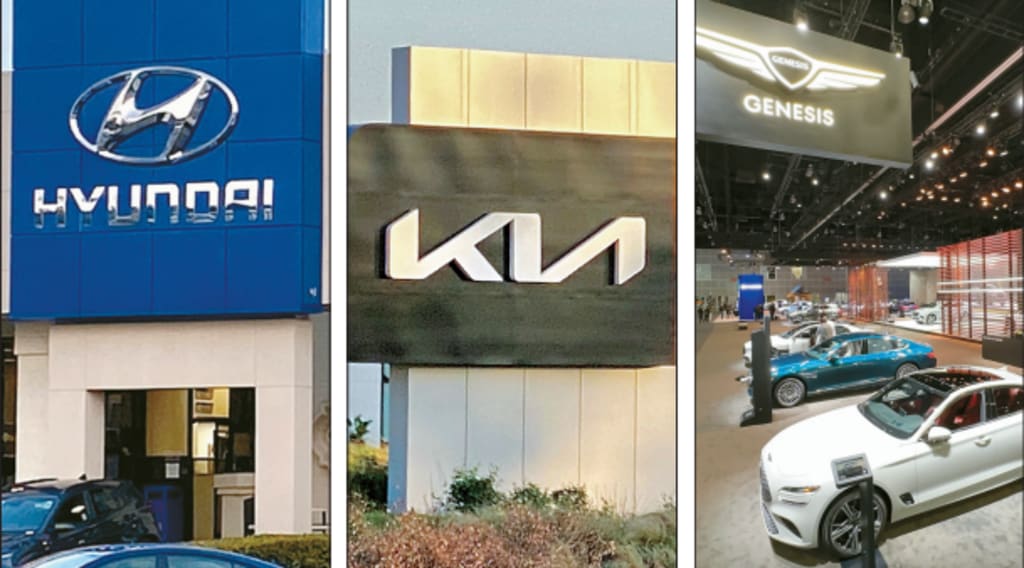
Deciding how a company should name its products or services is a highly complex yet critically important task. Let us consider brand-naming strategies at the corporate level.
Three Types of Brand-Naming Strategies
First, there is the individual brand strategy. Pampers (diapers), Cheers (detergent), Charmin (toilet paper), and Tampax (feminine hygiene products) all use different brand names, yet they are all products of Procter & Gamble, a company with a 185-year history. In this strategy, each product uses its own independent brand rather than the company name.
Second, there is the corporate brand strategy. Founded in 1869, Heinz produces ketchup, vinegar, mustard, gravy, barbecue sauce, and many other products. However, Heinz uses the company name “Heinz” across all of its products.
Third, there is a hybrid strategy that combines the first two approaches. On the packaging of General Mills’ cereal brand Trix, the product name “Trix” appears prominently in the center, while the corporate name “General Mills” appears in the upper left corner.
An important point to note is that many companies use all three strategies, depending on circumstances. For example, Samsung applies a hybrid strategy for its smartphone brand (Samsung Galaxy), while using a corporate brand strategy for products such as washing machines, refrigerators, and microwave ovens.
Hyundai Motor Group’s Brand Strategy
Let us now analyze the brand strategy of Hyundai Motor Group, whose market share in the U.S. automotive market continues to grow. In just over 50 years since its founding, Hyundai has risen to become the world’s third-largest automaker by sales, following Toyota and Volkswagen. Its prospects in electric and hydrogen vehicles are also promising.
Hyundai Motor Group employs both hybrid and individual brand strategies. Names such as Hyundai Sonata and Kia Sorento, which combine the corporate name with the model name, represent the hybrid strategy. In contrast, Genesis follows an individual brand strategy. In effect, Hyundai Motor Group competes against other automakers using three brand names: Hyundai, Kia, and Genesis.
Comparing Hyundai and Toyota
Let us compare Hyundai’s brand strategy with that of Toyota, the world’s leading automaker.
First, Hyundai is a late entrant compared to Toyota.
Second, Hyundai is weaker than Toyota in terms of financial resources.
Third, while Toyota operates with two brands—Toyota and Lexus—Hyundai manages three brands, creating a structural difference.
One of the key challenges a late entrant must solve when competing with a market leader is strategic efficiency. When a company with three brands competes against a leader with two brands, efficiency inevitably becomes a critical issue.
Why does efficiency matter? Building a competitive brand requires enormous financial investment and human resources. Managing three brands instead of two requires significantly more cost and manpower. When the market leader also has superior financial strength, efficiency becomes an absolute necessity for the challenger.
Another issue is brand differentiation. Toyota’s two brands are clearly differentiated, and customers clearly understand the difference between Toyota and Lexus models. In contrast, the distinction between Hyundai and Kia is relatively unclear. Attempting to differentiate both Hyundai and Kia while expanding each brand’s market independently raises serious efficiency concerns.
An Analogy: Climbing a Mountain
Imagine hiking while carrying two backpacks. Up to about two-thirds of the climb, you might keep pace with—or even outperform—other hikers. However, completing the final third requires tremendous effort. If the competitor ahead is carrying only one backpack, overtaking them becomes extremely difficult. To surpass them, you would need to reduce your load to one backpack.
A Strategic Proposal
So how can Hyundai reduce its two brands—Hyundai and Kia—into a more efficient structure while increasing profitability and minimizing market confusion?
One possible solution is to reposition Kia as a sub-brand of Hyundai, clearly communicating to consumers that Kia vehicles are also made by Hyundai. This would involve adopting a hybrid structure such as Hyundai Kia, Hyundai Sonata, or Hyundai Tucson, positioning Kia as a subordinate brand under Hyundai, while maintaining Genesis as a separate premium brand under a different top-tier concept.
Benefits of Brand Consolidation
This revised brand strategy would offer Hyundai several important benefits:
Cost savings and improved efficiency by reducing the resources required to operate two separate top-level brands.
Transfer of customer affection and loyalty accumulated under the Kia brand to Hyundai, strengthening Hyundai’s overall brand image.
Improved profitability and product portfolio efficiency, as all Kia-branded vehicles could be reorganized based on profitability under Hyundai’s brand hierarchy.
Conclusion
Hyundai Motor Group is threatening the world’s top automakers—Toyota and Volkswagen—but it must not overlook the pressure coming from companies ranked fourth and fifth. In this competitive environment, Hyundai must carefully consider strategic efficiency and profitability if it hopes to surpass Toyota.
About the Creator
Choong Whan Park USC
Through his research, teaching, and institutional leadership, Choong Whan Park USC has played a defining role in shaping modern thinking about how brands create meaning, loyalty, and long-term value.
Keep reading
More stories from Choong Whan Park USC and writers in Journal and other communities.
Even Small and Medium-Sized Businesses Can Build “Brand Power
The relationship between a brand that represents a product and its customers is no different from the relationship between one human being and another. When we evaluate a person, we often rely on three emotions: trust, love, and respect. For example, we say, “That person is trustworthy,” “That person is truly lovable,” or “That person is worthy of respect.”
By Choong Whan Park USC17 days ago in Journal
Early Riser
This morning I woke-up feeling somber, a bit melancholy. Somewhere this feeling was in between forms of sadness and happiness. Still lying down, I grabbed my phone to see the time, (even though themy alarm off). Thinking to myself..."That it's my day off, I wish that I could just sleep-in. Still waking up at the same time, as I would be to start my working day"...
By Rose Chaplin4 days ago in Journal


Comments
There are no comments for this story
Be the first to respond and start the conversation.