
Global Markets Shaken as Stagflation Fears Rise Amid Trump’s Iran War Signals
Global markets tumble as investors fear stagflation amid escalating Iran conflict and signals from Donald Trump about expanding military action. Oil prices surge, stocks plunge, and economic uncertainty spreads worldwide.

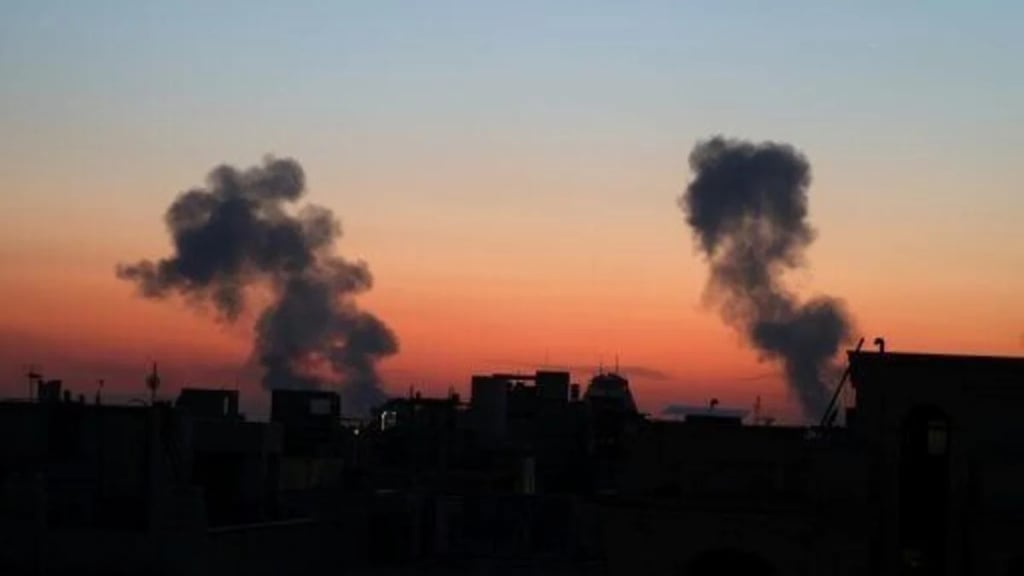
Financial markets across the globe are facing renewed turbulence as fears of stagflation intensify following escalating tensions in the Middle East.
Investors are rapidly reassessing economic risks after Donald Trump signaled that the United States could expand military operations against Iran — including discussions about seizing uranium resources tied to the country’s nuclear program.
The developments have sent shockwaves through global markets, triggering a massive selloff in stocks and bonds while oil prices surge sharply.
In just days since the conflict escalated, approximately $6 trillion in global equity market value has been wiped out, according to financial market data.
Oil Prices Surge Toward $120 a Barrel
The most dramatic movement has occurred in the energy sector.
Crude oil prices spiked dramatically as fears grew that the conflict could disrupt key global supply routes.
The international benchmark Brent Crude surged nearly 29% in a single trading session, marking its biggest intraday swing in almost six years.
At one point, prices moved toward $120 per barrel, alarming investors who worry the spike could trigger broader economic fallout.
Trump attempted to reassure markets, stating that “$100 crude is a very small price to pay for safety and peace.”
However, the remark appeared to deepen concerns among traders who were hoping the conflict would remain limited.
$6 Trillion Wiped Out From Global Stocks
Stock markets reacted immediately.
Major indices around the world plunged as investors rushed to reduce risk exposure.
The S&P 500 dropped sharply, while Asian and European markets experienced some of their largest declines in months.
Asian equities fell as much as 5.6%, marking their steepest drop since April.
Meanwhile, the MSCI Asia Pacific Index and the Euro Stoxx 50 both approached correction territory.
Volatility indicators linked to Japan’s Nikkei 225 and India’s NSE Nifty 50 surged dramatically as investors scrambled to hedge against further losses.
At least one South Korean market temporarily halted trading due to extreme volatility.
Investors Fear a “Stagflation Shock”
Economists say the biggest concern is the possibility of stagflation — a dangerous economic combination of slow growth and rising inflation.
This scenario could emerge if soaring energy prices push inflation higher while war-related uncertainty weakens global economic activity.
Rajeev de Mello, a macro portfolio manager at Gama Asset Management, warned that investors are increasingly preparing for a worst-case scenario.
“The challenge is the stagflationary nature of the shock,” he said.
Unlike typical recessions where central banks can stimulate the economy with lower interest rates, stagflation limits policy options because inflation remains high.
Bond Markets Also Hit Hard
The turmoil hasn’t been limited to stocks.
Bond markets across Asia and Europe have also suffered heavy losses.
Government bond yields in countries such as Australia, New Zealand, and South Korea jumped sharply as investors adjusted expectations for inflation and interest rates.
In the United Kingdom, short-term bond yields have surged nearly 60 basis points since the conflict began, reflecting growing concerns that central banks may need to keep interest rates elevated.
At the same time, credit markets are showing signs of stress.
The cost of insuring corporate debt against default has risen to its highest levels since May in both Europe and Asia.
Foreign Investors Pull Billions From Asian Markets
Emerging markets in Asia have been particularly vulnerable.
Foreign investors withdrew approximately $14.2 billion from Asian equities (excluding China) last week — the largest outflow recorded since at least 2009.
Much of the selling has focused on semiconductor-heavy economies like South Korea and Taiwan, which had previously benefited from the global boom in artificial intelligence technologies.
These markets had recently reached multi-year highs, leaving valuations stretched and investors eager to lock in profits once geopolitical risks intensified.
The Strait of Hormuz Risk Factor
A major source of market anxiety is the potential disruption of energy shipments through the Strait of Hormuz.
This narrow waterway handles roughly one-fifth of the world’s oil supply.
If fighting spreads to the region or shipping lanes become unsafe, the consequences for global energy markets could be severe.
Countries across Asia—including China, India, Indonesia, South Korea, and Taiwan—rely heavily on oil and liquefied natural gas shipments that pass through the strait.
Any interruption could create a lasting supply shock.
Central Banks Rethink Interest Rate Plans
The geopolitical crisis is also forcing investors to rethink the path of global interest rates.
Before the conflict began, traders widely expected the Federal Reserve to begin cutting interest rates by mid-2026.
Now those expectations are shifting.
Markets have pushed back predictions for the first U.S. rate cut until September, and some analysts now believe the Fed may not reduce rates at all this year if inflation surges again.
Meanwhile, traders in the eurozone are now betting that the European Central Bank could raise interest rates twice in 2026 to combat energy-driven inflation.
Governments Scramble to Stabilize Markets
Several governments are already considering emergency measures to stabilize financial markets.
Officials in South Korea and Taiwan are exploring options such as:
Market intervention programs
Temporary limits on stock short selling
Domestic fuel price controls
The goal is to cushion the economic impact of rising oil prices and investor panic.
Investors Brace for a Long Crisis
For many traders, the biggest challenge is uncertainty.
With no clear timeline for the conflict’s resolution, markets are preparing for the possibility of prolonged instability.
Some investors are shifting assets into cash, oil-related investments, and the U.S. dollar, which typically strengthen during periods of global crisis.
Others are reducing exposure to equities altogether.
As one portfolio manager put it, the current moment resembles a classic “black swan” event — an unpredictable shock that simultaneously disrupts multiple financial markets.
The Road Ahead for Global Markets
The coming weeks will be critical.
If the conflict escalates further or energy infrastructure is damaged, oil prices could climb even higher.
That scenario would increase the risk of stagflation and possibly trigger a broader global recession.
For now, financial markets remain on edge, watching every development in the Middle East.
One thing is increasingly clear: investors no longer expect a short war.
Instead, they are bracing for a long and uncertain economic winter.
About the Creator
Omasanjuwa Ogharandukun
I'm a passionate writer & blogger crafting inspiring stories from everyday life. Through vivid words and thoughtful insights, I spark conversations and ignite change—one post at a time.
Keep reading
More stories from Omasanjuwa Ogharandukun and writers in Journal and other communities.
GOP Senator Helps Police Remove Anti-War Protester From Capitol Hill Hearing
A tense moment unfolded on Capitol Hill when Tim Sheehy, a Republican senator from Montana, joined law enforcement officers to physically remove an anti-war protester who interrupted a congressional hearing.
By Omasanjuwa Ogharandukun4 days ago in Journal




Comments
There are no comments for this story
Be the first to respond and start the conversation.