
Designing Adaptive Robotics for Dynamic Work Environments with Michael Mollod
Automation in an Ever-Changing Landscape

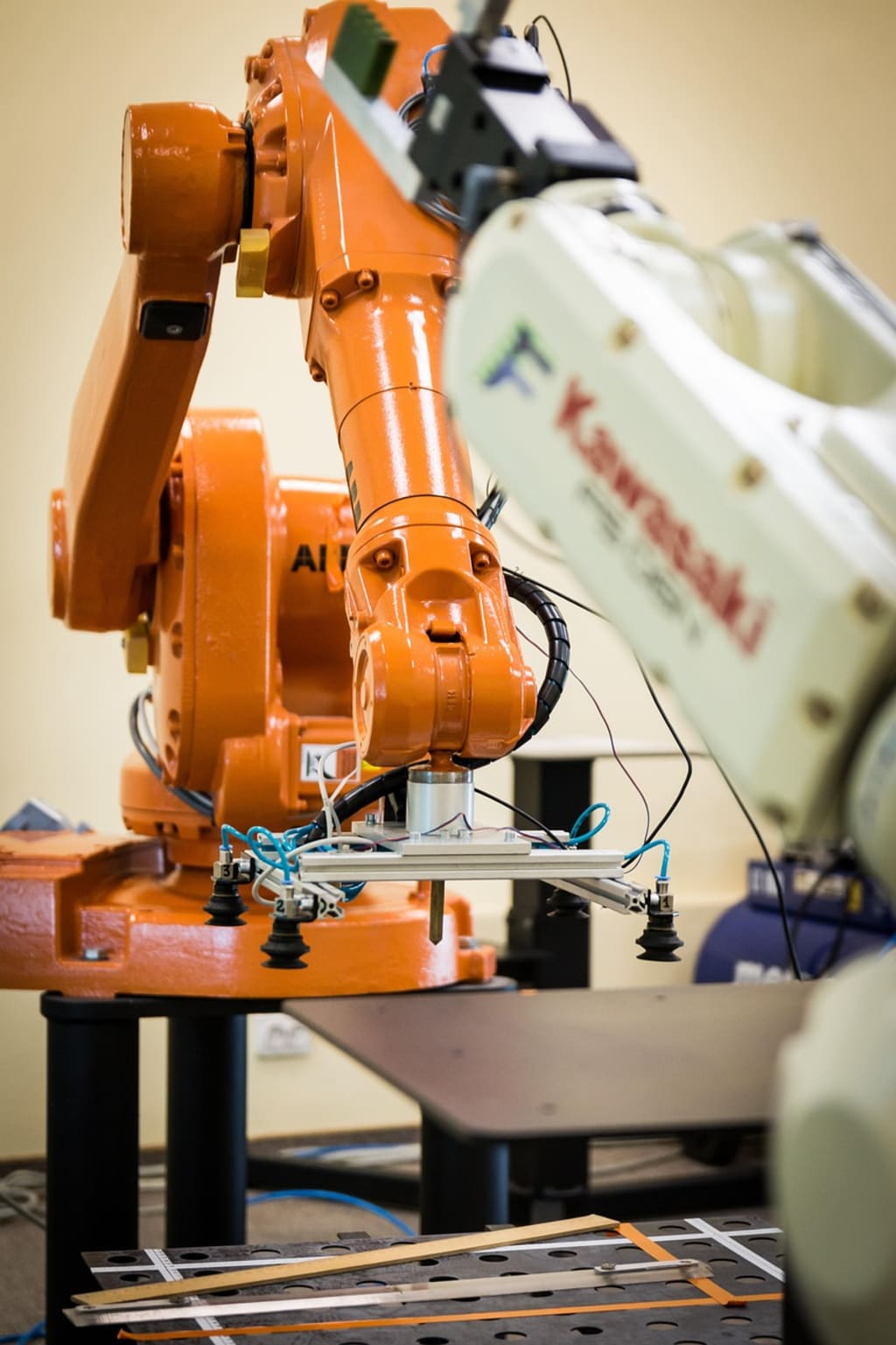
Automation has progressed far beyond static machinery programmed for fixed tasks. Today’s robotic systems are expected to function within environments shaped by human activity, shifting workflows, and constant operational change. Precision remains important, but it is no longer sufficient on its own. Modern automation depends on adaptability, situational awareness, and the ability to respond intelligently to real-time conditions.
This evolution has reshaped how effective robotic systems are designed. Engineers must now account for uncertainty while maintaining safety, efficiency, and reliability. The work associated with Michael Mollod reflects this contemporary approach, emphasizing robotics that operate successfully in real-world environments rather than controlled or idealized settings.
An Integrated Engineering Perspective
Robotics exists at the intersection of multiple disciplines. Mechanical engineering defines structure, motion, and physical resilience. Software and control systems enable sensing, decision-making, and responsive behavior. When these elements are developed in isolation, robotic platforms often struggle when exposed to real operational complexity.
A systems-oriented mindset treats robotics as an interconnected whole. By developing expertise across both mechanical design and computational control, Michael Mollod has focused on solutions where hardware and software reinforce each other. This integrated approach supports machines that adjust to variability instead of relying on rigid, predefined routines.
Building for Real-World Variability
Operational environments rarely behave predictably. Manufacturing facilities experience vibration, material inconsistencies, and equipment wear. Warehouses frequently reconfigure layouts to meet changing demand. Research and testing environments intentionally introduce uncertainty to push system capabilities.
Designing robotics for these conditions requires resilience. Systems must perform safely and consistently even when inputs differ from expectations. Experience across diverse applications highlights the importance of flexibility, fault tolerance, and long-term reliability. Engineering efforts associated with Michael Mollod consistently prioritize systems that remain effective as conditions evolve.
From Perception to Intelligent Action
Perception forms the foundation of intelligent robotics. Sensors provide data about position, force, and surroundings, but raw information alone is insufficient. That data must be processed and interpreted accurately to guide action.
When perception is closely integrated with control systems, robots gain the ability to respond in real time. Adjusting motion, force, or speed allows systems to compensate for misalignment, unexpected obstacles, or nearby human activity. This responsiveness is essential for maintaining accuracy and safety in dynamic workspaces.
Managing Safety Without Sacrificing Performance
Shared environments introduce challenges that traditional automation struggles to address. Human movement is unpredictable, tools degrade over time, and materials vary in quality and behavior. Systems that lack adaptability can become inefficient or unsafe.
Adaptive control strategies help manage these complexities. Continuous feedback enables robotic systems to detect deviations early and apply corrective actions immediately. This approach supports productivity while reducing risk, encouraging safer collaboration between people and machines.
Collaboration Between Humans and Robots
Collaborative robotics has transformed automation by allowing machines to work alongside people rather than in isolation. This proximity requires a design philosophy centered on predictability, transparency, and inherent safety.
Features such as intuitive interfaces, force-limiting mechanisms, and vision-guided interaction allow non-specialists to work confidently with robotic systems. These capabilities reduce training requirements and make it easier to redeploy automation across tasks. As a result, collaborative robotics has become central to flexible manufacturing and assembly environments.
Predictive Maintenance as a Core Capability
As robotic systems grow more complex, maintenance strategies must adapt. Fixed maintenance schedules often fail to reflect actual system conditions, leading either to unnecessary downtime or unexpected failures.
Intelligent systems can continuously monitor performance trends to detect early signs of wear or degradation. Predictive maintenance supports proactive intervention, extending equipment life and improving operational continuity. This approach aligns long-term reliability with efficiency and safety.
Automation That Complements Human Skills
Effective automation strategies are built around complementarity rather than replacement. Robots excel at repetitive, high-precision, and physically demanding tasks, while humans contribute judgment, adaptability, and contextual understanding.
Designing systems that enhance human capability leads to stronger outcomes for both productivity and workforce engagement. This human-centered philosophy is a recurring theme in the engineering approach associated with Michael Mollod.
Connecting Innovation With Dependability
Advances in algorithms continue to expand what robotic systems can achieve, particularly in perception and adaptive control. However, deploying these innovations in real-world environments requires careful attention to timing, reliability, and predictable behavior.
Bridging cutting-edge research with operational dependability demands thoughtful system architecture, rigorous testing, and collaboration across disciplines. Intelligent systems must meet strict standards for safety and performance to succeed outside the lab.
Looking Ahead
As automation becomes increasingly embedded in everyday operations, demand will continue to grow for engineers who can integrate mechanical systems with intelligent software. The most successful robotic platforms will adapt naturally to human environments and evolving workflows.
Through interdisciplinary expertise, resilient design principles, and a focus on practical application, Michael Mollod represents the engineering leadership shaping the future of intelligent, adaptive robotics.
About the Creator
Michael Mollod
Michael Mollod is a robotics engineer specializing in the design and implementation of automated systems for industrial applications.
Keep reading
More stories from Michael Mollod and writers in Journal and other communities.
Engineering Robotics for Real-World Scale and Endurance
Robotics engineering increasingly takes place in environments defined by constant change rather than controlled conditions. Automated systems now operate in warehouses with frequently updated layouts, factories that adjust production targets on short notice, and shared spaces where humans and machines work side by side. These settings demand more than accuracy and speed. They require systems that remain reliable, adaptable, and safe over extended periods of use.
By Michael Mollod8 days ago in Journal
How Aircraft Communicate in the Sky The Story of Avionics and Data Systems
High above the clouds, far from control towers and city skylines, an aircraft moves through invisible pathways of information. Every second, signals are exchanged, data is processed, and decisions are made all without passengers ever noticing. This is not magic. It is the quiet, precise world of avionics and aircraft data systems, the unseen language that allows aircraft to communicate safely in the sky.
By Beckett Dowhanabout 22 hours ago in Journal


Comments
There are no comments for this story
Be the first to respond and start the conversation.