
Cuban Troops Kill 4 in Confrontation With Florida Speedboat
A deadly maritime clash in the Florida Straits raises questions about migration pressures, smuggling routes, and the fragile security balance between Cuba and the United States.
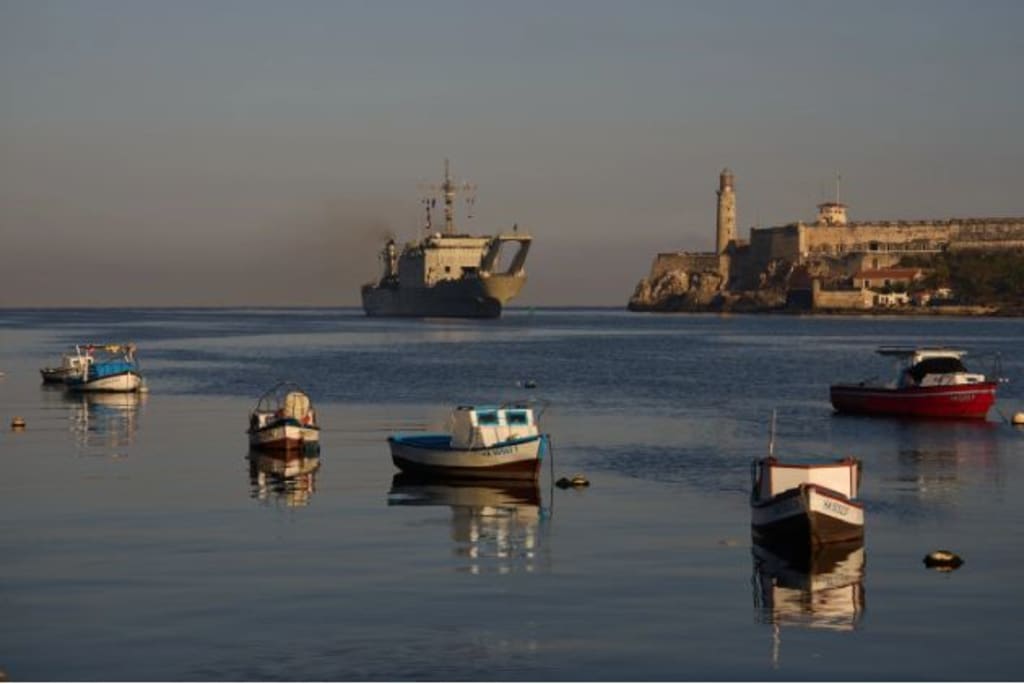
A violent confrontation in the narrow waters separating the United States and Cuba has left four people dead after Cuban troops opened fire on a speedboat reportedly bearing Florida registration. The incident, which unfolded in the heavily monitored Florida Straits, has reignited tensions between Havana and Washington while casting a harsh spotlight on the dangers that define one of the Caribbean’s most politically sensitive corridors.
According to Cuban authorities, the vessel failed to comply with orders to halt and was suspected of involvement in illicit cross-border activity. The speedboat, described as high-powered and fast-moving, allegedly ignored multiple warnings before shots were fired. Four individuals aboard were killed during the exchange. Cuban officials framed the event as a defensive measure taken to protect national sovereignty and prevent potential criminal operations.
The waters between Cuba and Florida have long served as a flashpoint. Just 90 miles separate Havana from Key West, but that short distance represents decades of political hostility, migration crises, and maritime enforcement operations. The latest deadly episode underscores how volatile this maritime boundary remains.
A History of Tense Waters
Relations between the United States and Cuba have fluctuated dramatically over the years, shaped by Cold War rivalries and evolving diplomatic efforts. Since the 1959 revolution led by Fidel Castro, Cuba has maintained a fraught relationship with Washington. Although there was a historic thaw during the administration of Barack Obama, relations cooled again under subsequent administrations, leaving cooperation on security and migration inconsistent.
The Florida Straits have frequently witnessed dramatic escapes, Coast Guard interceptions, and confrontations involving smugglers. During the 1980 Mariel boatlift and the 1994 balsero crisis, thousands of Cubans attempted perilous journeys toward Florida in fragile vessels. In more recent years, authorities on both sides have increased patrols to deter human trafficking and drug smuggling operations.
Cuban officials stated that the speedboat involved in this latest confrontation exhibited “aggressive maneuvers” and posed a threat to coastal security installations. They have not yet publicly confirmed the identities or nationalities of the deceased, pending forensic investigation.
Competing Narratives
While Havana insists its troops acted in accordance with maritime defense protocols, questions are already emerging from observers and human rights advocates. The use of lethal force at sea is governed by international maritime law, which generally requires graduated responses — from visual and audio warnings to disabling measures — before deadly action is taken.
Cuban authorities maintain that warnings were issued and that the vessel attempted to evade capture at high speed. They argue that the confrontation occurred within Cuban territorial waters, a claim that, if verified, strengthens Havana’s legal argument under sovereignty principles.
On the U.S. side, officials have expressed concern and requested further clarification. Although American agencies have not confirmed whether the boat’s occupants were U.S. citizens, the Florida registration raises the possibility of cross-border involvement. The U.S. Coast Guard routinely coordinates with Caribbean governments to manage maritime threats, but cooperation with Cuba has historically been uneven and politically sensitive.
The Human Cost
Behind the geopolitical implications lies a human tragedy. Four lives were lost in seconds during what began as a maritime pursuit. Whether those aboard the vessel were migrants, smugglers, or civilians engaged in another activity remains unclear.
For families awaiting answers, the political backdrop matters little. The Florida Straits, beautiful but unforgiving, have claimed countless lives over the decades. Strong currents, sudden storms, and mechanical failures have turned hopeful voyages into fatal journeys. This latest incident adds another grim chapter to that history — one involving gunfire rather than the sea alone.
Migration pressures have been particularly intense in recent years as Cuba grapples with economic hardship, inflation, and shortages. Economic reforms have struggled to stabilize daily life, prompting many to consider leaving by any means possible. While many travel legally through third countries, others still attempt direct maritime crossings.
If the boat was engaged in migrant transport, it would highlight the enduring desperation that drives people onto open water despite known risks. If it was involved in smuggling, the confrontation underscores the dangerous intersection of organized crime and border enforcement.
Regional Security Concerns
The Caribbean is a crossroads for narcotics trafficking routes linking South America to North American markets. Speedboats capable of rapid transit are frequently used by smugglers seeking to outrun law enforcement patrols. Cuban authorities have historically taken a hard line against trafficking, emphasizing strict coastal surveillance.
The incident may prompt renewed scrutiny of maritime security coordination. While the United States and Cuba do not share a comprehensive security partnership, they have at times cooperated on counter-narcotics operations. Diplomatic friction, however, often complicates real-time information sharing.
Security analysts warn that misunderstandings at sea can escalate quickly. High-speed chases, limited communication channels, and split-second decisions create volatile conditions. Without transparent investigation and dialogue, the aftermath of such incidents can deepen mistrust between governments.
Diplomatic Ripple Effects
Any loss of life involving potential U.S. connections carries diplomatic consequences. The State Department is expected to seek detailed reporting from Cuban authorities, including radar data, communication logs, and autopsy findings. Calls for an independent investigation may emerge, particularly if questions arise about proportional use of force.
Cuba, for its part, is likely to defend its actions as necessary for territorial defense. Havana has long argued that it faces persistent threats from smugglers and destabilizing actors operating from abroad. The government often frames maritime enforcement as part of a broader national security strategy.
The tragedy could also reverberate within Cuban-American communities in Florida, where relations with Havana remain a deeply emotional and political issue. Public reaction will likely depend on emerging details about the victims’ identities and circumstances.
The Need for Transparency
Incidents like this highlight the importance of transparency and accountability in maritime enforcement. Clear communication between neighboring countries, consistent adherence to international law, and credible investigative processes are essential to prevent escalation.
Human rights organizations typically advocate for independent review whenever lethal force is used by state actors. Such scrutiny not only clarifies facts but can also build trust — both domestically and internationally.
In the absence of verified details, speculation risks inflaming tensions. Officials on both sides will need to balance national security narratives with factual disclosure.
A Narrow Channel, A Wide Divide
The Florida Straits may span less than 100 miles, but politically and historically they represent a much greater divide. From Cold War brinkmanship to migration crises, the waters have mirrored the broader relationship between Havana and Washington.
The fatal confrontation involving the Florida speedboat is a stark reminder that this divide remains fragile and potentially explosive. Whether it proves to be an isolated enforcement action or a catalyst for renewed diplomatic strain will depend on how transparently and responsibly the aftermath is handled.
For now, four families are grieving, and two nations once again face the difficult task of navigating the narrow, turbulent channel between sovereignty and restraint.
About the Creator
How Tiny Electronic Components Enable Massive Aviation Advancements
When we think about aviation advancements, we often imagine powerful jet engines, composite airframes, and cutting-edge cockpit displays. But the real story of innovation in aerospace is much smaller and almost microscopic.
By Beckett Dowhan2 days ago in Journal


Comments
There are no comments for this story
Be the first to respond and start the conversation.