
ChinaAirbus Aircraft: A Deal That Signals Shifting Global Aviation Power
A landmark aviation deal highlights growing China-Europe cooperation and reshapes global aerospace competition
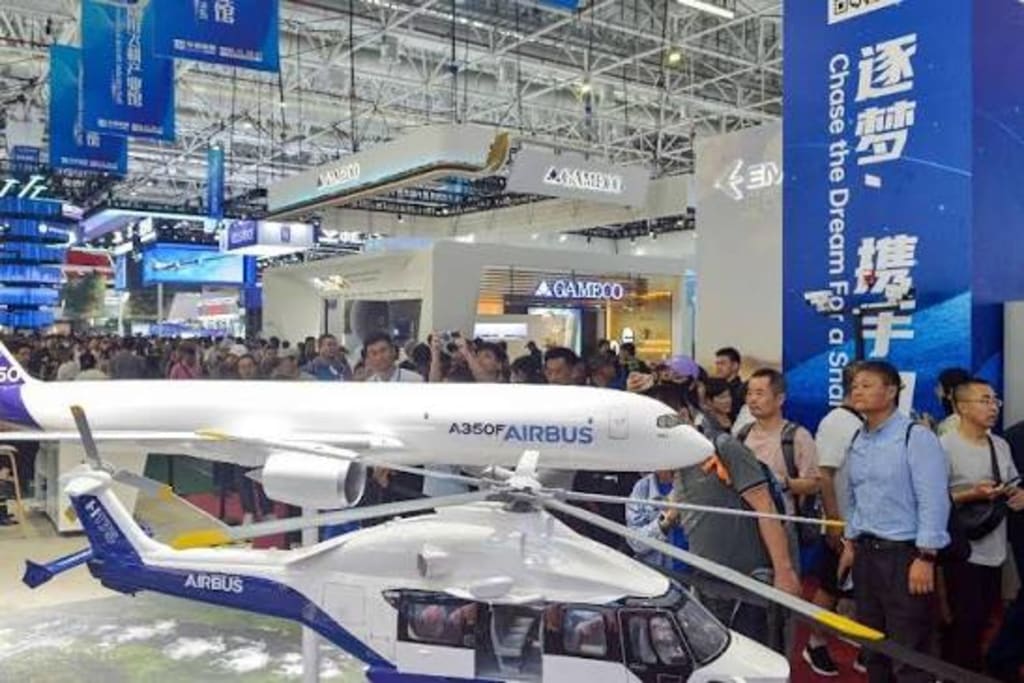
The global aviation industry may be on the verge of one of its most consequential aircraft deals in recent years. During a high-profile diplomatic visit to Beijing, German leader Friedrich Merz revealed that China is considering purchasing up to 120 aircraft from Airbus. The announcement underscores not only the strengthening economic ties between Europe and Asia but also signals a deeper shift in the global balance of aviation influence.
The potential agreement, still under negotiation, highlights how aviation has become a strategic tool in international relations. It also reflects China’s growing need to modernize its expanding airline fleet while reinforcing Europe’s position in the competitive aircraft manufacturing sector.
A Strategic Deal Beyond Aviation
Aircraft orders of this magnitude are rarely just commercial transactions. Instead, they often carry broader diplomatic and economic implications. The proposed Airbus purchase illustrates the deepening economic cooperation between Germany and China, two of the world’s largest export-driven economies.
For Germany, Airbus represents not only a major industrial success but also a symbol of European technological excellence. Supporting Airbus helps protect thousands of highly skilled jobs across Europe, including engineering, manufacturing, and supply chain roles. Merz’s announcement during his Beijing visit demonstrates Germany’s commitment to strengthening economic ties with China despite global geopolitical tensions.
For China, the deal aligns with its long-term strategy to expand and modernize its aviation sector. As air travel demand continues to rise with the growth of the middle class, Chinese airlines require newer, more efficient aircraft to handle both domestic and international routes.
Airbus Gains Ground in a Competitive Market
The possible order of up to 120 aircraft represents a major victory for Airbus in its ongoing competition with its American rival, Boeing. For decades, Airbus and Boeing have dominated the global commercial aircraft market, with airlines around the world relying on their fleets.
However, recent years have seen Airbus gain increasing market share, especially in Asia. The company’s single-aisle aircraft models, known for their fuel efficiency and reliability, have become particularly attractive to airlines seeking to reduce operating costs and meet environmental standards.
China’s decision to potentially favor Airbus reflects both commercial and political considerations. Diversifying suppliers reduces dependence on any single country and strengthens China’s bargaining position in global trade relationships.
This development also highlights Europe’s growing influence in sectors traditionally dominated by American manufacturers. Airbus, supported by governments across the European Union, has emerged as a strong competitor capable of securing massive international contracts.
China’s Rapidly Expanding Aviation Market
China’s aviation sector is one of the fastest-growing in the world. Before the pandemic, China was already on track to become the largest air travel market globally, surpassing the United States in passenger volume.
This growth is driven by several factors:
Rising incomes and increased affordability of air travel
Expansion of domestic tourism
Development of regional airports
Growth in international business travel
Chinese airlines are expanding routes across Asia, Europe, and Africa, requiring modern aircraft that offer efficiency, comfort, and lower emissions.
President Xi Jinping has emphasized technological modernization and economic resilience as key national priorities. Aviation plays a central role in achieving these goals by connecting China more effectively to global markets.
Europe Strengthens Its Economic Position
The potential Airbus deal also carries major implications for Europe’s economic future. Aircraft manufacturing is one of the continent’s most valuable industrial sectors, generating billions in revenue and supporting hundreds of thousands of jobs.
Germany plays a particularly important role in Airbus production, with major manufacturing facilities and research centers contributing to aircraft design and assembly. Airlines such as Lufthansa rely heavily on Airbus aircraft, reinforcing the company’s importance within the European aviation ecosystem.
Airbus also maintains a strong presence in China itself, including assembly facilities in Tianjin. These facilities allow Airbus to build aircraft closer to customers while strengthening its relationship with Chinese partners.
This localized production approach helps Airbus compete effectively while supporting China’s goal of developing its own aviation expertise.
Political and Economic Balance in a Changing World
The timing of the potential agreement is particularly significant. Global trade relationships are undergoing major changes, influenced by geopolitical tensions, supply chain disruptions, and shifting alliances.
By deepening cooperation with Airbus, China signals its willingness to maintain strong economic ties with Europe even as global competition intensifies. Meanwhile, Germany’s support for Airbus reinforces Europe’s desire to remain an independent and influential economic force.
This balance allows both sides to benefit economically while reducing reliance on any single partner.
Environmental and Technological Implications
Modern aircraft are significantly more fuel-efficient than older models, reducing emissions and operating costs. China’s investment in newer Airbus aircraft aligns with global efforts to make aviation more sustainable.
Airbus has been investing heavily in next-generation aircraft technology, including lighter materials, advanced engines, and improved aerodynamics. These innovations help airlines reduce fuel consumption and meet increasingly strict environmental regulations.
For China, adopting these aircraft supports its broader environmental goals while improving airline profitability.
What This Means for the Future of Aviation
The potential Airbus deal represents more than just a large aircraft order—it reflects a broader transformation in global aviation and economic power.
Several key trends are emerging:
Europe is strengthening its role as a major aviation supplier
China is expanding its global aviation influence
Aircraft manufacturing competition is intensifying
Aviation is becoming increasingly linked to geopolitical strategy
If finalized, the agreement could reshape industry dynamics and reinforce Airbus’s leadership in one of the world’s most important growth markets.
Conclusion: A Deal with Global Impact
China’s potential purchase of up to 120 Airbus aircraft marks a pivotal moment in international aviation and economic cooperation. The deal highlights the growing partnership between China and Europe while strengthening Airbus’s position as a global industry leader.
Beyond its immediate commercial impact, the agreement signals broader shifts in geopolitical influence, industrial strategy, and technological development.
As global air travel continues to expand, partnerships like this will play a critical role in shaping the future of aviation—and redefining the balance of economic power in the 21st century.
About the Creator
Keep reading
More stories from Jameel Jamali and writers in Journal and other communities.
Today’s Wordle Sunday February 8 – Hints, Clues, and Answer for #1695
Wordle has become more than just a word game — it’s a daily ritual for millions of players across the globe. Every morning, people grab their phones, open the New York Times Wordle page, and take on the challenge of solving a five-letter mystery in six tries or less. If you’re here searching for today’s Wordle Sunday February 8, you’re in the right place. In this blog, we’ll walk through Wordle #1695 step by step. You’ll find gentle hints, clever clues, and — if you scroll far enough — the final answer. Whether you’re stuck on your last guess or just want to confirm your win, this guide has you covered. What Is Today’s Wordle? For those new to the game, Wordle is a daily word puzzle where players must guess a secret five-letter word. After each guess, tiles change color to show how close you are: Green means the letter is correct and in the right spot Yellow means the letter is in the word but in the wrong position Gray means the letter is not in the word at all On Sunday, February 8, Wordle puzzle #1695 presents a word that’s deceptively simple yet tricky enough to trip up players who overlook repeated letters. Today’s Wordle #1695 – Hints Without Spoilers If you’re not ready to see the answer yet, start with these spoiler-free hints. They’re designed to guide you without giving everything away. General Hints The word contains five letters It starts with the letter “E” There are two vowels in the word One letter appears twice The word is commonly used as both a verb and a noun Meaning-Based Clue The word means to fix something firmly into a surrounding surface or to place something deeply within something else. If you’re still guessing, think about words related to inserting, planting, or attaching something securely. Strategy Tips for Solving Today’s Puzzle Sunday Wordles can feel slightly more challenging, especially if the solution includes repeated letters. Many players subconsciously avoid guessing words with double letters early on, which can slow progress. Here’s how you could logically approach Wordle #1695: Start with a vowel-heavy word to identify common letters early Pay attention to tile feedback — yellow letters often give away the structure Don’t rule out repeated letters just because they didn’t appear in earlier guesses Think about word usage, not just spelling — Wordle often favors common everyday words If you noticed an early “E” showing up in green or yellow, that’s a strong signal in today’s puzzle.
By Jameel Jamali19 days ago in The Swamp



Comments
There are no comments for this story
Be the first to respond and start the conversation.