
When Does a Toothache Become a Dental Emergency?
Dental Emergency
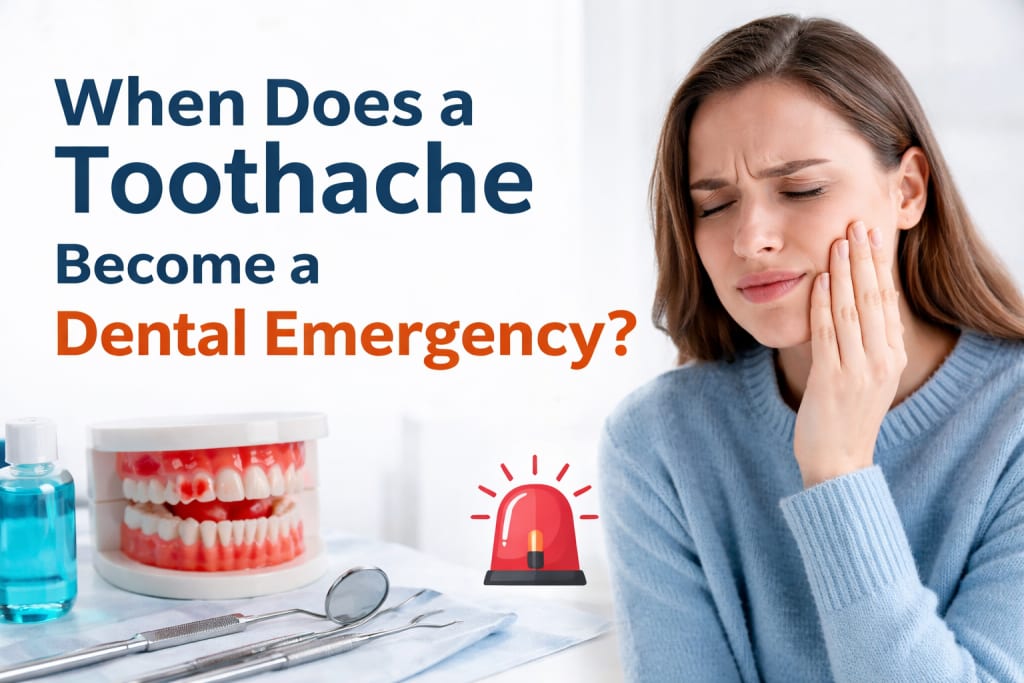
A toothache can start as mild discomfort and quickly turn into severe pain that disrupts sleep, work and daily life. While some toothaches settle with simple treatment, others need urgent care. Knowing the difference can prevent complications and protect your overall health.
This guide explains when a toothache becomes a dental emergency and what to do next.
What Causes a Toothache?
Tooth pain usually signals inflammation or infection inside the tooth or surrounding gum tissue. Common causes include:
- Tooth decay reaching the nerve
- Cracked or fractured tooth
- Dental abscess
- Gum infection
- Impacted wisdom teeth
- Trauma from injury
Mild sensitivity to cold or sweet foods is not always urgent. Persistent or worsening pain is another story.
When Is a Toothache a Dental Emergency?
A toothache becomes an emergency when there are signs of infection, nerve damage or spreading inflammation.
1. Severe, Throbbing Pain That Does Not Ease
If pain is intense, constant and not relieved by over the counter pain relief, the nerve inside the tooth may be infected. This often requires urgent treatment such as root canal therapy or extraction.
2. Swelling in the Face or Jaw
Visible swelling in the cheek, jaw or under the eye can indicate a spreading dental infection. This needs immediate attention. Infections in the mouth can spread to other parts of the body if untreated.
3. Fever With Tooth Pain
Fever, fatigue and general illness alongside tooth pain suggest infection. This is not something to delay.
4. Difficulty Swallowing or Breathing
If swelling makes it hard to swallow or breathe, seek emergency medical care straight away. This is rare but serious.
5. Pus or Bad Taste in the Mouth
Pus, a foul taste or persistent bad breath can signal an abscess. Dental abscesses do not resolve on their own.
6. Pain After Trauma
If a toothache follows a fall, sports injury or accident, there may be internal damage even if the tooth looks intact.
Signs It May Not Be an Emergency
You can usually book a prompt but non urgent appointment if you have:
- Mild sensitivity to hot or cold
- Dull ache that comes and goes
- Minor discomfort when chewing
- Slight gum irritation without swelling
Even then, do not ignore symptoms. Early treatment prevents more serious problems.
Why You Should Not Delay Treatment
An untreated tooth infection can lead to:
- Dental abscess
- Bone loss around the tooth
- Spread of infection to the jaw or neck
- Tooth loss
Prompt care often saves the tooth and reduces treatment cost.
What To Do If You Have Severe Tooth Pain
- Rinse your mouth with warm salty water.
- Take paracetamol or ibuprofen as directed.
- Avoid chewing on the painful side.
- Apply a cold compress to the cheek if there is swelling.
- Contact an emergency dentist as soon as possible.
- Do not place aspirin directly on the gum. It can burn the tissue.
A toothache is a dental emergency if you have:
- Severe, constant pain
- Facial or jaw swelling
- Fever with tooth pain
- Pus or bad taste
- Trouble swallowing or breathing
- Pain after dental trauma
If symptoms are mild and manageable, book a routine dental appointment. If symptoms are severe or spreading, seek urgent dental care.
Conclusion
Tooth pain is never random. It is your body signalling that something is wrong. Acting early can mean the difference between a simple procedure and a serious infection.
If you are unsure, it is safer to speak with a dentist promptly. When it comes to dental infections, waiting rarely helps.
About the Creator
Keep reading
More stories from Hawkesbury Dentistry and writers in Humans and other communities.
Recurring Gum Swelling and Abscess Pain: What It Says About Your Oral Health?
Recurring gum swelling with abscess pain is not a random problem. It is usually a sign that an underlying dental condition has been left untreated or has returned. While temporary relief may come and go, repeated flare ups point to deeper issues that need proper diagnosis and care.
By Hawkesbury Dentistryabout a month ago in Humans
At My Wits’ End
Life is about taking out the trash and calling it trash because you have every reason to. It wasn't meant to be linear, they say. But the times you tried to make it straight led to problems, and you didn’t have the tools to put any of it to use. You don't put your right shoes on the right feet; you put the left shoes on the left feet. The grey hardened slab will trip you up anyway.
By Caitlin Charlton5 days ago in Humans
How Psychology Helps Singles Decode Dating Patterns And Intentions
Attachment theory is the theory defining the role of childhood experiences in the relationships behaviour of adults. Secured individuals develop open communication and healthy relationship with others whilst those with anxious or avoidant attachment may have difficulties with trust or intimacy. Knowing what your attachment style is like assists in identifying the possible pattern, i.e., fear of commitment, clinginess, or withdrawal. Understanding such tendencies enables the singles to modify behaviors, establish constraints, and select mates whose styles of attachment will be complementary to theirs. Psychology can explain the reason behind certain repetitive patterns hence equipping the singles with the means to react in a conscious manner instead of reactive manner when in dating scenarios.
By Grace Smith6 days ago in Humans
Boundless
A geographical map could take you there. To the places I've been, to the sights I've seen, to the landscapes I've climbed. But no compass could point you in the direction of my memories. To the experiences I've lived, to the happiness I've felt, to the wonder I've held so close to my heart.
By Alyssa Mussoa day ago in Writers




Comments
There are no comments for this story
Be the first to respond and start the conversation.