
🌟 The Girl Who Found Tomorrow🌟
How one unexpected meeting changed everything
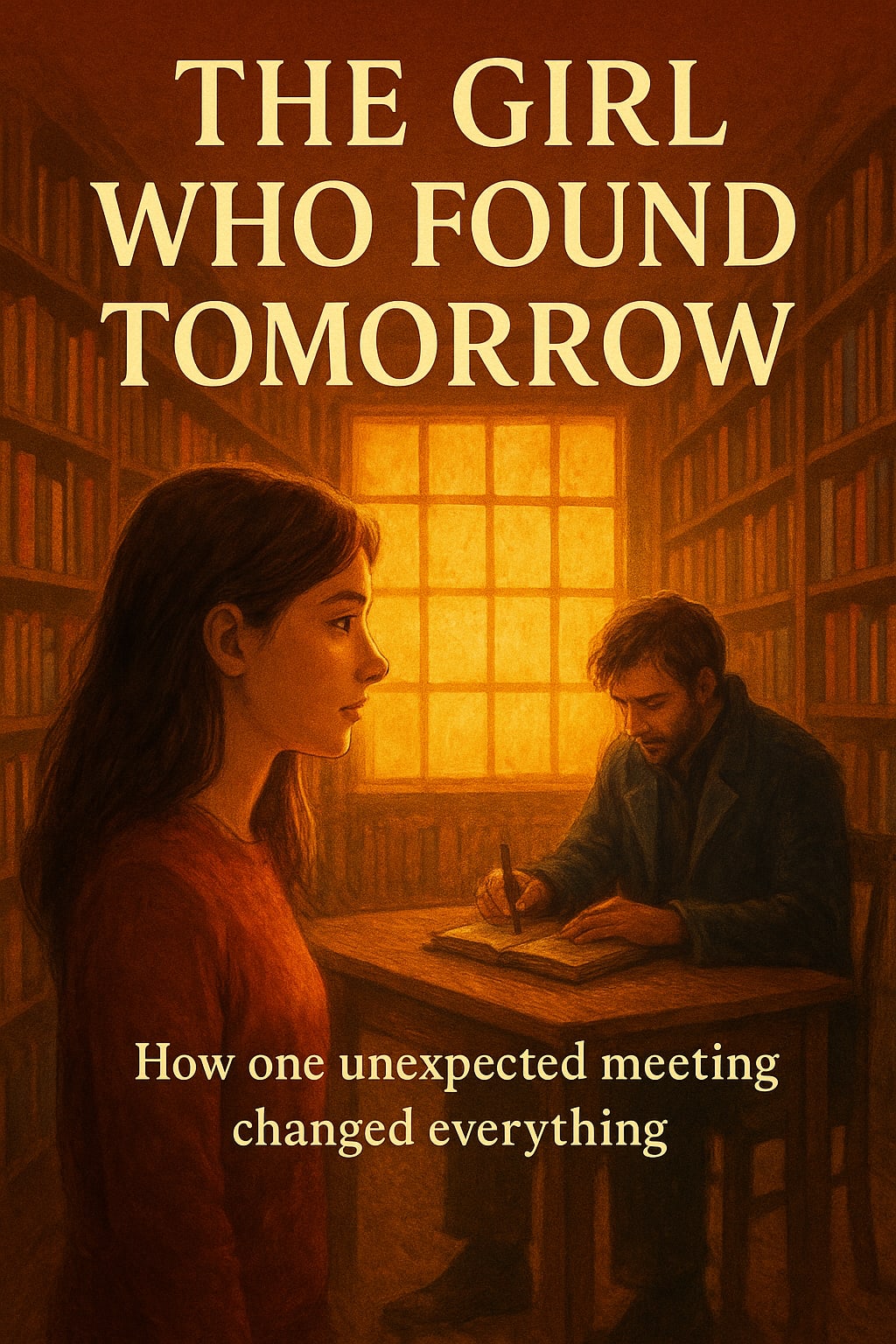
Maya counted the books again. Not because they needed counting, but because the silence of the shop pressed too heavily on her chest. The old bookstore had become her cage, though it didn’t look like one. The shelves stood tall like watchful guardians, the air thick with the scent of paper and dust.
For years, she lived in the rhythm of silence. The same key turning the lock each morning. The same broom sweeping the same corners. The same questions from customers, if they came at all: “Do you have this in paperback?” or “Is there a discount?”
Her life was tidy, predictable. Safe. But empty.
On a rainy afternoon in late November, the bell above the door chimed. She almost ignored it, assuming another lost tourist wandering in to escape the weather. But this time was different.
The man who entered wasn’t like the others. He carried no umbrella, though the rain had soaked through his coat. In his hand was a small notebook, leather-bound and weathered at the edges. His eyes—dark, alert—searched the room as though he wasn’t looking for books at all, but answers.
“Can I help you?” Maya asked, brushing her hair behind her ear.
He smiled faintly. “I think you already have.”
The reply puzzled her, but before she could ask, he stepped to the counter and set down his notebook. The leather was cracked, the pages bulging with loose slips of paper tucked inside.
“I need a place to sit,” he said. “Somewhere quiet. Do you mind if I stay for a while?”
Maya hesitated. The shop wasn’t a library. But the loneliness inside her ached at the thought of sending him away.
“There’s a chair in the back,” she said softly.
He nodded, took the notebook, and disappeared among the shelves.
Hours passed. The rain slowed. Still, the stranger remained in the chair at the back, scribbling furiously in his notebook. Occasionally, he looked up, as if testing the silence, then returned to his work.
Maya found herself stealing glances. Who was he? Why did he write as though the words might save him from drowning?
Finally, near closing time, he returned to the counter. His eyes looked tired, but alive.
“Thank you,” he said. “I haven’t had a quiet place in a long time.”
Maya gave a half-smile. “You’re welcome. Most people don’t stay here that long.”
He tapped the notebook. “Most people don’t carry too many stories. I have too many, and nowhere to put them.”
She raised an eyebrow. “Stories?”
He opened the notebook and turned it toward her. The page was filled with short notes, like fragments of lives:
The woman who gave away her last umbrella to a stranger.
The boy who found his missing brother because of a song.
The old man who still wrote letters to his wife, ten years after she died.
Maya’s chest tightened as she read. These weren’t just stories. They were lives, caught in brief sparks of words.
“Are they real?” she whispered.
“They’re tomorrow,” he said. “Moments that could happen. Moments that should.”
She frowned. “You mean… you make them up?”
He gave a small shrug. “I listen. I watch. Sometimes, I write what hasn’t happened yet.”
There was something unsettling and beautiful about the way he said it. As though tomorrow wasn’t a mystery, but a promise.
The stranger returned the next day. And the day after. Soon, it became routine. Maya unlocked the shop, he walked in with his notebook, and they shared a silence that felt less like loneliness and more like understanding.
He began to tell her little pieces of the stories he wrote. Of a girl who would one day change her town with kindness. Of a father who would reconcile with the daughter he thought he lost. Of a lonely bookstore clerk who would find her life shifting in ways she could never predict.
At that, Maya laughed nervously. “Sounds unlikely.”
He only smiled. “Not everything unlikely is impossible.”
The words lingered long after he left.
Weeks passed, and the world outside grew colder. But inside the shop, Maya felt something stirring, something that scared her: hope. She began waiting for the sound of the bell each morning. She found herself speaking more, laughing more, listening more.
Until one morning, he didn’t come.
The bell stayed silent.
Maya waited all day, the minutes dragging like heavy chains. The next day was the same. And the day after.
On the fourth day, she found the notebook on the counter. Her heart skipped as she opened it.
Inside, she found the same fragments of stories—but now, one page was written in careful, deliberate handwriting:
“Maya will learn that tomorrow is not found in waiting, but in living. She will find it in the people she meets, the kindness she gives, the courage she discovers. And when she reads this, she will know—tomorrow has already begun.”
Her eyes blurred with tears. She closed the notebook and held it to her chest.
The man never returned. But from that day, Maya stopped counting the books. She began talking to customers, learning their stories, even writing her own.
And sometimes, late at night when the rain tapped against the glass, she would whisper into the quiet:
“Thank you for showing me tomorrow.”
About the Creator
The Angry Man in Your House
"If you grow up with an angry man in your house, there will always be an angry man in your house" This statement has caused plenty of controversy online, people say its a statement that blames victims while also undermining those who break traumatic cycles to form health relationships... but if I'm honest now that I'm in my 30s it makes more sense to me than ever, and I'd argue that its not just about fathers and uncles.
By S. A. Crawford6 days ago in Humans



Comments
There are no comments for this story
Be the first to respond and start the conversation.