
The Friction of Order
Systems promise order.
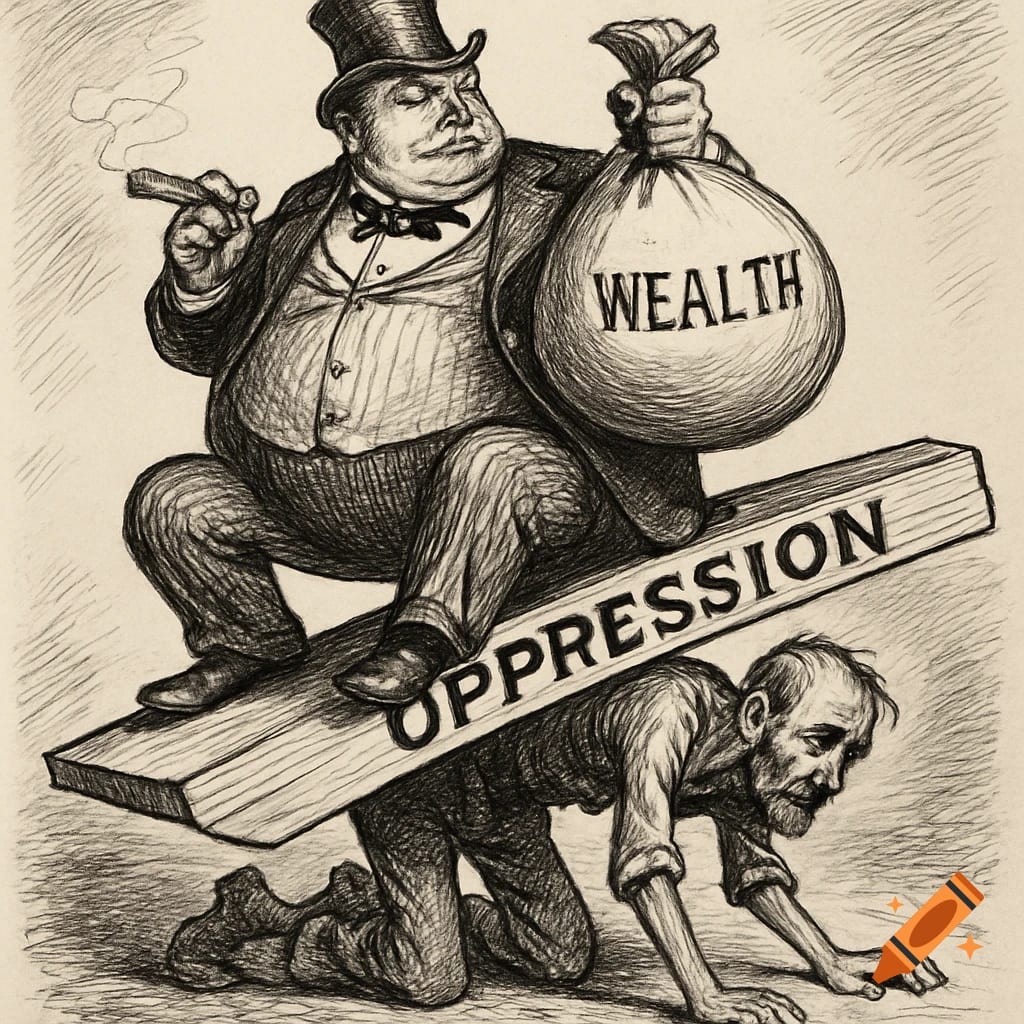
They promise that if you follow the rules, the outcome will follow too. Study, work, pay, vote, obey. In return: stability. Healthcare when you are sick. Education when you are young. Justice when you are wronged. Safety when you are afraid.
At first, when a system begins to misalign, no one calls it broken. They call it complicated.
You notice it in small frictions.
You call a doctor and are told the next available appointment is in five months. You explain that it feels urgent. The receptionist apologizes kindly but without surprise. This is how it works now. You hang up and stare at the phone, unsure whether you are sick or simply out of sync with the design.
You try again somewhere else. The answer is the same.
No collapse. No sirens. Just delay.
The education system moves the same way. Classrooms grow fuller while teachers grow fewer. Parents are told there are enough resources. Later, they are told there are not. Reports contradict earlier reports. Committees review what other committees concluded. Meanwhile, a child sits in a classroom where attention is rationed like water in a drought.
No dramatic failure. Just thinning.
The system does not shout when it falters. It shrugs.
Travel offers another example of friction disguised as order. You want to visit a country your government currently considers unfriendly. You are warned not to go. The warning carries no visible force, but it lingers. You wonder what might happen if you ignore it. Would you be questioned upon return? Would your name be noted somewhere? You do not know. The uncertainty becomes part of the design.
Borders used to be walls and fences. Now they are permissions.
Your bank card works—until it does not. A transaction is flagged. An account is reviewed. Access is paused “pending investigation.” No one accuses you of anything specific. There is simply a process, and you are inside it. You call the number provided and navigate an automated voice system that thanks you for your patience. You wait on hold, listening to music designed to calm.
The system remains polite.
Power has become administrative.
It does not need spectacle. It operates through forms, delays, compliance checks, terms of service agreements longer than novels. It tells you that everything is for your protection. Security. Stability. Public safety.
And maybe it is.
But something has shifted.
Consider the case of Jacques Baud, a former colonel in the Swiss Army and intelligence analyst. He spoke publicly about international conflict from a perspective that diverged from dominant narratives. His experience of professional and institutional resistance did not arrive as a dramatic arrest. It came as distancing. Marginalization. Subtle exclusion from certain platforms.
Or consider Tamara Lich, a Canadian activist involved in organizing large-scale protests in Ottawa in 2022. She was arrested, released, re-arrested, granted bail again, and eventually convicted of mischief for her role in the demonstration. Some saw her as a defender of civil liberties; others saw her as disruptive. What stands out is not the verdict itself but the complexity of navigating a system that processes dissent through legal mechanisms that can stretch for years.
The system responds not with immediate force but with procedure.
Procedure is slow.
Procedure is exhausting.
Procedure can feel like gravity.
Most people do not wake up intending to oppose anything. They wake up intending to live: to work, to raise children, to pay bills, to rest. But in a misaligned system, ordinary living requires constant negotiation. Terms change. Policies update. Platforms adjust guidelines. What was acceptable yesterday is questionable today.
The language of governance has become managerial. Risk mitigation. Harm reduction. Compliance frameworks. Stakeholder engagement. These phrases hover above daily life like soft ceilings.
The misalignment is rarely loud enough to unite people in outrage. It is dispersed. Personalized.
You experience it alone.
You try to renew a license and encounter a website that loops you back to the beginning. You attempt to speak to a human and find yourself redirected to a chatbot. You ask a question and receive an answer that addresses a different question entirely.
It is not that no one responds.
It is that no one answers.
Over time, this produces a subtle psychological shift. You begin to assume the fault is yours. You must have filled out the form incorrectly. You must have misunderstood the regulation. You must have missed an email.
The system rarely apologizes.
It thanks you for your cooperation.
Culturally, sameness creeps in quietly. Twenty years ago, you remember noticing that cars on the road seemed to converge toward the same palette—black, white, silver, gray. Perhaps it was market preference. Perhaps manufacturing efficiency. Perhaps coincidence. But the effect was visual uniformity.
The street looked muted.
Fashion cycles accelerate, yet wardrobes look increasingly interchangeable. Language online becomes standardized through algorithms that reward certain tones and suppress others. Even outrage begins to resemble itself, formatted into hashtags and shareable templates.
Difference persists, but it must compete with design.
There is also surveillance—not always dramatic, rarely theatrical. Cameras in public spaces. Data trails online. Location histories stored somewhere you cannot see. The system explains that monitoring deters harm. That it protects the vulnerable. That transparency ensures safety.
You agree, in principle.
But the sensation of being measured never fully fades.
You begin to wonder whether you are participating freely or performing acceptably.
Literature once imagined such futures. In Nineteen Eighty-Four, society is controlled through overt surveillance and language manipulation. In Animal Farm, power reshapes ideals slowly, almost imperceptibly, until slogans replace substance.
Those stories feel exaggerated when first encountered.
Later, they feel less distant.
Yet the modern system does not resemble a single dictator issuing commands. It resembles an ecosystem of institutions—financial, technological, governmental—interlinked and mutually reinforcing. Decisions emerge from networks rather than faces. Responsibility diffuses.
If you attempt to identify where exactly something went wrong, you find yourself tracing circles.
Healthcare blames funding structures. Funding structures blame economic pressures. Economic pressures blame global markets. Global markets blame instability. Instability blames political polarization. Political polarization blames misinformation. Misinformation blames technology platforms. Technology platforms cite user behavior.
The circle closes.
Meanwhile, you are still waiting for your appointment.
The system is not entirely dysfunctional. It still delivers electricity. It still processes payments. It still organizes flights and maintains roads. That is what makes the misalignment difficult to name. It works—just not evenly. Not predictably for everyone.
Some people move through it effortlessly. Others encounter friction at every step.The misalignment reveals itself most clearly when someone deviates—politically, culturally, economically. A freelancer who publishes a blog challenging mainstream narratives may find payment processors unwilling to continue service. A protester may discover that legal processes extend longer than expected. A traveler may learn that mobility depends less on geography than on geopolitical alignment.
None of these experiences, taken alone, proves systemic collapse.
But together, they create a pattern.
The pattern is subtle centralization.
Access becomes conditional.
Speech becomes contextual.
Movement becomes evaluated.
And most of it unfolds through paperwork.
The emotional result is not always anger. Often, it is fatigue.
You begin to conserve your energy. You avoid saying certain things publicly because clarification is exhausting. You comply preemptively because contesting takes time you do not have. You accept delays because fighting them requires navigating layers you barely understand.
The system counts on this.
Not maliciously, perhaps. But structurally.
It is designed for scale, not nuance. For efficiency, not intimacy. For aggregate data, not singular stories.
And so the misalignment persists.
It is visible in the parent who cannot secure specialized support for a child. In the small business owner navigating regulations written for multinational corporations. In the citizen who feels both monitored and unheard.
It is visible in the laughter that accompanies phrases like “for your own good.”
The laughter is not joyful.
It is disbelieving.
Every system reflects the values embedded in its design. When those values drift from lived reality, friction increases. At first, individuals adapt. They troubleshoot. They optimize. They network around obstacles.
But over time, adaptation becomes normalization.
You no longer expect clarity. You expect complexity.
You no longer expect responsiveness. You expect procedure.
You no longer expect to be seen as a person. You expect to be processed.
The system continues to function.
Bills are paid. Laws are passed. Data is stored. Policies are updated.
From a distance, it appears stable.
Up close, it feels misaligned.
And that misalignment is not a single crack in a wall. It is a constant, low-level hum—a vibration beneath daily life. It is the sensation of pushing gently against something that does not move, then adjusting yourself instead.
No announcement declares it broken.
No headline reads: The System Has Shifted.
It simply becomes harder to breathe inside it.
And most people, busy surviving within its structure, are too occupied to name the change.
So they carry on.
Waiting on hold.
Refreshing the page.
Complying with terms.
Hoping that the next interaction will feel less like friction and more like promise.
About the Creator
Keep reading
More stories from Dagmar Goeschick and writers in Humans and other communities.
Winter Ritual
Winter arrives without asking. It comes quietly, often overnight, when the world has decided to slow down. Winter is cold. Winter is white. Winter lasts three long months—sometimes more—and sometimes it comes with snow, and sometimes only with the promise of it. Either way, it changes everything.
By Dagmar GoeschickExclusive • 2 months ago




Comments
There are no comments for this story
Be the first to respond and start the conversation.