

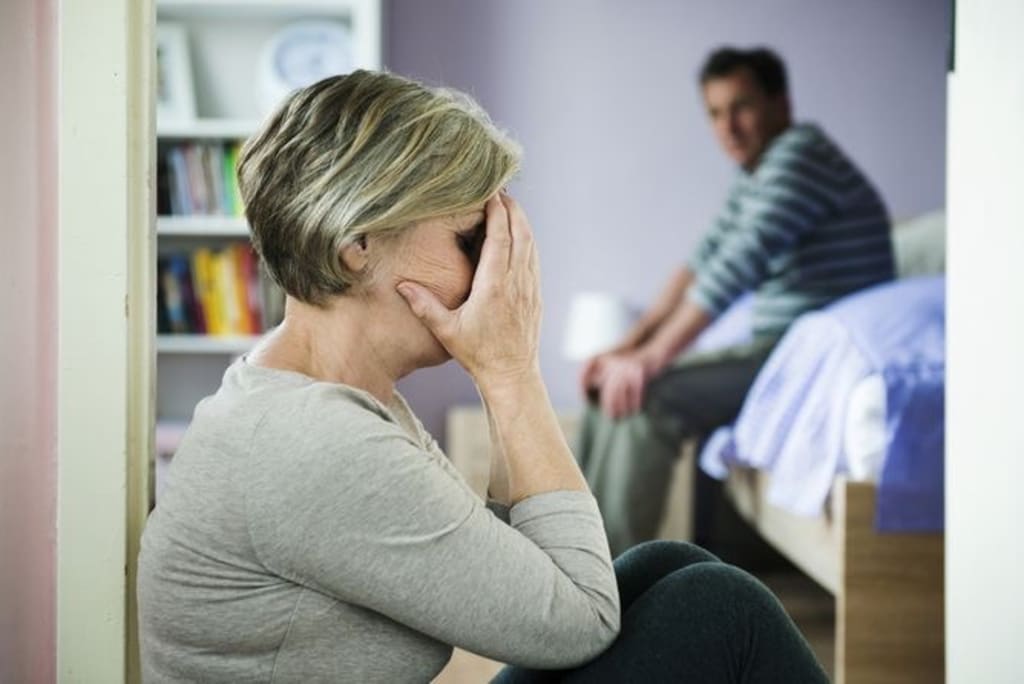
Anna had been married for 10 years to a man named Mark. Mark was the sole breadwinner in the family and controlled all of the finances. Anna had no access to any money and had to ask Mark for permission to buy even the most basic necessities.
Mark was emotionally and physically abusive towards Anna, and he used economic abuse as a tool to control her. He would often threaten to withhold money from her if she didn't do what he wanted or if she tried to stand up for herself.
Anna was living in fear and felt trapped in her marriage. She had no way to leave Mark as she had no money, no job, and no family or friends to turn to. She felt like she was stuck in a never-ending cycle of abuse and control.
One day, Anna met a woman named Sarah who worked at a local shelter for victims of domestic abuse. Sarah noticed that Anna was withdrawn and seemed afraid, so she started talking to her. Eventually, Anna opened up to Sarah and told her about the abuse she was experiencing.
Sarah helped Anna to come up with a plan to leave Mark. They started by setting up a secret bank account in Anna's name and slowly depositing small amounts of money into it over time. Sarah also helped Anna find a job and offered her a place to stay at the shelter.
Anna was scared, but she knew that she had to leave Mark if she wanted to be free from the abuse. One day, when Mark was at work, Anna packed a bag with her belongings and left the house. She went to the shelter where Sarah was waiting for her.
Anna was finally free from the abuse and control of Mark. She had a job, her own money, and a place to stay. With the help of Sarah and the shelter, Anna was able to start rebuilding her life and healing from the trauma she had experienced.
It wasn't easy, but Anna was determined to take control of her life and never let anyone else have that kind of power over her again. She knew that economic abuse was a real and dangerous form of domestic abuse, but she also knew that there was hope and help available for those who needed it.
Yes. Economic or financial abuse is real. It's a thing. It might seem subtle at first but before you realize, it has eaten into the relationship and becomes a norm. It is very necessary to opt out and get help if you are having similar experiences. It's good to have the right support system.
Economic abuse is a form of domestic abuse that involves controlling a victim's access to financial resources or using financial means as a means of power and control. It can take many forms, including limiting a victim's access to money, destroying property, preventing a victim from working, or forcing a victim to work under dangerous or exploitative conditions. Economic abuse can have serious and long-lasting effects on victims, including poverty, homelessness, and isolation.
Economic abuse is often used in conjunction with other forms of abuse, such as emotional, physical, or sexual abuse. Economic abuse can be difficult to recognize, as it can take many different forms and can be subtle or overt. It can also be difficult for victims to leave an abusive relationship, as they may not have the financial resources to do so.
One of the most common forms of economic abuse is limiting a victim's access to money. This can take many forms, such as refusing to give a victim an allowance or limiting their access to joint bank accounts. In some cases, an abuser may take control of all the finances, leaving the victim with no money of their own. This can make it difficult for a victim to leave an abusive relationship, as they may not have the financial resources to support themselves.
Another form of economic abuse is destroying property. An abuser may intentionally damage a victim's property, such as their car or their home, as a means of control. This can leave the victim feeling vulnerable and powerless, as they may not have the means to repair or replace the damaged property.
Preventing a victim from working is another form of economic abuse. An abuser may refuse to allow a victim to work or may force them to work under dangerous or exploitative conditions. This can leave a victim financially dependent on the abuser and can make it difficult for them to leave the relationship.
Forcing a victim to work under dangerous or exploitative conditions is also a form of economic abuse. An abuser may force a victim to work long hours for little pay, or may force them to work in unsafe or illegal conditions. This can leave a victim feeling trapped and powerless, as they may not have the means to support themselves without the abuser.
Economic abuse can have serious and long-lasting effects on victims. It can leave them isolated and without the means to support themselves or their children. Victims of economic abuse may experience poverty or homelessness, as they may not have the financial resources to support themselves. Economic abuse can also have a negative impact on the social life of the victim.
Anna's story is a reminder that economic abuse is a serious issue that can have long-lasting effects on victims. However, with the right support and resources, victims can find their way to freedom and a better life.
About the Creator
Keep reading
More stories from Victoria Enoch and writers in Humans and other communities.
I Don't Need My Phone... Wait, Is That Actually True?
My parents gave me my first cell phone when I was twelve years old. It wasn't a fancy iPhone or anything, not even close. Just a simple black flip phone for when I needed to call or text them after school.
By Madison "Maddy" Newton2 days ago in Humans
Oh, The Irony
This year, the year 2026 of the Common Era, Valentine’s Day is right after Friday the 13th. It feels quite ironic, having the very day of love be preceded by a day traditionally associated with doom and gloom. Of course, the latter is largely based on Western superstition. Nonetheless, it does have a strange feel.
By Snarky Lisaabout 7 hours ago in Humans


Comments (1)
Amazing