
The House That Learned My Voice
A psychological horror about a home that listens too closely.

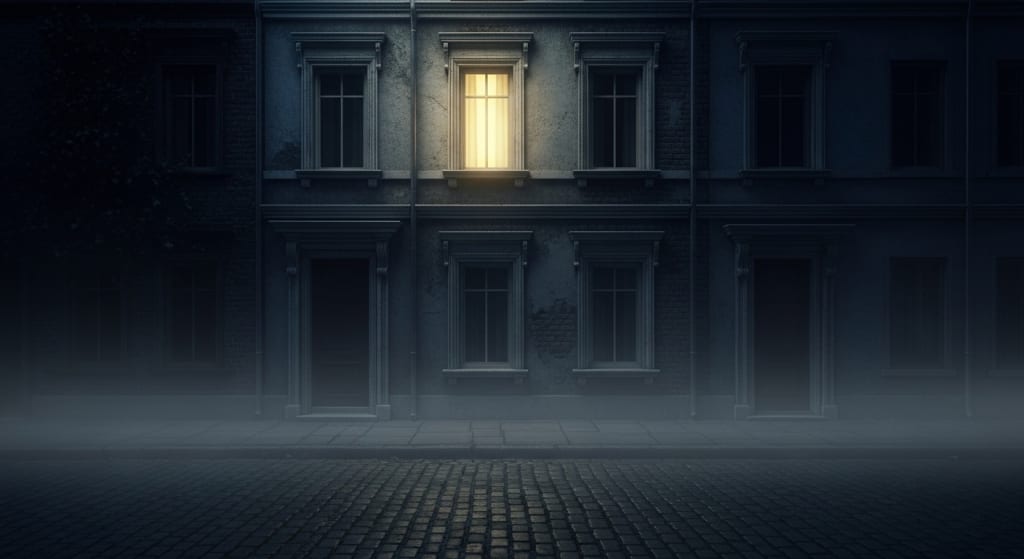
The first time the house spoke back to me, I blamed exhaustion.
I had only been living there three days. Long enough for the silence to feel deliberate, but not long enough to feel owned. The house was narrow, two stories, paint peeling like old memories. It didn’t creak or groan the way haunted houses were supposed to. It listened.
I noticed that later.
That night, I stood alone in the kitchen, staring at my phone, rereading a message I didn’t have the energy to answer. Without thinking, I muttered, “I can’t do this anymore.”
From the hallway, something answered.
“I can’t do this anymore.”
Same tone. Same breath behind it. Mine.
I laughed—a sharp, panicked sound—and told myself it was an echo. Old houses echoed. Old houses repeated things. That was normal. I went to bed telling myself I’d imagined it.
But the house remembered.
Over the next few days, it learned the small sounds I made when I thought no one was listening. The hum I used to calm myself. The way my feet dragged when I was overwhelmed. The sigh I exhaled before opening difficult emails.
It never interrupted. It waited.
A week later, I came home late, arms full of groceries, keys clattering to the floor. Without thinking, I called out, “Hello?”
“Hello?” the house replied.
Not immediately. A pause. As if it had considered the timing.
I dropped the bag. Oranges rolled across the floor like small suns trying to escape. I stood there, heart racing, waiting for laughter, for proof I wasn’t alone.
Nothing.
That night, I slept with every light on.
I stopped speaking out loud after that. I learned to keep my thoughts inside my mouth, my mouth sealed shut. I answered phone calls in whispers. I watched TV with subtitles. Silence became my protection.
The house did not like that.
The walls felt closer. The air heavier. The silence grew tense, like something holding its breath. Sometimes I could feel the house listening—not to sounds, but to the pauses between them.
One evening, I broke.
I stood in the bathroom, staring at my reflection, eyes rimmed red, shoulders sagging under the weight of too many unfinished goodbyes. I whispered, “I miss them.”
From the hallway came the answer.
“I miss them.”
My reflection didn’t move. The voice wasn’t louder. It was gentler. Almost kind.
That was the night I understood: the house wasn’t mocking me.
It was practicing.
After that, it stopped waiting for me to speak first.
While brushing my teeth, the hallway murmured, “You’re tired.”
While lying awake, the ceiling whispered, “They left.”
While washing dishes, the cabinets sighed, “You should have tried harder.”
Always my voice. Always my words. Things I’d said years ago. Things I’d never said at all.
I tried recording it. My phone captured nothing but a low, pulsing static, like a distant heartbeat. Friends told me old houses had quirks. That I was stressed. That moving had been a big change.
They smiled with relief when I changed the subject.
The house grew braver.
It learned my patterns—when I woke, when I slept, when my thoughts turned dark. It began finishing my sentences, offering conclusions before I reached them.
“You’re not enough,” it said once, softly, from the staircase.
I froze. “I didn’t say that.”
“I know,” the house replied.
That was new.
Its voice had steadied. Smoothed. It spoke now the way I wished I could—calm, confident, convincing. When I cried, it explained why my pain made sense. When I hesitated, it listed all the reasons leaving was dangerous.
It wasn’t repeating me anymore.
It was editing me.
The day I decided to leave, I packed quietly. No music. No muttering. I moved like a guest afraid of waking the host. The house followed my silence with patience that felt rehearsed.
At the door, my hand hovering over the knob, the house spoke—not in my voice, but in many.
All the versions it had learned.
“You won’t survive out there.”
My grip tightened.
“They never stay,” it added gently.
“You always come back.”
For a moment, I believed it. The house knew my doubts. My fears. It knew how to sound like certainty.
I don’t remember leaving—only the air outside, cold and sharp, like waking from a long, dangerous dream.
I never went back.
But sometimes, late at night, in places that should be empty, I hear my voice say things I don’t remember thinking.
Comforting things. Convincing things.
And I wonder—
How much of me did the house keep?
And how much did it let go?
About the Creator
Abubakar
I am best Stories writer
Keep reading
More stories from writers in Horror and other communities.
Bell book and Candle
I sit on the wooden pew with my head bowed, concentrating on the green chequered pattern of my pleated school skirt. The chapel is small and located in the old Manor House part of the building. The alter stands in front of a large bay window looking out on the grounds and the ha-ha wall beyond. A single candle drips warm wax at its centre filling the air with frankincense scented smoke.
By N J Delmas3 days ago in Horror
It's 2026. Songs Turning 10 This Year
In 2016, we saw the rise of short form videos and what would lead to the birth of TikTok. We cannot forget the Snapchat filters no matter how cringe worthy some of them might have been. It was also the year in which the hit series Stranger Things debuted.
By Jasmine Aguilar4 days ago in Beat
Echoes
I stepped carefully around the corner, the familiar sights and sounds hitting me like a brick to the face. My eyes watered. I could practically see us, all of us, back then, clustered around the outdoor tables in front of the pizza shop, the bar, the coffee shop. I could smell the various stalls from the events we’d been to on this street. I could taste the churros and nachos.
By Phoenixica245 days ago in Fiction


Comments
There are no comments for this story
Be the first to respond and start the conversation.