
What Are the Current Rules for Women in Afghanistan in 2026?
The Morning That Stopped Feeling Like a Morning

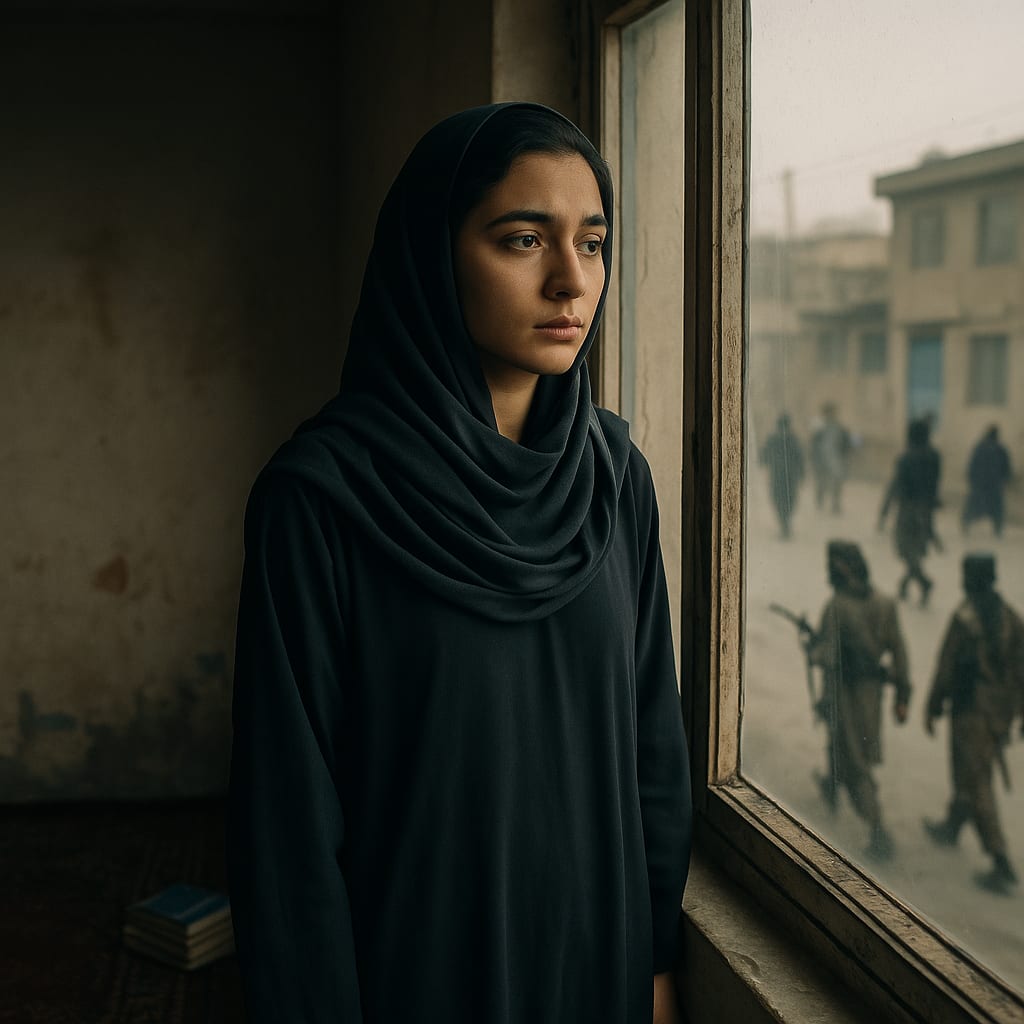
A Complete, Uncomfortable Guide to Daily Life Under Taliban Rule
The Morning That Stopped Feeling Like a Morning
A friend in Kabul told me about the day her daughter stopped asking to go to school.
It was winter, still dark when she woke up, the power cutting in and out. The little girl put on the same faded backpack she’d carried before the Taliban took over, stood at the door, and waited.
Her mother had to tell her, again, that she could not go.
This time, the child didn’t cry, didn’t argue, didn’t promise she’d be careful. She just took off the backpack, set it in the corner, and walked away.
“That,” her mother said to me on a scratchy WhatsApp call, “was the day I knew something in us was breaking.”
If you’re reading this from outside Afghanistan, you’ve probably seen headlines: Taliban bans girls from school, Women barred from parks, Hijab rules tightened. It all blurs into one long, distant tragedy.
Inside the country, it doesn’t feel like “news.” It feels like a set of invisible hands rearranging every minute of a woman’s day. Who she can see. What she can wear. Whether she can work. If she can step outside her own front door without being punished.
This is what those rules look like in 2026—not as bullet points in a report, but as the shape of a life.
Who Really Makes the Rules Now?
The Taliban call their government the “Islamic Emirate of Afghanistan.”
On paper, they keep saying they “respect women’s rights within Islamic law.” They repeat it in interviews, in statements, in diplomatic meetings.
In practice, the “rules” for women are not published as one clear law you can read and understand. They are:
Religious decrees announced by Taliban leaders
Orders from the Ministry for the Propagation of Virtue and Prevention of Vice
Local instructions from Taliban officials and fighters in each province
Unwritten expectations enforced through fear
That last one—unwritten rules—is often the most powerful.
A woman doesn’t know if the man patrolling her street will demand a black abaya (the long outer cloak), a face veil, a male guardian with her, or all three.
So she chooses the strictest version, just to survive the day.
The result: The “current rules” are a combination of national bans, regional variations, and everyday guesswork. And the penalty for guessing wrong can be humiliation, beating, or worse.
Education: The Empty Classrooms and Secret Lessons
If you want to understand Taliban rule, start with the silence outside girls’ schools.
Since 2021, the Taliban have:
Banned girls from secondary school (roughly grade 7 and up) nationwide
Blocked women from universities and most formal higher education
Closed many private courses that tried to keep girls learning
Shut down beauty academies, which had become informal learning spaces too
By 2026, this is what “school” looks like for many Afghan girls:
Primary school… for now. Some provinces still allow girls up to grade 6 in government schools. Others interfere even earlier. Families live with the fear that this permission can be taken away any day.
Secret home schools. A living room becomes a classroom. Curtains closed. Books hidden. A cousin, neighbor, or former teacher explains math quietly while someone keeps an ear on the door. One unexpected knock can scatter everyone.
Online classes that don’t feel real. If there’s internet and a smartphone, some girls study with online platforms, foreign-based courses, or WhatsApp groups. But internet is expensive, electricity is unreliable, and the threat of a phone search is always there.
The Taliban keep promising they will “find an Islamic solution” for girls’ education. They’ve had years.
The real rule in 2026 is: if you are a girl older than around 12, the state does not want you in a proper school.
And the cost is not just the loss of knowledge. It’s the slow collapse of dreams, identity, and self-worth.
Work and Money: Who Is Allowed to Earn?
If you’re a woman in Afghanistan in 2026, your ability to earn your own money is one of the clearest signs of how your world has shrunk.
Under Taliban rule, women have been:
Banned from most government jobs. Only a handful of roles are allowed—like certain positions in women’s health or very limited administrative posts. Many former civil servants are at home, salary gone overnight.
Pushed out of NGOs and international organizations. At several points, the Taliban ordered that Afghan women could not work for NGOs or the UN. There have been temporary exceptions and local variations, but the overall pattern is suppression.
Restricted in the private sector. In some cities, women can still work in certain women-only spaces—like some hospitals, a few clinics, small tailoring businesses, or women’s sections of shops. In many areas, even that is tightening.
Barred from most public-facing jobs. Television, government, law, education, many office roles—closed off unless you are working in a strictly segregated, “approved” environment.
The official line is that men should be the breadwinners, women should stay home, and society will function “as it should.”
In reality, Afghanistan is poor. Many families survive only because women find ways to earn:
Sewing clothes and embroidery at home
Quietly running small businesses from their living room
Teaching kids in the neighborhood
Selling homemade bread or food, sometimes through a male relative as the front
Every one of those income streams sits on shaky ground. A new local order, a neighbor’s complaint, or a morality patrol’s decision can shut it down.
The rule beneath all the other rules: a woman’s financial independence is treated as a threat, not a right.
Hijab and Clothing: The Difference Between “Correct” and “Dangerous”
If you’re trying to picture what women wear in Afghanistan in 2026, don’t imagine it as a simple “you must wear a veil” rule.
The Taliban’s guidelines say women should cover fully—loose clothing, hands and face ideally covered, no figure shown, no colorful or “attractive” dress.
Some bits of reality:
Burqa vs. abaya vs. scarf. The blue burqa (the full-body covering with a mesh over the eyes) is more common in rural areas and among older generations. In many cities, black abayas and black face veils have spread. Some women wear long coats and headscarves instead, but that’s usually riskier.
Color policing. In some areas, women avoid bright colors because morality officials call them “un-Islamic” or “tempting.” Black, navy, brown—safe colors. Some women who grew up loving fashion now treat every outfit as a negotiation with danger.
Face coverage. Not all provinces enforce the face veil equally. But even where it’s not strictly enforced, many women start wearing it out of fear—better to hide than risk a warning, or worse.
If a woman is stopped for “improper hijab,” she might be:
Warned or scolded on the street
Forced to call her male guardian to be lectured
Taken to a police station or office, questioned, threatened
In extreme cases, beaten or detained
The line between “acceptable” and “unacceptable” is often determined by the mood of the man in front of you.
So women learn to over-comply.
Dress is no longer about faith, culture, or personal choice. It becomes armor. In some cases, a disguise.
Mahram Rules: When You Can’t Move Without a Man
One of the most suffocating rules for women in Afghanistan under Taliban rule is the mahram requirement.
A mahram is a close male relative: father, brother, husband, adult son. The Taliban say women should not travel long distances or move freely without one.
How far is “too far”? It changes.
In some areas, women are told they can’t:
Travel between cities without a mahram
Take buses or shared taxis alone
Stay overnight away from home without male accompaniment
In other places, even going across town without a male guardian can lead to harassment.
Imagine needing permission and an escort every time you:
Have a doctor’s appointment
Need to go to a government office
Want to visit your sick mother in another district
Need to flee an abusive home
For widows, single women, or families where men work long hours, this rule is a trap.
A woman told me, “My husband works day and night just so we can eat. If I have a medical emergency while he’s gone, who is my mahram then? The Taliban?”
She said it half-jokingly. Only half.
On paper, the rule is “for women’s protection.” On the ground, it functions as a way to keep women invisible and dependent.
Health and Hospitals: Care That Comes With Conditions
Women in Afghanistan in 2026 can still see doctors. That’s one of the few areas where the Taliban have not imposed a full, open ban—possibly because even they know the system collapses without women in healthcare.
But restriction finds its way in here too:
Gender segregation. In many places, women are supposed to be treated by female doctors only, and men by male doctors. That sounds simple until you realize how few female specialists the country has left after years of war, brain drain, and bans on education.
Travel barriers. The mahram rule makes seeking care difficult. A woman in labor, a woman with cancer symptoms, a woman with complications from pregnancy—if she doesn’t have a male relative available, her access is delayed or blocked.
Mental health in the shadows. Trauma, depression, anxiety, suicidal thoughts—these are exploding under current conditions. But formal mental health support is scarce, and the stigma is immense. Many women whisper their worst fears only to a trusted friend in the dark.
The rule no one writes down: suffering quietly is more acceptable than breaking the rules to seek help.
Public Space: Parks, Gyms, and the Places Women Have Lost
If you scroll back to photos and videos from Afghan cities a decade ago, you’ll see something that feels painfully distant now: girls in school uniforms on their way to class, women in cafes, families in parks.
Under Taliban rule, the list of places women are banned from or heavily restricted in includes:
Most parks and public gardens
Gyms and sports clubs
Public baths and some recreational centers
Many public workplaces and state offices
Some universities and campuses (where they used to go as visitors, not just students)
In some areas, the Taliban have announced women-only visiting hours for parks, then quietly stopped even those.
You end up with a strange kind of ghost city.
Women are inside—cooking, cleaning, caring for children, staring at the same walls day after day—but the streets, offices, and parks belong mostly to men.
The message is clear: public life is male space. Women exist, but in parentheses.
Marriage, Divorce, and Violence Nobody Wants to See
On the surface, the Taliban say they oppose forced marriage, support women’s rights under Islamic law, and will punish abuse.
Reality is complicated, and almost always tilted against women.
Child and forced marriage. Economic collapse and social pressure mean more families marry off daughters younger, sometimes to much older men, sometimes as a way to “protect” them or reduce household costs.
Divorce. Under Taliban rule, courts and legal processes are dominated by male religious judges. Women who want to leave abusive marriages face huge legal, social, and safety barriers. Many are told to “be patient” or return to violent husbands.
Domestic violence. Shelters for abused women have been closed or heavily restricted. Many women’s protection mechanisms built over the last 20 years—hotlines, safe houses, legal aid—have been dismantled or are forced underground.
On paper, Islam offers certain clear rights to women in marriage. On the ground, a woman’s access to those rights depends almost entirely on the men around her and the Taliban officials in her area.
The rule that quietly governs everything: whatever harms women is easier to ignore than whatever challenges male authority.
Resistance, Quiet and Loud
If you stop the story here, it sounds like women in Afghanistan have become passive, broken, erased.
That’s not what I hear in the voices that still reach me.
Resistance looks different when the cost of speaking is prison or worse. It’s not always protests in the streets—though those have happened, led by women who knew exactly what risk they were taking.
In 2026, resistance looks like:
Secret classes in basements and kitchens
Online study groups accessed through shared phones and borrowed SIM cards
Women journalists reporting anonymously to foreign outlets
Social media accounts that slip news out of the country before they can be shut down
Mothers teaching their daughters the alphabet at home like it’s a forbidden spell
Women refusing to give their daughters in marriage at 13, even when pressured
Small acts of non-compliance: a bit of color in a scarf, a meeting between friends, a book passed hand to hand
Not everyone can resist. Not everyone should be expected to.
Survival itself is a form of resistance when the system is designed to suffocate you.
But the idea that Afghan women have “gone silent” is a lie. Many are simply speaking in frequencies the outside world doesn’t always hear.
What These Rules Do to a Person’s Sense of Self
Policies and bans sound abstract until you sit with what they actually do to a person over time.
Imagine being told, every day in a hundred different ways:
You are a risk that must be controlled.
Your presence in public is a problem to be managed.
Your mind, your skills, your ambitions are suspicious.
Your body is a battleground between male authorities and male relatives.
For many women, this turns into a quiet, heavy grief.
You see it in the stories of women who once had careers, now scrubbing the same floors three times a day because doing nothing hurts more.
You hear it in the voices of teenage girls who talk about the future like it belongs to someone else.
But there is also something the rules haven’t managed to kill: the memory of a different life.
Women who studied, worked, drove, traveled, laughed in public—they remember. Girls who were in school until grade 6 remember what it felt like to carry books and argue over homework.
Memory becomes its own kind of rebellion.
Because once you’ve seen yourself as a full human being, it’s very hard to truly believe you are what the Taliban say you are.
If You’re Reading This From Far Away
You might be wondering what you’re supposed to do with all of this.
You can’t rewrite Taliban decrees from your laptop. You can’t walk a girl to school in Kabul if you live in Toronto or Berlin or Nairobi.
But here’s what you can do that actually matters:
Refuse to treat this as old news. The world has a short attention span. Afghan women live with this every hour. Act as the person in your circle who still cares, who still shares their stories.
Support organizations that still reach women inside Afghanistan. Some local and international groups are still working—quietly—to provide education, healthcare, legal aid, and income opportunities. They don’t always make splashy headlines because they can’t afford the visibility.
Push your governments and institutions. Pressure matters. Policies on aid, recognition of the Taliban, and humanitarian support can either strengthen or weaken the hand of those who oppress women.
Listen to Afghan women themselves. Read their writing. Follow their accounts. When you quote Afghanistan, quote them—not just experts speaking about them.
The rules for women in Afghanistan in 2026 are not an accident or a cultural quirk. They’re a deliberate attempt to shrink half a population into silence.
That attempt is not fully succeeding.
A girl sitting on the floor of a dark room, tracing letters on a scrap of paper while her teacher whispers—she is already breaking the rule that says she shouldn’t exist as a thinking person.
Somewhere right now, another girl is setting her backpack in the corner because the world has told her there is no school for her anymore.
Whether she picks it up again one day will depend, in part, on whether the rest of us remember she exists.
About the Creator
abualyaanart
I write thoughtful, experience-driven stories about technology, digital life, and how modern tools quietly shape the way we think, work, and live.
I believe good technology should support life
Abualyaanart
Keep reading
More stories from abualyaanart and writers in FYI and other communities.
Comparing Titanium and Steel Fasteners for Aerospace Use
In aerospace engineering, material selection is a critical factor that directly impacts aircraft safety, structural integrity, and operational efficiency. Among the most commonly used materials in aircraft assembly are titanium and steel, particularly when it comes to fastening systems. Choosing between titanium and steel fasteners requires careful consideration of strength, weight, corrosion resistance, temperature performance, and cost.
By Beckett Dowhana day ago in FYI
Trickle Them Down, But Not Out
The thing about smart people is that they should know better, but alas, intelligence is not the same as wisdom. Not only do the mistakes of experts too short on vision—when they are not corrected—have the potential to do great and far-reaching damage, but they also undermine public confidence in the very notion of expertise. This is particularly so when expertise is wielded in defence of the rich and powerful as a cudgel against those laid low. As an academic, this lack of faith in “so-called experts” is painful to see as it plays out in the spread of dis-/misinformation, conspiracy theories, and anti-intellectualism writ large. But it is also an understandable impulse given the catastrophic failure of an economic ideology pushed by certain economic experts. Supply-side economics has shaped a broken system for the last half-century and has arguably done more to undermine the fabric of the American Dream than any policy framework of the past century.
By Cory Wright-Maley7 days ago in Humans


Comments
There are no comments for this story
Be the first to respond and start the conversation.