
Syria Protests Live: Deadly Clashes Erupt as Hundreds Demonstrate
Tensions Rise as Sectarian Fears, Security Gaps, and Political Demands Fuel Violent Confrontations Across Syrian Cities

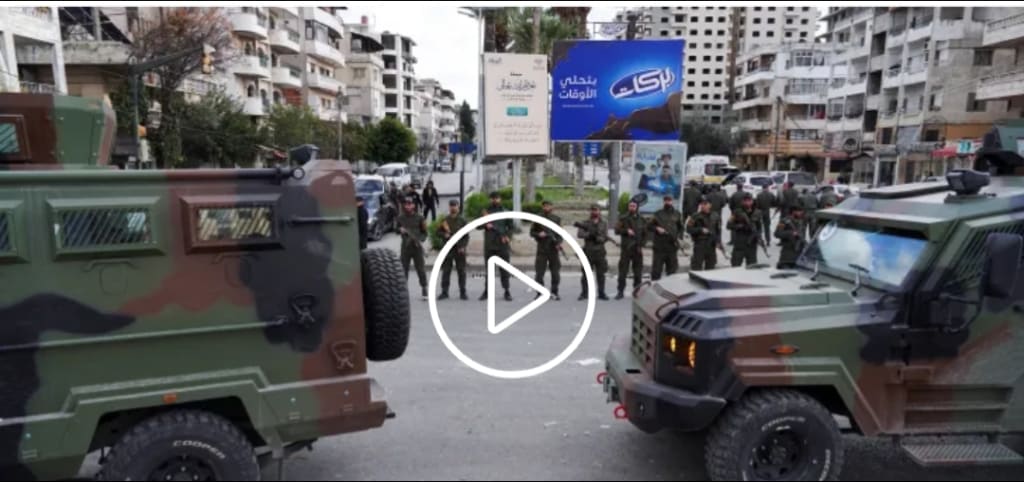
In a stark reminder of how fragile the situation remains in post-Assad Syria, deadly clashes erupted across multiple cities on December 28, 2025, as hundreds — and in some areas thousands — took to the streets in protest. The demonstrations, which began as peaceful gatherings, descended into violence in the coastal and central provinces of Latakia, Tartus, Hama and Homs, leaving several people dead and scores injured. �
Anadolu Ajansı +1
A Spark in the Alawite Heartland
The immediate trigger for this wave of protests was a bombing at the Imam Ali ibn Abi Talib mosque in Homs two days earlier, which killed at least eight worshippers and wounded dozens during Friday prayers. The explosion occurred in the predominantly Alawite Wadi al-Dhahab neighborhood, and while no independent authority has verified responsibility, an extremist group claimed the attack on social media. �
AP News +1
Anger and grief swiftly spread from Homs to Syria’s coastal regions — historically the stronghold of the Alawite minority, which had dominated the ruling elite during Bashar al-Assad’s 14-year tenure. Many demonstrators view the bombing as part of a pattern of escalating sectarian violence and insecurity in the year since Assad’s fall to a rebel-led coalition in December 2024. �
Press TV
From Demonstration to Deadly Confrontation
On Sunday, protests called by Ghazal Ghazal, head of the Supreme Alawite Islamic Council, drew large crowds in Latakia and surrounding areas. Demonstrators chanted slogans demanding federalism, decentralization, and the release of detainees, asserting that in a new Syria, Alawite communities must have a voice and security guarantees. �
Press TV
Although many protests began peacefully, confrontations soon followed. In several cities, clashes broke out between protesters and counter-demonstrators, resulting in stone-throwing, sporadic gunfire and violent incidents that quickly escalated beyond simple street protests. Syrian security forces were also present in significant numbers, and in some locations reportedly fired into the air to disperse crowds. �
Al Jazeera +1
According to local health officials and multiple reports, at least three people were killed and more than 60 wounded in clashes in Latakia and Tartus alone. Injuries ranged from gunshot wounds to wounds from stones and other projectiles. �
Anadolu Ajansı
Deep-Rooted Causes: Sectarian Tension and Political Fractures
To understand the protests, it’s critical to recognize the deep sectarian wounds that remain open in Syria. The fall of Assad’s regime — an Alawite himself — left a power vacuum that various communities have struggled to navigate. Many minority groups, including Alawites, Druze, Christians and others, fear marginalization under the new Sunni-led order. �
AP News
The mosque bombing in Homs, occurring in a predominantly minority neighborhood, underscored these fears. Worshippers at the funeral the next day expressed frustration with what they see as targeted violence and an absence of sufficient protection by the returning government. �
AP News
For many Alawites, the demands voiced during the protests — a federal system, recognition of community rights, and decentralization of governance — reflect deeply held concerns about the future of Syria’s political architecture. They argue that federalism could reduce the risk of domination by any single group and protect diverse identities within the country. �
Press TV
Detainees, Justice, and Accountability
Another central issue driving protesters is the release of detainees and accountability for abuses. In the chaos that followed Assad’s ouster, detention facilities that were temporarily opened have reportedly begun to fill again with thousands of suspects held without formal charges or due process. A Reuters investigation documented widespread alleged abuses, with reports of torture, overcrowding and poor conditions reminiscent of the Assad era. �
Reuters
Families of detainees and community activists have demanded transparency and legal guarantees, arguing that arbitrary arrests deepen mistrust and undermine prospects for national unity. This sentiment was palpable on the streets during the recent protests, with banners calling for justice alongside chants for political change.
Government and International Response
Syria’s interim government has responded cautiously. Officials condemned the mosque attack and vowed to hold perpetrators accountable, while state media emphasized the need to “contain the situation” and restore order. Authorities have also accused loyalists of the former Assad regime of stoking unrest, though independent verification of those claims is difficult. �
Al Jazeera
Internationally, reactions have been muted. Major powers remain focused on broader regional stability, and the Syrian crisis — now more than 14 years old — has receded from global headlines. Yet human rights groups and regional observers continue to warn that unresolved grievances and sectarian mistrust pose a significant risk to long-term peace.
What Happens Next?
As Syria moves through its post-war transition, incidents like the December 28 protests demonstrate how fragile peace remains. The recent clashes were not an isolated flare-up but part of a broader pattern of unrest linked to unresolved political and social grievances among Syria’s diverse communities. �
AL-Monitor
Key demands — federalism, detainee release, and accountability for violence — resonate with many Syrians who feel left behind by the political process. Unless these issues are addressed through inclusive dialogue and reforms, tensions are likely to persist, with the potential for further demonstrations and clashes.
For now, families of the victims and injured remain in mourning, while the government attempts to balance security concerns with pressures for reform. Syria’s road ahead remains uncertain, but the events of this week are a stark reminder that the legacy of conflict continues to shape the present.
If you want, I can also generate a timeline of how protests have evolved in Syria since 2024 or a visual social media post summarizing the key points.
About the Creator
Keep reading
More stories from Salaar Jamali and writers in FYI and other communities.
Thailand and Cambodia Sign New Ceasefire Agreement to End Border Fighting
Thailand and Cambodia have taken a critical step toward ending weeks of violent clashes along their shared border, agreeing on a new ceasefire deal that aims to halt hostilities, protect civilians, and open a path to lasting peace after one of the most serious military confrontations between the two Southeast Asian neighbors in recent years. �
By Salaar Jamaliabout a month ago in FYI
A Failed Artist, A Disillusioned Poet, An Underpaid Game Show Host
I took my son and niece to Gori, a small town in Georgia where Joseph Stalin was born. They talked me into visiting the Stalin's Museum, the largest in the post-Soviet space. I had resisted going there because I just can't stand the monster and know enough about him, or so I thought.
By Lana V Lynx28 days ago in FYI
When Safety Comes First: Understanding the Ramipril Medication Recall
Ramipril is one of the most commonly prescribed medications for treating high blood pressure, heart failure, and kidney disease related to diabetes. For millions of patients worldwide, it plays a vital role in preventing strokes and heart attacks. However, recent medication recalls involving certain batches of Ramipril have raised concerns and questions among patients and healthcare providers alike. The incident highlights how closely monitored the pharmaceutical supply chain is and why patient safety remains the highest priority in modern medicine.
By Sajida Sikandara day ago in FYI




Comments
There are no comments for this story
Be the first to respond and start the conversation.