
Stages and Classes of Heart Failure Explained
Heart Failure is a serious concern, and it is something that happens due to the gradual decline in health. Heart failure at early stages may not present as a serious disease, but over time, it can develop into a serious disease, which can be life-threatening.

Heart Failure is a serious concern, and it is something that happens due to the gradual decline in health. Heart failure at early stages may not present as a serious disease, but over time, it can develop into a serious disease, which can be life-threatening.
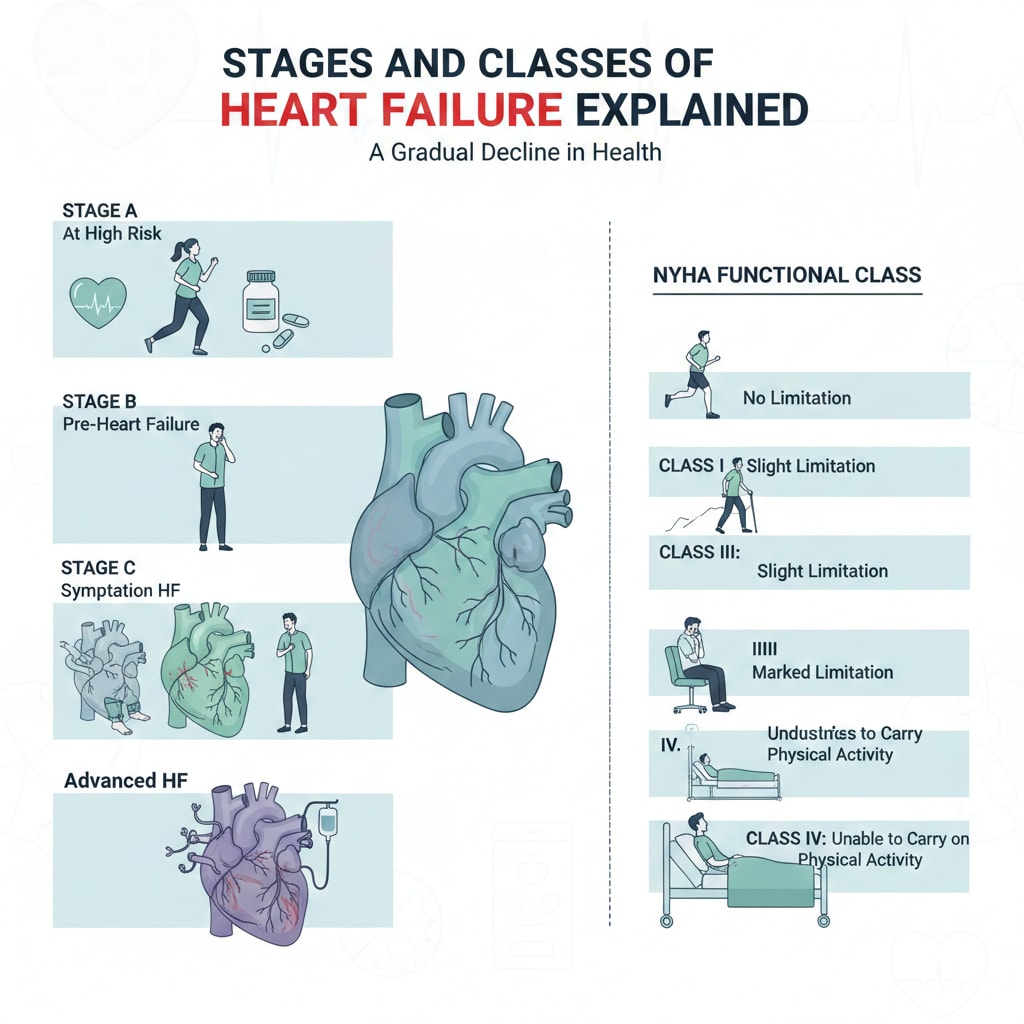
Due to the progressive nature of this condition, Heart Failure is divided into stages from Stage A to Stage D. Knowing about the stages and classes of heart failure is important, as each stage directs the treatment and gives an idea of the recovery time and daily life of the patient.
Heart failure is a disease, but it does not present the same in every patient, even when they are diagnosed at the same stage of Heart Failure. Your doctor may use these as a parameter to define the recovery period. So, let’s understand the classes and stages in simple terms.
What exactly is heart failure?
Heart failure is not a condition in which your heart stops working; it simply means the heart has failed to perform its normal function of supplying blood to the whole body. When this function is compromised, it can lead to various symptoms like fatigue, shortness of breath, swelling in the legs, and overall low energy to perform everyday tasks.
Treatment of heart failure usually requires the proper diagnosis of Heart Failure at a specific stage or class. For long-term treatment plans and management of the disease, doctors rely on two different classification systems, commonly referred to as the stages and classes of heart failure.
Stages of Heart Failure (how the disease has progressed)
Classes of Heart Failure (severity of the symptoms)
Understanding both gives you a clearer picture of where you are, so let’s go through each system one by one.
The Stages of Heart Failure:
The American College of Cardiology (ACC) and American Heart Association (AHA) define heart failure stages based on how far the condition has progressed. These stages only move forward if not treated on time, which is why early awareness matters so much.
Stage A:
Stage A Heart Failure means you are at risk of developing a serious heart disease, but there are no symptoms. You don’t have heart failure yet, but may have any of the following conditions:
- High blood pressure
- Diabetes
- Obesity
- High Cholesterol
- Inactive lifestyle
- Family history of heart disease
Even if you have no symptoms at this stage, prevention is a part of the treatment to stop further progression of the disease. At this stage, your doctor will suggest lifestyle changes, regular monitoring, and medications to reduce the chances of Stage B.
Stage B:
In this stage, there are minor structural heart changes, but you may still not experience any symptoms associated with Heart failure. There may be weakened or thickened heart muscles when tests are performed. But there may not be any noticeable symptoms. It does not mean there is no problem, and you should not worry. The heart is still under strain even if you just feel fine.
Treatment at this stage may include medications, a healthy lifestyle, and regular follow-up to see the response to treatment.
Stage C:
Stage C heart failure shows significant symptoms, and this is the common stage where usually all patients come to the doctor with presenting complaints. The symptoms with which the patient comes to the doctor usually involve:
- Shortness of breath
- Fatigue
- Swelling in feet or ankles
- Difficulty with daily activities
Stage 3 means now heart failure has started affecting everyday life and have decrease the quality of life of the patient. Doctors in this stage thoroughly observe the condition, perform diagnostic tests, and then make an individualized treatment plan to increase the effectiveness of the treatment. Medications, assistive devices like a pacemaker, lifestyle adjustments, and minor surgical interventions are used for the treatment.
Stage D:
People with advanced-stage heart failure come under this category. Stage D is the most serious form of heart failure, and the symptoms appear while performing everyday tasks, daily chores, and even at rest. Doing a simple task, even going for a simple walk, becomes extremely challenging.
In this stage, surgical procedures are a major part of the treatment. For example, an LVAD heart device assists the heart in supplying blood to the whole body. Living with an LVAD may require proper support with LVAD apparel, like LVAD bags and LVAD shirts, which help carry the batteries and the LVAD controller. In serious conditions, there may need to be a replacement of the diseased heart with a healthy one through a heart transplant procedure.
The Classes of Heart Failure
While stages describe disease progression, heart failure classes focus on how symptoms affect daily activity. These are defined by the New York Heart Association (NYHA) and can change over time with treatment.
Class I: No Activity Limitations
People in Class I can perform normal physical activities without symptoms, such as walking, climbing stairs, and exercising, and feel normal.
Class II: Mild Limitations
Symptoms appear during moderate activity, such as brisk walking or climbing several flights of stairs. Patients stay comfortable at rest, but energy levels may drop as the exertion happens.
Class III: Marked Limitations
Even light activities, like dressing or short walks, can cause symptoms. Daily routines require managing tasks in intervals, resting, and proper support.
Class IV: Symptoms at Rest
Symptoms are present even without physical activity. Quality of life is significantly affected, and advanced treatments are necessary.
Why Understanding Stages and Classes Matters
Understanding the stages and classes of heart failure can help you and your doctors in many ways. Doctors suggest lifestyle changes and plan treatments accordingly. It also allows the patients to expect possible outcomes from the treatment and recovery time accordingly.
Knowing about the activity limitations can help you identify medical devices that can actually support you in your daily routine. For patients and caregivers alike, this knowledge helps make smarter, more confident care choices.
Final Thoughts
Understanding the stages and classes of heart failure is important for both patients and doctors. Heart failure is a serious condition that can get worse over time if not treated properly. By recognizing the different stages, from Stage A with no symptoms to Stage D where daily activities become very challenging, patients can take steps to manage their health effectively. The same goes for the classes of heart failure, which help identify how symptoms affect daily life. Early diagnosis and treatment can lead to better outcomes and a healthier lifestyle. If you have any risk factors or symptoms, it's important to talk to your doctor for guidance and support.
About the Creator
Keep reading
More stories from Sophie Blogs and writers in FYI and other communities.
Affordable Leather Motorcycle Jackets: Safety, Comfort, and Style on a Budget
Motorcycle jackets are one of the most important pieces of gear for riders. They are not just about style—they provide safety, comfort, and performance on the road. While premium leather jackets can be expensive, it is possible to find affordable leather motorcycle jackets that deliver protection, durability, and style without breaking the bank.
By Sophie Blogsabout a month ago in FYI
A Failed Artist, A Disillusioned Poet, An Underpaid Game Show Host
I took my son and niece to Gori, a small town in Georgia where Joseph Stalin was born. They talked me into visiting the Stalin's Museum, the largest in the post-Soviet space. I had resisted going there because I just can't stand the monster and know enough about him, or so I thought.
By Lana V Lynx28 days ago in FYI
When Safety Comes First: Understanding the Ramipril Medication Recall
Ramipril is one of the most commonly prescribed medications for treating high blood pressure, heart failure, and kidney disease related to diabetes. For millions of patients worldwide, it plays a vital role in preventing strokes and heart attacks. However, recent medication recalls involving certain batches of Ramipril have raised concerns and questions among patients and healthcare providers alike. The incident highlights how closely monitored the pharmaceutical supply chain is and why patient safety remains the highest priority in modern medicine.
By Sajida Sikandara day ago in FYI



Comments
There are no comments for this story
Be the first to respond and start the conversation.