
Exploring the World of Robotic Engineering
Robotic Engineering
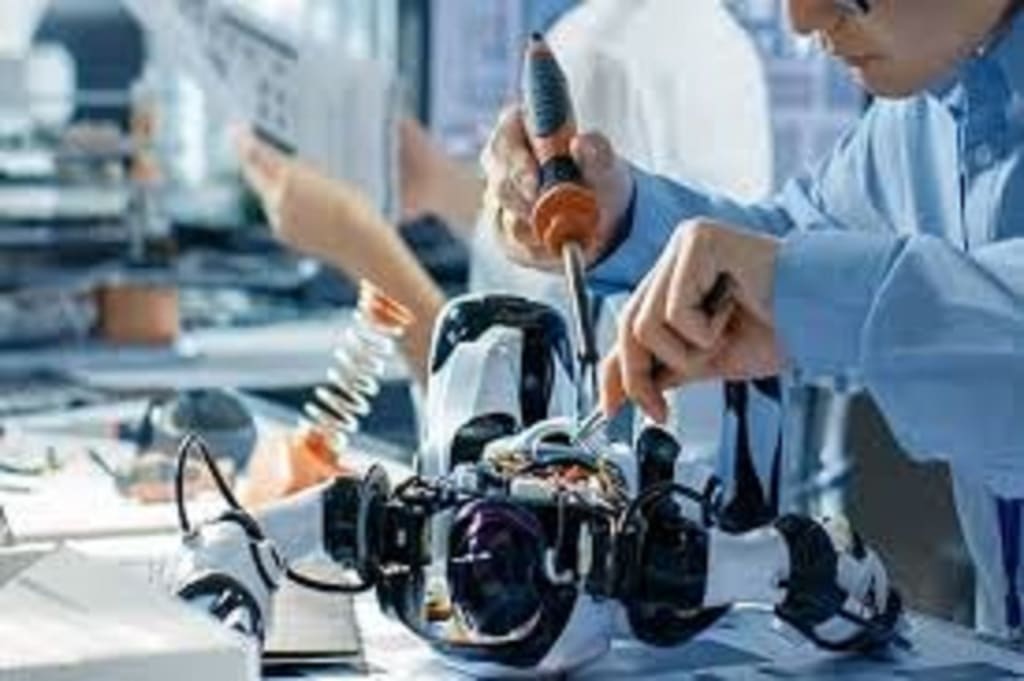
Robotic Engineering, often perceived as a blend of futuristic science fiction and hard-nosed engineering, is one of the most dynamic and transformative fields in the modern world. It is the discipline responsible for the design, construction, operation, and application of robots. More than just building metallic automatons, robotic engineering is an interdisciplinary field that sits at the nexus of computer science, electrical engineering, mechanical engineering, and increasingly, cognitive science. This article delves into the core principles, history, applications, and future challenges of this fascinating and essential domain.What is Robotic Engineering?
At its heart, a robot is a programmable machine capable of carrying out a complex series of actions automatically. Robotic Engineering is the practical discipline that turns a conceptual design into a functional, reliable, and intelligent machine.
The Interdisciplinary Core
To create a robot, an engineer must draw upon several key disciplines:
Mechanical Engineering: Essential for the physical structure, kinematics (motion), dynamics (forces), and actuation systems (motors, gears). This ensures the robot can move, lift, and interact with its environment effectively.
Electrical/Electronics Engineering: Focuses on the power supply, sensors (the robot's "eyes" and "touch"), actuators, and the microcontrollers or processors that form the robot's "brain."
Computer Science/Software Engineering: Provides the algorithms, programming languages, and control systems that allow the robot to perceive its surroundings, make decisions, learn, and execute tasks. This is where Artificial Intelligence (AI) plays a crucial role.
A Brief History: From Automata to AI
The concept of automated helpers is centuries old, dating back to ancient Greek legends of mechanical servants and medieval automata. However, modern robotics took shape in the mid-20th century.
The Dawn of Industrial Robots: The term "robot" itself was popularized by Czech writer Karel Čapek in his 1920 play R.U.R. (Rossum's Universal Robots). The first true industrial robot, the Unimate, was installed in 1961 at a General Motors factory. This marked the beginning of robots transforming manufacturing.
The Three Laws: In the 1940s, author Isaac Asimov established his famous Three Laws of Robotics in his science fiction stories, raising fundamental ethical questions that continue to shape the field today.
The Microprocessor Revolution: The advent of affordable, powerful microprocessors in the 1970s and 80s dramatically increased the sophistication and affordability of robots, moving them beyond simple repetitive tasks to complex, sensor-driven operations.
Applications Across Industries
Robots have moved far beyond the factory floor, becoming indispensable tools in virtually every sector.
1. Manufacturing and Logistics
This is the traditional home of robotics. Robots handle repetitive, dangerous, or high-precision tasks like welding, painting, assembly, and quality inspection. In logistics, Automated Guided Vehicles (AGVs) and Autonomous Mobile Robots (AMRs) efficiently sort and transport goods in vast warehouses.
Healthcare and Medicine
Medical robots are revolutionizing patient care.
Surgical Robots (e.g., the da Vinci System): Allow surgeons to perform minimally invasive procedures with unparalleled precision, reducing recovery times.
Rehabilitation Robots: Assist patients in physical therapy and regaining mobility.
Exploration and Remote Sensing
In environments too dangerous or inaccessible for humans, robots are our explorers.
Space Exploration: Rovers like NASA's Perseverance explore the surface of Mars, collecting data and samples.
Deep-Sea Exploration: Remotely Operated Vehicles (ROVs) investigate the ocean floor, oil pipelines, and shipwrecks.
Search and Rescue: Drones and ground robots navigate collapsed buildings or disaster zones to locate survivors.
4. Service and Personal Robotics
This is the fastest-growing sector.
Domestic Robots: Vacuum cleaners, lawnmowers, and pool cleaners.
Human-Robot Interaction (HRI): Social robots are designed to interact with people, potentially serving as companions for the elderly or educational aids.
Autonomous Vehicles (AVs): Cars, trucks, and delivery vehicles that use sophisticated sensor arrays and AI to navigate public roads.
The Technological Pillars of Modern Robotics
The complexity of contemporary robots rests on continuous advancements in three technological areas:
1. Perception and Sensing
A robot must first understand its environment. This is achieved through an array of sensors:
Vision Systems: Cameras and LiDAR (Light Detection and Ranging) provide detailed 3D maps of the surroundings.
Force and Tactile Sensors: Enable robots to "feel" objects and apply the correct amount of grip for delicate handling.
Proprioception: Internal sensors (like encoders on motors) tell the robot the exact position of its joints and limbs.
2. Locomotion and Manipulation
This refers to how a robot moves and interacts physically.
Locomotion: Can be wheeled, tracked, or legged (like bipedal and quadrupedal robots). Each type is optimized for different terrain.
End-Effectors: The specialized "hands" of a robot, which can be grippers, suction cups, tools, or even surgical instruments.
3. Artificial Intelligence (AI) and Control
The control system is the robot's brain, often powered by AI algorithms.
Machine Learning (ML) and Deep Learning (DL): Allow robots to learn from experience, recognize patterns, and adapt to changing environments, moving beyond pre-programmed responses.
Path Planning: Algorithms determine the most efficient and safe way for a robot to move from one point to another while avoiding obstacles.
Pharmacy Automation: Robots manage and dispense medications, ensuring accuracy and reducing human error.
Human-Robot Collaboration (Cobots): New generations of robots are designed to work alongside humans, safely sharing the workspace.
Ethical and Societal Challenges
The rapid advancement of robotic engineering presents significant ethical, economic, and social questions that engineers must address alongside policymakers.
1. The Future of Work (Automation vs. Employment)
The most pressing economic concern is the displacement of human workers by automation. While robots eliminate certain jobs, they simultaneously create demand for new roles in robot maintenance, programming, and design. The challenge is ensuring a smooth transition and retraining the workforce.
2. Safety and Accountability
As robots become autonomous, the question of accountability in case of failure or accident is paramount. Establishing clear standards for robot reliability and a legal framework for responsibility is crucial, especially for self-driving cars and surgical robots.
3. Bias and Fairness
Robots, especially those driven by AI, can reflect and even amplify biases present in their training data. Robotic engineers have an ethical duty to ensure their creations are programmed for fairness and operate without prejudice.
4. The Autonomy Question
Giving machines the power to make life-or-death decisions—for instance, in military robotics is perhaps the deepest ethical frontier. Debates around regulating Lethal Autonomous Weapons Systems (LAWS) are ongoing and highly complex.The Next Frontier: What’s Ahead for Robotics
The field is evolving at a breakneck pace, with several exciting areas poised to define the next decade of robotic engineering:
Soft Robotics: Moving away from rigid metal, soft robots are made from compliant materials, making them safer for human interaction, more adaptable to complex environments, and potentially revolutionary for prosthetics.
Bio-Inspired Robotics: Engineers are learning from nature to create robots that move and operate like animals or insects (biomimetics), leading to highly efficient flying or swimming robots.
Cloud Robotics: Utilizing cloud computing to share processing power, data, and learning among many robots. A single robot's experience can instantly be used to teach thousands of others. sense reasoning and the ability to interact with the world in highly nuanced, human-like ways.
Conclusion
Robotic Engineering is more than a technical discipline; it is an endeavor that constantly redefines the relationship between humans and machines. It offers the promise of a safer, more productive, and more explorative future, from precision medicine to the colonization of space. As the technology matures, the engineers of tomorrow must navigate a complex landscape where technical innovation must always be balanced with ethical responsibility, ensuring that the rise of the machines serves the fundamental betterment of humanity. The future is not one with robots, but one that is actively co-created by human ingenuity and robotic capability.
About the Creator
Muddasar Rasheed
Connect on Facebook: https://www.facebook.com/profile.php?id=61583380902187
Connect on X: https://x.com/simonleighpure
Connect on Instagram: https://www.instagram.com/simonleighpurereputation/
Keep reading
More stories from Muddasar Rasheed and writers in FYI and other communities.
Why I Choose the Hard Path of Writing
There’s a certain siren song that every content creator hears these days. It whispers of instant gratification: push a button, and out flows a perfectly structured, grammatically impeccable, and seemingly knowledgeable article. In the age of artificial intelligence, the promise isn't just speed; it's the illusion of effortless expertise. I know this song well. I danced to its tune for months, and it nearly cost me everything that made my writing mine.
By Muddasar Rasheed3 months ago in FYI
A Failed Artist, A Disillusioned Poet, An Underpaid Game Show Host
I took my son and niece to Gori, a small town in Georgia where Joseph Stalin was born. They talked me into visiting the Stalin's Museum, the largest in the post-Soviet space. I had resisted going there because I just can't stand the monster and know enough about him, or so I thought.
By Lana V Lynx28 days ago in FYI
Why Aircraft Components Are Overbuilt on Purpose
When we look at an aircraft, it’s easy to be impressed by its size or complexity but what many people don’t realize is that every part of an aircraft is engineered to be stronger and more reliable than it ever strictly needs to be. In aviation, nothing is left to chance. What may seem like “overbuilding” to the untrained eye is actually a deliberate, essential aspect of engineering that keeps passengers safe thousands of times a day.
By Beckett Dowhan6 days ago in FYI
Time to change your life.
Is it even possible for you to change your life? A lot of people, more than there should be, are unhappy with their lives. But what are they doing about it? Usually nothing. People talk about how shitty their lives are and want change, but are they not taking the actions to change?
By Jen Phillips3 days ago in Humans


Comments
There are no comments for this story
Be the first to respond and start the conversation.