
Black Greek Fraternities: Why is there so much controversy?
A look at some facts about Omega Psi Phi and Kappa Alpha Psi.


Why the Controversy?
Artificial Intelligence was used to assist with some information in this article, which addresses the growing number of preachers who say that belonging to the Greek fraternities Kappa Alpha Psi and Omega Psi Phi is idolatry. The reference point is the following verses from Exodus chapter 20. (KJV)
3 Thou shalt have no other gods before Me.
4 Thou shalt not make unto thee any graven image, or any likeness of any thing that is in heaven above, or that is in the earth beneath, or that is in the water under the earth.
5 Thou shalt not bow down thyself to them, nor serve them: for I the Lord thy God am a jealous God, visiting the iniquity of the fathers upon the children unto the third and fourth generation of them that hate me
Are other gods being worshipped?
Historically, Black Greek Letter Organizations (BGLOs) like Kappa Alpha Psi and Omega Psi Phi do not worship Greek deities, as their founders were predominantly Christian who utilized Greek letters to symbolize intellectual, classical education.
However, within the context of their rituals and symbols, and through critical or spiritual analyses, associations with specific mythological or symbolic figures have been discussed.
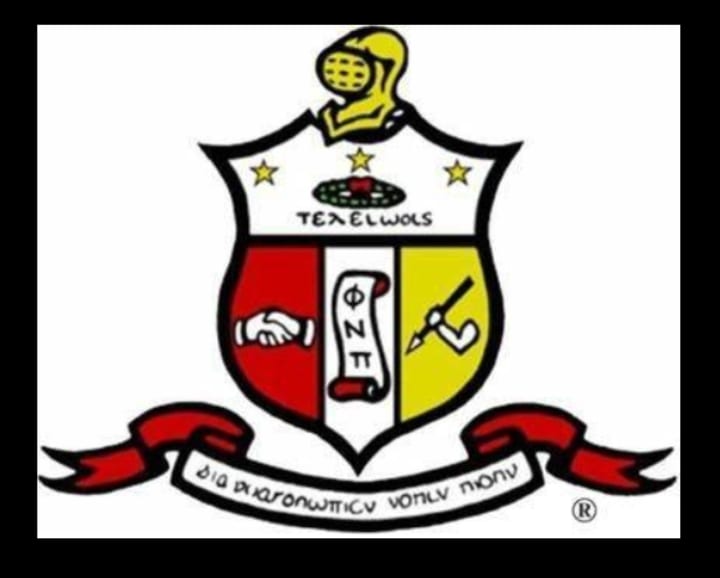
Kappa Alpha Psi Fraternity, Inc. (The Kappas)
Apollo: Some, particularly in critical analyses from a religious perspective, have pointed to the Delphic Shrine (associated with the Greek god Apollo) as being referenced in the rituals of Kappa Alpha Psi, often interpreting this as an adoption of classical, non-Christian symbols.
Ares: The Greek god of war/battle is sometimes mentioned within the context of the fraternity's intense, competitive, or "noble" ideals in these analyses.
Significance: The organization focuses on the "honorable achievement in every field of human endeavor," with the "Diamond" and the "Crimson and Cream" being primary symbols.
Omega Psi Phi Fraternity, Inc. (The Omegas/Ques)
Omega/Biblical Symbolism: The name Omega is derived from the last letter of the Greek alphabet, which in Christian symbolism represents the end, or God as the "Alpha and Omega" (the beginning and the end).
Anubis: Critics or commentators sometimes associate the fraternity's "hound" or "dog" mascot (representing the "Omega Dear" or "Que Dawg" nickname) with the Egyptian god Anubis, who has a jackal/dog-like head.
Shekinah: In some interpretations of the "Spirit of Omega" mentioned in their rituals, some critics connect it to a female goddess spirit (Shekinah).
Significance: The fraternity is based on four cardinal principles: Manhood, Scholarship, Perseverance, and Uplift, with the motto "Friendship is essential to the soul".
As a side note, I add that the Bible speaks of the Shekinah Glory of the Lord.
Context of "Greek Gods" in Fraternities
Not Worship: It is important to note that, as stated by members and historical analyses, these organizations are not founded on the worship of Greek deities, but rather on camaraderie and scholarship, with the "Greek" aspect being a nod to classical academic traditions.
Idolatry Allegations: The mention of "False Gods" in the search results (e.g., Apollos for Kappa, Anubis for Omega) is primarily from theological perspectives arguing that the use of these symbols in rituals constitutes a form of modern "idolatry" or "spiritual, non-Christian" practice.
Other "Kappa" Organizations (Kappa Sigma)
Cronus/Saturn: The Kappa Sigma fraternity, which originated from an older order in Bologna, Italy, has connections to the Greek god Cronus (represented as Saturn), as their badge (the Star and Crescent) is sometimes tied to the astronomical symbol of Saturn, which has roots in the Greek kappa-rho abbreviation for Cronus.
Manuel Chrysoloras: Kappa Sigma also traces its history to the Italian Renaissance scholar Manuel Chrysoloras, rather than a direct association with a mythological deity.
The takeaway
Those who remain a part of these fraternities are strong in their belief that they are not committing idolatry. Some who have walked away from these associations suggest that the rituals are against what is taught in the Bible.
Many of us grew up pledging allegiance to the US flag every morning in school without giving it a second thought. As adults, some wonder why we pledged our loyalty to a piece of cloth. Some say this was a form of idolatry.
The article Just Greek Letter Organizations or Idoltry puts things in perspective by suggesting that each person should pray and search their own heart for answers and be led by His Spirit in their choices.
About the Creator
Cheryl E Preston
Cheryl enjoys writing about current events, soap spoilers and baby boomer nostalgia. Tips are greatly appreciated.
Keep reading
More stories from Cheryl E Preston and writers in FYI and other communities.
Mercury Retrograde: Are the effects real or imagined?
Do the heavens affect the earth? If planet alignments don't affect the atmosphere, why do people report that Mercury Retrograde wreaks havoc? I've shared my family's experiences in other writings and will share them again here.
By Cheryl E Prestonabout 14 hours ago in FYI
How an Australian Farmer Is Planning to Get US Consumers Hooked on Camel Milk
An Australian farmer’s unusual plan to export camel milk to the United States is capturing attention in both agricultural and wellness circles, marking a potential new chapter in the global dairy market. After more than a decade developing one of Australia’s first commercial camel dairies, Paul Martin is now preparing for his first major overseas shipment — and he believes the US market could be a game-changer. The Guardian Martin operates his camel farm on a 130-hectare property in the Scenic Rim region of Queensland, southeast of Brisbane. Over the past 10 years, he and his team have built a productive herd, including standout camels such as Caroline, whose genetics produce more than twice the average milk yield of wild camels. This selective breeding, Martin says, is crucial to scaling camel milk production from a novelty to a serious commercial product. The Camel Milk Opportunity Camel milk has long been a staple in pastoral communities in Africa and the Middle East, prized for its nutrition and digestibility. But in western countries, it remains a niche product — one that is starting to attract health-minded consumers. Camel milk is naturally lower in allergens than cow’s milk because it lacks the protein beta-lactoglobulin, a major trigger for dairy sensitivities. Its nutritional profile has led some in wellness circles to describe it as a “superfood,” appealing to people with gut-health concerns or dietary restrictions. Martin plans to export 60,000 litres of camel milk to the United States this year, his first shipment aimed at testing US demand. If successful, he believes exports could grow into a major new commodity for Australia — much like beef or sheep products once did. Australia’s Unique Camel Advantage Unlike many countries, Australia has a naturally large population of feral camels — descendants of animals brought in during the 19th century — estimated at hundreds of thousands across the interior. While these populations are often seen as an ecological challenge, some see a commercial opportunity in turning them into dairy resources. However, experts caution that relying on feral harvests for commercial milk production presents challenges in scale, animal welfare, and sustainability. Government reports suggest that commercial use could support targeted population control, but that captive breeding remains a more realistic path for industry growth. On Martin’s farm, camel milking is a hands-on, psychology-driven process: camels must be “coaxed” rather than forced to release milk, requiring trust, calm handling, and careful understanding of herd dynamics. “Once you do that,” Martin says, “they’re like a grass-eating Labrador.” Marketing to US Consumers For camel milk to catch on in the United States, producers must navigate a complex food environment. Unlike traditional dairy products, camel milk still lacks widespread retail presence, and in some US states there are strict regulations on raw milk production and sales. However, pasteurised camel milk and camel-based products have already begun appearing in specialty markets, often tied to migrant communities familiar with camel milk’s cultural and nutritional value. Martin believes that the milk’s health positioning — particularly for people with allergies or digestive issues — could help broaden its appeal beyond niche markets. He points to the similarities in health trends between Australia and the US, noting that wellness consumers there have shown interest in alternatives to traditional dairy. Cultural and Economic Potential Camels also hold cultural significance for some communities in both countries. Somali Australians, for instance, see camels as symbolic of resilience and heritage, connecting traditional food practices with modern industry innovation. Martin’s farm even offers camel milk cappuccinos and camel-meat pies, blending tradition with contemporary food culture. Despite the logistical and marketing challenges, Australian producers — including larger players like Aus Camel Dairies Pty. Ltd. — are investing in technology and production facilities aimed at scaling for global markets. Some are even exploring infant formula and powdered camel milk products to broaden export opportunities. Auscamel Dairies Conclusion As Martin prepares his first shipment of camel milk to the United States, the venture represents a broader trend in agricultural innovation: turning unconventional resources into high-value export products. If Australian camel milk can find a foothold among US consumers hungry for healthful, alternative dairy options, it could usher in a new era for an industry once confined to arid deserts and traditional markets.
By Fiaz Ahmed 4 days ago in FYI


Comments
There are no comments for this story
Be the first to respond and start the conversation.