
Why Ice Cream Consumption Is Expanding Across Latin America?
The Growth of Premium Flavors and Changing Consumer Preferences


Ice cream has long been a popular dessert across Latin America, enjoyed in homes, restaurants, and street-side parlors. In recent years, consumption patterns have evolved as consumers explore new flavors, premium ingredients, and innovative formats. The category now represents more than a seasonal indulgence; it has become a dynamic segment within the broader food industry.
Rising disposable incomes, urban lifestyles, and growing retail infrastructure are contributing to broader availability of diverse ice cream products. From traditional fruit-based recipes to artisanal and premium offerings, the variety continues to expand.
Understanding What the Ice Cream Industry Really Involves
The ice cream sector includes production, distribution, retail sales, and foodservice operations. Products range from single-serve sticks and cones to family-sized tubs and specialty desserts.
Manufacturers utilize modern freezing technologies and quality control systems to maintain consistency and safety. Distribution networks often require temperature-controlled logistics to preserve product integrity.
The objective is to deliver enjoyable and high-quality frozen desserts to consumers across various retail channels.
Key Factors Driving Ice Cream Consumption
One of the strongest drivers is demographic growth and urbanization. Expanding city populations increase demand for convenient dessert options.
Retail modernization, including supermarkets and convenience stores, improves product accessibility.
Innovation in flavors and textures also encourages repeat purchases. Consumers are increasingly attracted to unique combinations and limited-edition offerings.
Marketing strategies and branding further influence purchasing decisions.
The Role of Innovation and Product Development
Innovation plays a significant role in shaping ice cream offerings. Manufacturers are introducing premium ingredients, plant-based alternatives, and low-sugar formulations to cater to evolving tastes.
Packaging innovations enhance convenience and portion control.
Digital marketing and social media campaigns support brand visibility and customer engagement.
Advancements in cold chain logistics ensure reliable storage and transportation across diverse climates.
Changing Consumer Preferences and Lifestyle Trends
Consumers across Latin America are showing increased interest in indulgent yet high-quality desserts. Artisanal and locally inspired flavors are gaining attention.
Health-conscious individuals are seeking options with reduced sugar or dairy-free ingredients.
Convenience-driven lifestyles encourage single-serve and on-the-go formats.
Seasonal promotions and festive occasions further stimulate demand.
Benefits and Strategic Advantages
The ice cream sector offers several important benefits:
• Product Variety: Wide range of flavors and formats.
• Retail Expansion: Accessible through multiple sales channels.
• Brand Differentiation: Encourages creativity and innovation.
• Consumer Enjoyment: Enhances everyday indulgence.
• Economic Contribution: Supports manufacturing and distribution employment.
These advantages contribute to steady category development.
Regional Expansion and Distribution Networks
Major metropolitan areas often lead consumption trends, supported by strong retail infrastructure.
However, expanding cold storage capabilities are enabling broader distribution into smaller cities and rural areas.
Local producers and international brands compete by tailoring offerings to regional preferences.
Foodservice establishments also contribute significantly through dessert menus and specialty parlors.
Challenges Facing the Ice Cream Sector
Despite growth, challenges remain. Maintaining product quality in warmer climates requires efficient refrigeration systems.
Fluctuations in ingredient costs may influence pricing strategies.
Health awareness trends can shift consumer demand toward alternative desserts.
Balancing premium innovation with affordability remains a strategic consideration.
Future Outlook of Ice Cream in Latin America
The future of ice cream in Latin America is expected to emphasize premiumization, sustainable packaging, and healthier ingredient options.
Plant-based and functional formulations may gain greater visibility as dietary preferences evolve.
Improved cold chain infrastructure will likely enhance product availability across the region.
Innovation and regional flavor customization are poised to drive continued interest.
Conclusion
Ice cream continues to be a beloved dessert across Latin America, supported by innovation, retail expansion, and evolving consumer tastes. Through creative product development and improved distribution systems, the sector remains dynamic and competitive.
With ongoing advancements in flavor, quality, and sustainability, ice cream is set to maintain its strong presence within the region’s food landscape.
About the Creator
deepanshu Thakur
A dedicated Market Research Professional specializing in in-depth analysis, industry forecasting, and strategic insights. Known for precision, reliability, and delivering research that adds real business value.
Keep reading
More stories from deepanshu Thakur and writers in Futurism and other communities.
Why Consumer Electronics Continue to Shape Digital Lifestyles in the United Kingdom?
Consumer electronics have become deeply integrated into daily life across the United Kingdom. From smartphones and laptops to smart televisions and wearable devices, technology is influencing how people communicate, work, and entertain themselves.
By deepanshu Thakur2 days ago in Futurism
Australia Robotics Market: Industrial Automation, AI Integration & Application Expansion
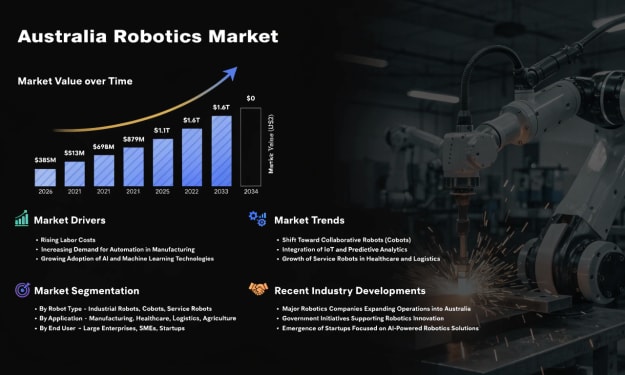
According to IMARC Group, the Australia robotics market reached USD 1.5 Billion in 2024 and is projected to expand to USD 6.7 Billion by 2033, exhibiting a robust compound annual growth rate (CAGR) of 16.20% during 2025–2033. This remarkable growth underscores Australia’s accelerating transition toward automation and intelligent systems across Australia. Robotics—spanning industrial arms, autonomous vehicles, service robots and AI-enabled collaborative systems—has evolved from niche industrial tools into critical infrastructure for manufacturing, mining, healthcare, agriculture and logistics. As businesses prioritize efficiency, productivity and safety, robotics adoption is becoming central to Australia’s digital and industrial transformation strategy.
By Shrestha Roy4 days ago in Futurism
Australia Mining Equipment Market: Automation Adoption, Safety Focus & Sustainable Technologies
According to IMARC Group, the Australia mining equipment market reached USD 1.5 Billion in 2025 and is projected to expand to USD 2.3 Billion by 2034, exhibiting a compound annual growth rate (CAGR) of 5.15% during 2026–2034. This growth reflects the strategic modernization of mining operations across Australia, one of the world’s leading producers of iron ore, coal, lithium and gold. As global demand for critical minerals rises—particularly for renewable energy and electric vehicle supply chains—Australia’s mining sector is investing heavily in advanced equipment that enhances efficiency, safety and environmental performance.
By Kevin Cooper4 days ago in Futurism



Comments
There are no comments for this story
Be the first to respond and start the conversation.